Ueno Park
Tokyo, Japan
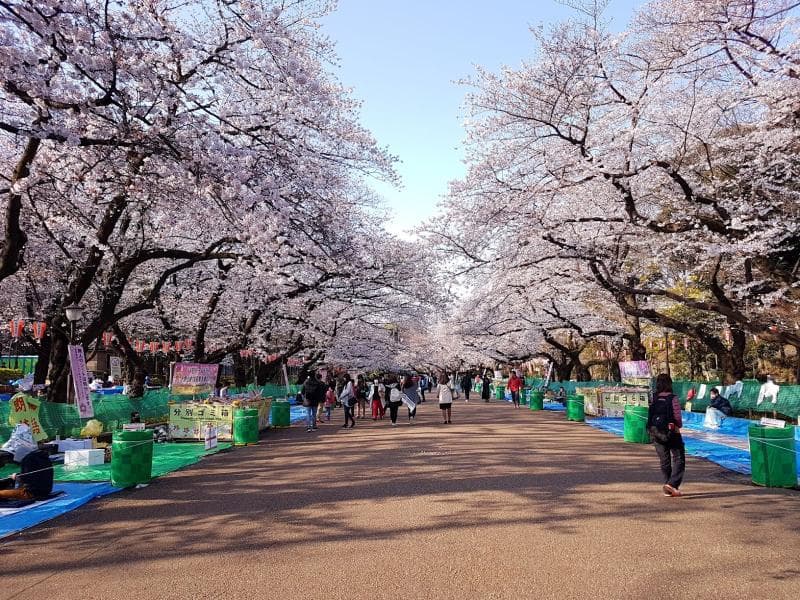
Discover Ueno Park in Tokyo, Japan: a cultural hub with world-class museums, Japan's oldest zoo, historic temples, and stunning cherry blossoms.
Overview
Ueno Park, officially known as Ueno Onshi Kōen ('Ueno Imperial Gift Park'), is a sprawling public park situated in the Taitō district of Tokyo, Japan. As one of Japan's first designated public parks, it serves as a vibrant cultural heart for the city, drawing over ten million visitors annually. It is celebrated for its lush greenery, a remarkable concentration of world-class museums, Japan's oldest zoo, and particularly, its spectacular cherry blossoms in spring.
This expansive urban oasis offers a unique blend of nature, history, and art, providing a tranquil escape from the bustling metropolis while connecting visitors to significant aspects of Japanese heritage. Whether seeking cultural enrichment, a leisurely stroll, or the joyous atmosphere of hanami, Ueno Park presents a captivating experience for every traveler.
History & Cultural Background
The land that now constitutes Ueno Park holds a profound historical legacy, originally belonging to the vast temple grounds of Kan'ei-ji, a powerful Buddhist temple founded in 1625. This temple was strategically built in the 'demon gate' — the inauspicious northeastern direction of Edo Castle — to ward off evil. It also served as a family temple for the ruling Tokugawa clan during the Edo Period.
The tranquil temple grounds dramatically transformed into a battlefield in 1868 during the Boshin War, known as the Battle of Ueno, where imperial forces clashed with Tokugawa loyalists. Much of the temple complex was destroyed in this conflict. Following the Meiji Restoration, the new government, inspired by Western ideals of public spaces, converted the area into one of Japan's first Western-style public parks. It officially opened its gates in 1873. The park received its current official name, Ueno Onshi Kōen, in 1924, when Emperor Taishō formally presented it to the city of Tokyo as an imperial gift.
What Makes It Special
Ueno Park's distinctiveness lies in its unparalleled concentration of cultural and natural attractions. It is a true cultural hub, boasting an impressive collection of museums, including:
- Tokyo National Museum: Japan's oldest and largest national museum, housing an extensive collection of Japanese and Asian art and artifacts, including numerous national treasures.
- National Museum of Nature and Science: Dedicated to the natural sciences, with exhibits ranging from prehistoric times to modern technology.
- National Museum of Western Art: A UNESCO World Heritage site, uniquely designed by the renowned architect Le Corbusier, showcasing Western art.
- Tokyo Metropolitan Art Museum: Featuring diverse art exhibitions.
- Shitamachi Museum: Offering a glimpse into the daily life of old Tokyo's working-class 'shitamachi' district.
Beyond the museums, the park is home to Ueno Zoo, Japan's oldest zoological garden, established in 1882. The park's picturesque Shinobazu Pond, with its vast lotus beds, offers a serene environment and serves as an important wintering ground for various bird species. On an island within the pond stands Bentendo Temple, dedicated to Benten, the goddess of good fortune, wealth, music, and knowledge.
Perhaps most famous is Ueno Park's role as one of Tokyo's premier cherry blossom viewing spots. With over a thousand cherry trees, it attracts millions during late March and early April for joyous hanami (flower viewing) parties.
Stories, Fun Facts & Local Details
Ueno Park is steeped in fascinating stories and unique details that add depth to its beauty. It's said that a Dutch army surgeon, Dr. A.F. Bauduin, played a crucial role in advocating for the area to become a public park rather than a university hospital after the destruction of Kan'ei-ji Temple.
Historically, the park was a site of many 'firsts' for Japan: it hosted the country's first art museum, its first zoo, and even its first tram. The statue of Saigo Takamori, often referred to as 'The Last Samurai', stands proudly near the park's southern entrance, honoring a key figure of the Meiji Restoration. Interestingly, after the Great Kantō earthquake in 1923, notices for missing persons were posted on his statue, highlighting its importance as a central gathering point.
Shinobazu Pond is thought to be a miniature representation of Lake Biwako, Japan's largest freshwater lake, reflecting the traditional cultural practice of recreating famous landscapes. The park's location in the Ueno area places it within Tokyo's 'shitamachi' district, historically the 'lower town' where artisans and merchants resided, giving it a distinctive, authentic charm compared to the city's more modern areas.
Visitor Perspective
Visiting Ueno Park offers a truly immersive experience, easily accessible via the JR Ueno Station's 'Park Exit', as well as several other train and subway lines. The park grounds themselves are freely accessible to the public, typically open from early morning until late evening (e.g., 5:00 AM to 11:00 PM), allowing for peaceful strolls or invigorating morning jogs.
While entry to the park is free, individual attractions such as the museums and Ueno Zoo have their own admission fees and operating hours, generally opening around 9:30 AM and closing by 5:00 PM. It is advisable to note that most of these facilities are typically closed on Mondays, so planning your visit accordingly is recommended. The park features wide walking paths, numerous benches, and clear signage, often in English, making navigation straightforward. Visitors can easily spend half a day or more exploring its diverse offerings, from captivating art collections to historical shrines and the lively zoo, making it a comprehensive cultural destination within Tokyo.
Coordinates: 139.77111, 35.71222
View on Google Maps💬 How Travelers Describe This Place
Based on community votes
Interesting
836Unique
620Must See
594Photogenic
522Beautiful
83
Traveler Stories
Discover memorable experiences shared by travelers who have visited this place.
No traveler stories yet.
Be the first traveler to share what made this place memorable.
Things to see at Ueno Park



Tour
By
Spot
Discover amazing places around the world. Your journey starts here.
Explore
© 2026 TourBySpot. All rights reserved.