Toshogu Shrine
Tokyo, Japan
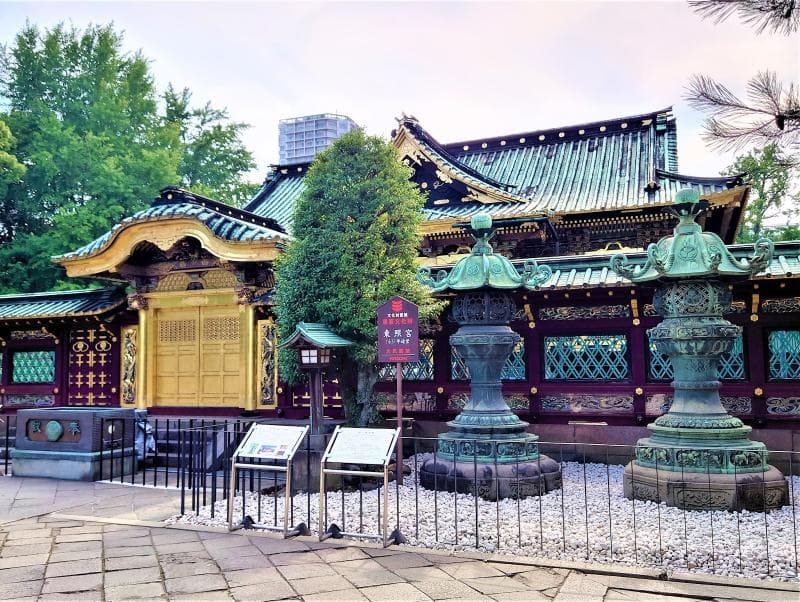
Discover Ueno Toshogu Shrine in Tokyo, Japan – an Edo-period golden shrine dedicated to Tokugawa Ieyasu, famed for its intricate carvings and historical resilience.
Overview
Nestled within the verdant expanse of Ueno Park in Tokyo, Japan, lies the exquisite Ueno Toshogu Shrine, a vibrant testament to Edo-period artistry and enduring history. This stunning Shinto shrine stands as a golden jewel, dedicated to the revered Tokugawa Ieyasu, the founder of the Tokugawa Shogunate, which ushered in a long era of peace and stability for Japan. Its intricate architecture, distinguished by lavish gold leaf and elaborate carvings, offers visitors a rare glimpse into the opulence and craftsmanship of 17th-century Japan. The shrine is not merely a historical relic; it is a serene sanctuary where the past seamlessly intertwines with the present, inviting curious travelers to discover its profound cultural significance and architectural grandeur.
History & Cultural Background
Ueno Toshogu Shrine's origins trace back to 1627 when it was first established by Tōdō Takatora to honor Tokugawa Ieyasu, who had been deified posthumously as Tōshō Daigongen, the 'Great Deity of the East Shining Light'. Ieyasu's legacy as the unifier of Japan and the architect of the Tokugawa Shogunate, which governed for over 250 years, is central to the shrine's purpose. The shrine underwent a significant reconstruction in 1651, ordered by Tokugawa Iemitsu, Ieyasu's grandson and the third shogun. This rebuilding effort ensured its present magnificent form, embodying the distinctive Gongen-zukuri architectural style, characterized by its complex layout connecting the worship hall, offertory hall, and main hall under a single roof. Remarkably, the main structure has withstood numerous natural disasters and conflicts, including the Battle of Ueno, the Great Kanto Earthquake, and the Tokyo firebombing of World War II, preserving its original Edo-period design. Due to its historical integrity and architectural significance, Ueno Toshogu Shrine has been designated an Important Cultural Property of Japan.
What Makes It Special
What truly sets Ueno Toshogu Shrine apart is its exceptional preservation as a prime example of Edo-period architecture in Tokyo. While many historical structures in the city have been rebuilt, this shrine has remained largely intact since 1651. Its buildings are adorned with an astonishing amount of gold leaf and intricate carvings, a style distinct from the more traditional minimalist Japanese aesthetics. The Karamon Gate, a Chinese-style gate, features elaborate gold foil and detailed carvings of flowers and birds. Surrounding the main shrine building is the Sukibei Wall, built in 1651, which is renowned for its upper section decorated with carvings of various land and sea creatures, adding a layer of artistic storytelling to its protective function. Along the approach to the shrine, visitors are greeted by hundreds of stone and bronze lanterns, many donated by daimyo (feudal lords) from across Japan during the Edo period. These lanterns, 48 bronze and over 200 stone, stand as silent guardians and historical markers, contributing to the shrine's unique atmosphere.
Stories, Fun Facts & Local Details
Beyond its grand facade, Ueno Toshogu Shrine holds many fascinating details that deepen its allure. Tokugawa Ieyasu is revered here not just as a historical figure, but as a powerful deity to whom people pray for good fortune, business prosperity, warding off evil, and even success in examinations. The shrine also enshrines two other significant Tokugawa shoguns: Tokugawa Yoshimune and Tokugawa Yoshinobu, the 8th and 15th shoguns respectively. A particular highlight for many visitors is the Ueno Toshogu Peony Garden (Botan-en), established in 1980. This beautiful strolling garden showcases around 500 peony plants of 110 varieties in spring and approximately 160 plants of 40 varieties in winter, often protected by traditional straw huts against the cold. The garden's seasonal beauty provides a striking natural contrast to the golden shrine. Within the shrine grounds, you can also find 'Komainu' (guardian lion-dogs) statues, which typically appear in pairs at the entrances of Shinto shrines and Buddhist temples, symbolically warding off evil spirits.
Visitor Perspective
Visiting Ueno Toshogu Shrine offers a contemplative break from the bustling energy of Tokyo. The outer grounds, including the initial approach lined with historical lanterns and the Karamon Gate, are free to explore, providing ample opportunity to appreciate its exterior beauty. For a more intimate experience, there is a modest admission fee to enter the inner precinct, allowing closer inspection of the Sukibei Wall and the Golden Hall (Honden). While the main hall itself is not accessible internally, its ornate exterior, rich with gold leaf and intricate carvings, can be admired up close. The shrine's location within Ueno Park makes it easily combinable with other attractions like museums and the zoo, offering a rich cultural day out. Whether you're seeking a moment of tranquility, a deep dive into Japanese history, or simply to marvel at exceptional architecture, Ueno Toshogu Shrine promises a meaningful and visually stunning experience.
Coordinates: 139.7706, 35.7154
View on Google Maps💬 How Travelers Describe This Place
Based on community votes
Beautiful
980Photogenic
396Unique
389Interesting
340Must See
201
Traveler Stories
Discover memorable experiences shared by travelers who have visited this place.
No traveler stories yet.
Be the first traveler to share what made this place memorable.

Tour
By
Spot
Discover amazing places around the world. Your journey starts here.
Explore
© 2026 TourBySpot. All rights reserved.