Triumphal Arch
Chisinau, Moldova
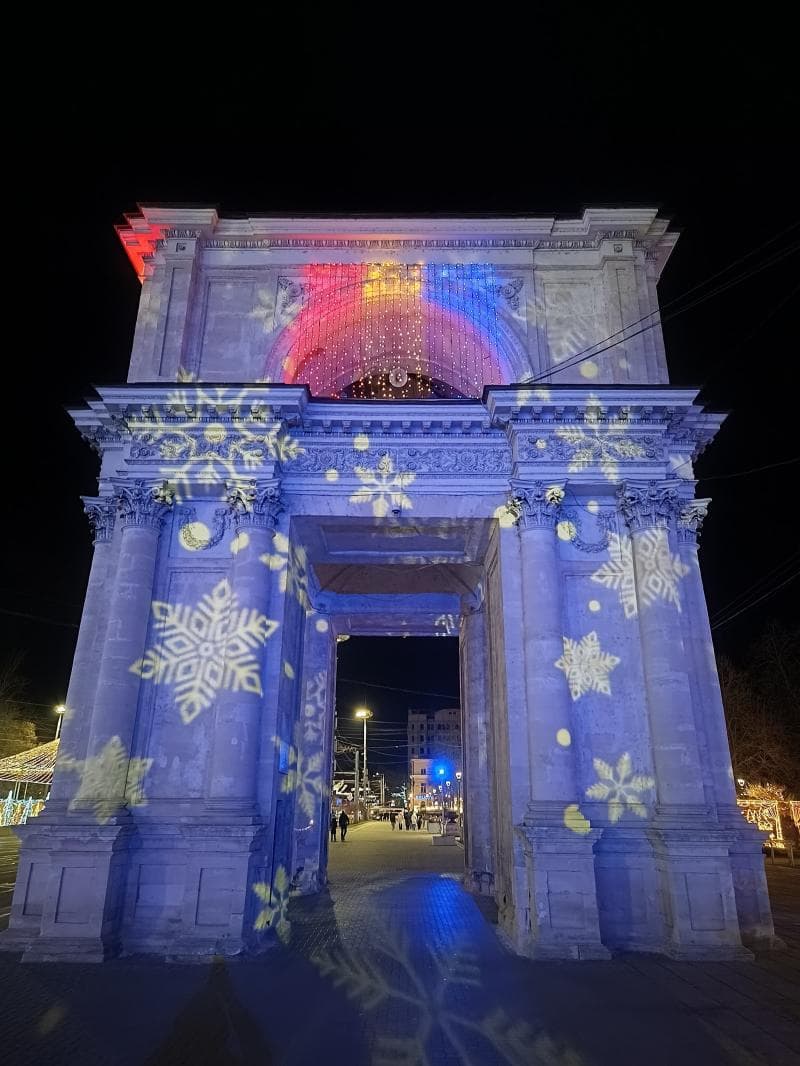
Explore Chisinau's Triumphal Arch, a neoclassical landmark in Moldova. Built in 1841, it commemorates a historic victory and houses a giant bell. Discover its unique history and architecture.
Overview
Standing proudly in the heart of Chisinau, Moldova's capital, is the Triumphal Arch, a neoclassical monument that serves as a profound symbol of the city's rich history and enduring spirit. Also known as the Holy Gates or, during the Soviet era, the Arch of Victory, this impressive structure is an integral part of Chisinau's central architectural ensemble. Crafted from polished white stone, it commands attention in Piața Marii Adunări Naționale, positioned elegantly between the Nativity Cathedral and the Government House. At 13 meters tall, the Arch is a prominent landmark, offering a glimpse into Moldova's past and present, captivating visitors with its stately presence and intricate details.
History & Cultural Background
The Triumphal Arch in Chisinau was constructed between 1840 and 1841, a period steeped in historical significance. Designed by architect Luka Zaușchevici, its primary purpose was to commemorate the Russian Empire's victory over the Ottoman Empire during the Russo-Turkish War of 1828-1829. However, an intriguing anecdote adds a layer of unique cultural context to its creation. The Arch was, in a sense, 'accidentally' built to house an enormous 6.4-ton bell. This bell, cast from captured Turkish cannons, was initially intended for the nearby Nativity Cathedral but proved too large for its bell tower. Thus, the Triumphal Arch was conceived not only as a monument to military triumph but also as a practical solution to accommodate this colossal bell, solidifying its place in the city's architectural and cultural narrative.
What Makes It Special
What sets Chisinau's Triumphal Arch apart is its blend of classical architectural elegance and its compelling backstory. The monument is characterized by a square plan and two levels, featuring four massive pillars adorned with ornate Corinthian-style capitals. Ceramic ornaments further embellish its polished white stone facade, showcasing the craftsmanship of its time. A notable feature is the mechanical clock mounted on its front, which has a history almost as rich as the Arch itself. First installed around 1839 or 1842, it underwent several replacements and repairs, including after sustaining damage during World War II. Today, the clock still keeps time, chiming every fifteen minutes, and is beautifully illuminated at night, adding a magical glow to the city center. Its harmonious alignment with the Nativity Cathedral and Cathedral Bell Tower makes it a central visual anchor in Chisinau's urban landscape.
Stories, Fun Facts & Local Details
The tale of the oversized bell and the subsequent construction of the Arch is a particularly charming local detail. Imagine the dilemma of having a grand bell, meant for a cathedral, only to discover it wouldn't fit! This led to the ingenious solution of building an entirely new structure to house it, giving the Arch its dual purpose of commemoration and utility. Throughout its history, the Arch has borne various names, from the Holy Gates to the Arch of Victory during the Soviet era, reflecting the changing political tides of the region. Another interesting chapter involves the marble memorial plaques. In 1945, these were affixed to the Arch, dedicated to Soviet patriotic scenes and heroes of World War II, but they were subsequently removed in 1991 following Moldova's independence. While often compared to larger triumphal arches in European capitals like Paris or Bucharest, Chisinau's Arch, despite its more modest size, is celebrated for its unique charm and character, earning it a reputation as one of the world's most beautiful triumphal arches.
Visitor Perspective
For any curious traveler, the Triumphal Arch offers an accessible and enriching experience. Its central location makes it an ideal starting point for exploring Chisinau's historical downtown. Visitors are welcome to walk directly beneath its arches, allowing for a closer appreciation of its architectural intricacies and the sense of history it embodies. The Arch stands adjacent to the serene Cathedral Park, providing a perfect spot for a leisurely stroll or a moment of reflection amidst greenery. It's a popular photo opportunity, especially captivating at dusk when its classical features are subtly illuminated, creating a picturesque backdrop. Whether you're drawn by its historical narrative, its architectural beauty, or simply its presence as a cherished city landmark, the Triumphal Arch offers a meaningful connection to Chisinau's past and present, inviting every visitor to partake in its quiet grandeur. Its family-friendly and wheelchair-accessible nature ensures that it is a welcoming destination for all.
Coordinates: 28.8325, 47.02472
View on Google Maps💬 How Travelers Describe This Place
Based on community votes
Unique
898Interesting
667Must See
618Beautiful
308Photogenic
32
Traveler Stories
Discover memorable experiences shared by travelers who have visited this place.
No traveler stories yet.
Be the first traveler to share what made this place memorable.
Things to see at Triumphal Arch



Tour
By
Spot
Discover amazing places around the world. Your journey starts here.
Explore
© 2026 TourBySpot. All rights reserved.