The Bund
Shanghai, China
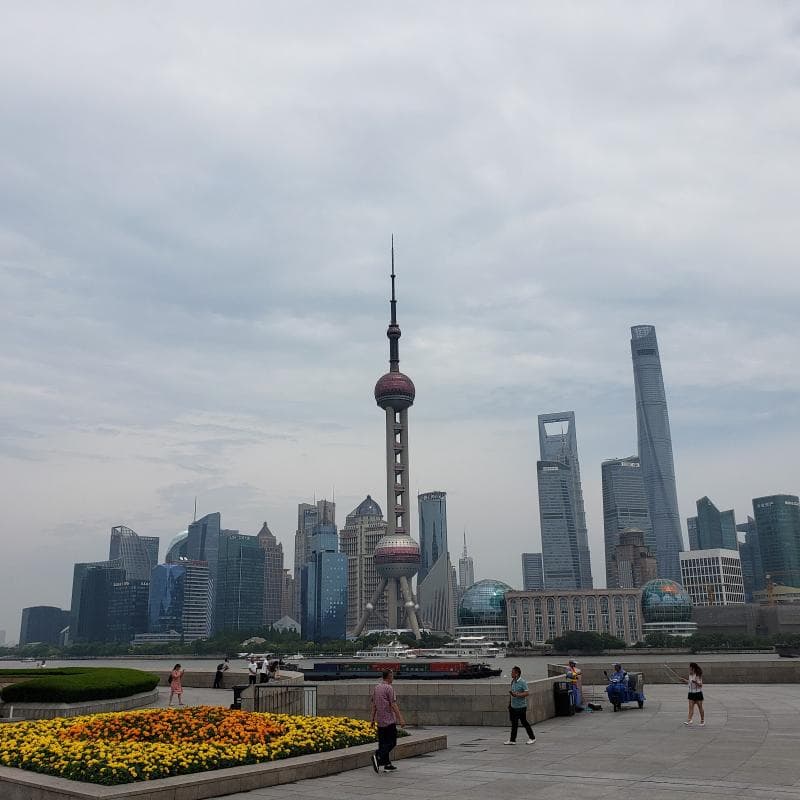
Explore The Bund in Shanghai, China – a historic waterfront promenade showcasing colonial architecture and stunning views of the modern Pudong skyline. Discover its rich history and cultural significance.
Overview
The Bund, known locally as Waitan, is Shanghai, China's iconic waterfront area, stretching approximately 1.5 to 1.6 kilometers along the western bank of the Huangpu River. This historic promenade offers a stunning juxtaposition of old and new Shanghai, with its collection of grand European-style buildings on one side and the futuristic skyline of Pudong across the river on the other. It is a protected historical district and serves as a powerful symbol of the city's past, present, and future.
History & Cultural Background
Before the mid-19th century, the Bund was a muddy lane with tall reeds. Its transformation began after the First Opium War and the signing of the Treaty of Nanking in 1842, which established Shanghai as a treaty port. This led to the creation of foreign concessions, with the British pioneering the first settlement. The Bund quickly evolved into a major financial and trading hub in East Asia, attracting banks, trading firms, and consulates from various Western powers.
The architecture along the Bund reflects this colonial period, showcasing a remarkable 'outdoor museum of international architecture' with styles including Neoclassical, Baroque, Gothic, Romanesque, Renaissance, Art Deco, and Beaux-Arts. These buildings once housed the Shanghai branches of institutions like the Hongkong and Shanghai Banking Corporation (HSBC) and the Shanghai Club. After the establishment of the People's Republic of China in 1949, the Bund, seen as a symbol of Western colonialism, underwent significant changes, with government ministries occupying many of the former foreign institutions. However, with economic liberalization in the late 1970s and 1980s, the Bund was revitalized, and many buildings were gradually returned to their original or similar uses.
What Makes It Special
What truly sets the Bund apart is its unique architectural heritage and the dramatic visual contrast it presents. On its western side, a row of 52 well-preserved historic buildings stands as a testament to its past, each telling a story of Shanghai's development and its interaction with global powers. These structures, often referred to as 'the Bund's World Expo of Architecture,' form a distinct skyline that evokes the glamor of pre-War Shanghai. Facing these historical facades, across the Huangpu River, lies the ultra-modern Lujiazui financial district in Pudong, with its towering skyscrapers like the Shanghai Tower, Oriental Pearl TV Tower, and Shanghai World Financial Center. This striking duality between tradition and modernity makes the Bund a powerful symbol of China's economic renaissance and its complex historical evolution.
Stories, Fun Facts & Local Details
The name 'Bund' itself has Anglo-Indian origins, meaning 'an embankment along a muddy waterfront'. The riverside promenade is sometimes affectionately called 'Lovers' Wall,' a nod to its historical role as a romantic spot. Before its major reconstruction, the Bund was susceptible to severe floods, leading to the rebuilding of its embankment to prevent future damage. Interestingly, the Bund has made appearances in popular culture, including being a primary setting in Steven Spielberg's Oscar-winning film 'Empire of the Sun' and a popular Hong Kong TV series. For a unique crossing, visitors can take the Bund Sightseeing Tunnel, an underground tram connecting the Bund to Pudong, known for its vibrant light and sound shows rather than external views. In the mornings, the Bund buzzes with locals practicing tai chi and engaging in other exercises, offering a glimpse into daily Shanghai life.
Visitor Perspective
A stroll along the Bund's pedestrian promenade is a quintessential Shanghai experience. Visitors can admire the architectural masterpieces, each building telling a silent story of a bygone era, while simultaneously marveling at the futuristic cityscape of Pudong across the river. The atmosphere changes dramatically from day to night; during the day, it's a bustling historical walk, while at night, the buildings are beautifully illuminated, creating a spectacular 'crystal palace' effect against the backdrop of Pudong's lit-up skyscrapers. Many advise visiting in the early morning to avoid crowds and observe local life, or in the evening to witness the breathtaking light displays. The Bund is freely accessible all day, making it an ideal spot for photography, a leisurely walk, or simply soaking in the dynamic energy of Shanghai.
Coordinates: 121.4856, 31.2366
View on Google Maps💬 How Travelers Describe This Place
Based on community votes
Beautiful
953Unique
658Photogenic
585Interesting
69Must See
22
Traveler Stories
Discover memorable experiences shared by travelers who have visited this place.
No traveler stories yet.
Be the first traveler to share what made this place memorable.
Things to see at The Bund



Tour
By
Spot
Discover amazing places around the world. Your journey starts here.
Explore
© 2026 TourBySpot. All rights reserved.