Customs House Tower
Shanghai, China
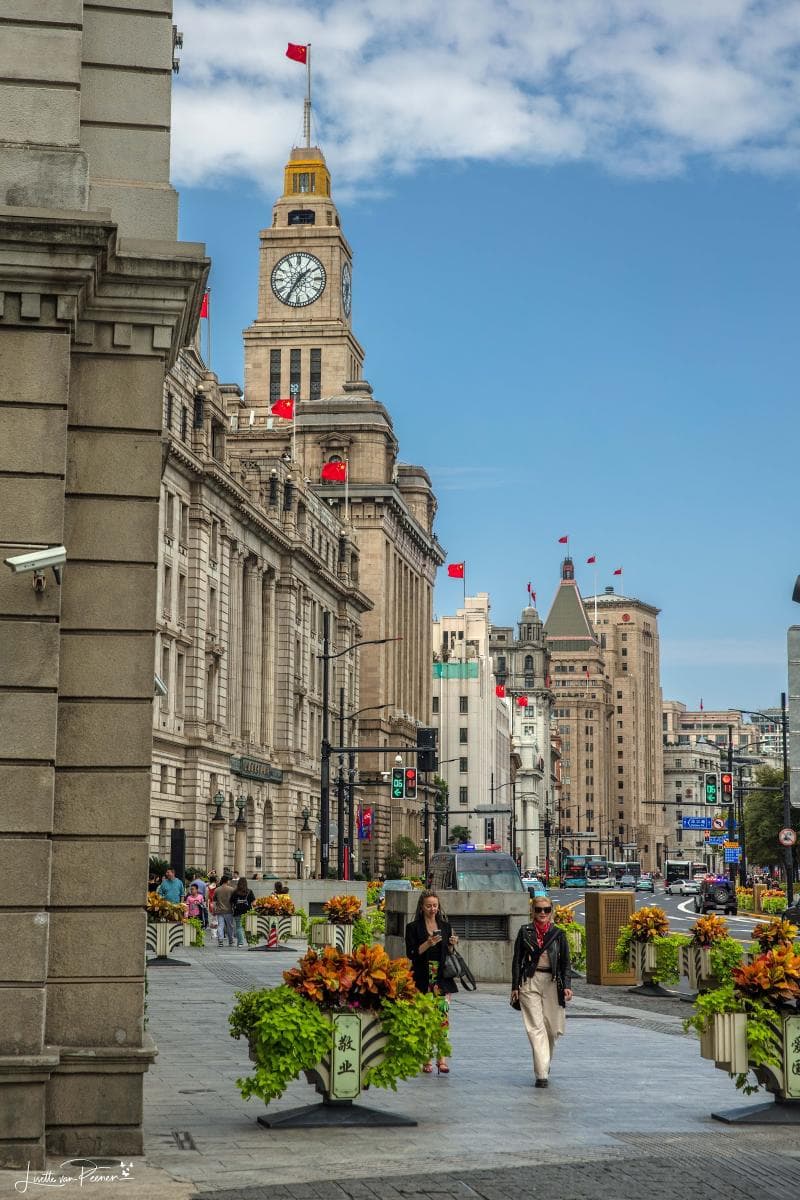
Explore Shanghai's historic Customs House Tower on The Bund, a neoclassical landmark with a legendary clock and rich maritime history in China.
Overview
Standing majestically along The Bund, Shanghai's iconic waterfront promenade, the Customs House Tower is a testament to the city's rich history as a bustling international port. This distinguished eight-story building, completed in 1927, serves as a prominent landmark and a enduring symbol of Shanghai's past and present global significance. Designed with Greek-revival Neo-Classicist flair, its granite facade and monumental clock tower immediately capture the eye, drawing visitors into a narrative of trade, architecture, and cultural evolution. It's one of the few historic structures on The Bund that continues to serve its original function, housing the Shanghai Customs offices to this day.
While its interior is primarily an active government office, making public access generally restricted, the exterior and the legendary clock tower are focal points for any exploration of The Bund. Its towering presence, harmoniously blended with its neighboring historic buildings, offers a glimpse into Shanghai's ‘Paris of the East' era. The Customs House Tower is more than just a building; it's a living piece of Shanghai's narrative, its clock tower keeping time over a city that never truly sleeps.
History & Cultural Background
The story of the Customs House Tower in Shanghai is deeply interwoven with the city's emergence as a vital trading hub. The Shanghai Custom House was first established in the late 17th century by the Qing dynasty, following the lifting of a sea trade ban, to facilitate commerce along China's east coast. Over time, as Shanghai's overseas trade flourished and foreign merchant ships began berthing closer to the current Bund area, the need for a more accessible customs office grew.
The current building is the third iteration on this significant site. An earlier Gothic design from 1891, featuring a five-story clock tower, was eventually deemed outdated. It was demolished in 1925 to make way for the present structure, designed by the British architectural firm Palmer and Turner. Completed on December 19, 1927, at a cost of 4.3 million taels of silver, the Customs House was, at the time, the tallest building on The Bund. Its construction solidified Shanghai's status as a formidable player in global maritime trade, with the building serving as the headquarters of the Chinese Maritime Customs Service. This institution managed the city's maritime trade revenues and symbolized its importance in the early 20th century.
What Makes It Special
The Customs House Tower is instantly recognizable by its impressive 90-meter clock tower, a feature that has reliably kept time for the city for nearly a century. This clock tower is no ordinary timepiece; its mechanisms and bells were built by renowned British clockmakers JB Joyce & Co. and John Taylor Bellfounders, respectively, and were inspired by London's iconic Big Ben. Shipped to Shanghai in 1927, the clock's four faces, each 5.3 meters in diameter and composed of over 100 glass pieces, illuminate the Bund skyline. It holds the distinction of being the largest mechanical clock in Asia.
Beyond its grand exterior, the building's Greek-revival Neo-Classicist style, characterized by a granite facade, monumental colonnades, and symmetrical proportions, makes it a prime example of early 20th-century civic architecture. The interior, though largely unseen by the public, boasts a grand entrance hall with marble columns adorned with gold leaf, and an octagonal dome featuring mosaics depicting ships and lighthouses – a direct nod to its maritime purpose. This architectural grandeur, combined with its continued functionality, sets it apart as a truly special landmark.
Stories, Fun Facts & Local Details
The clock tower's chimes carry a fascinating history that reflects China's modern narrative. Originally, the clock played the traditional Westminster Quarters tune, much like Big Ben. However, during the Cultural Revolution (1966-76), the melody was changed to the revolutionary song 'The East is Red'. A brief return to the Westminster Quarters occurred in 1986 during Queen Elizabeth II's visit to Shanghai. Yet, by 1997, coinciding with Hong Kong's return to China, 'The East is Red' was reinstated and has largely remained the tune played, adding a distinct local resonance to its hourly tolls.
Another intriguing detail is that the building's design, particularly its clock tower, later inspired the national customs emblem of China, which incorporates elements like the caduceus and a golden key. This highlights its deep symbolic importance to the nation's trade and identity. The Customs House stands next to the equally magnificent HSBC Building, and together they form one of The Bund's most iconic architectural ensembles, often referred to as the 'Voice of the Bund' for its resounding chimes.
Visitor Perspective
While the Customs House Tower operates as an active government building and its interior is generally closed to the public, its external grandeur is a must-see for any traveler to Shanghai. Positioned strategically on The Bund, it offers an arresting sight, especially during the evening when the facade is beautifully illuminated. Visitors can stroll along the waterfront promenade, admiring its neoclassical architecture and the impressive clock tower. The building's presence, alongside other historic structures, transports you back to an era when Shanghai was a nexus of global commerce and culture. Capturing photographs of its iconic clock face against the modern Pudong skyline is a popular activity, creating a striking contrast between old and new Shanghai. To truly appreciate its scale and intricate details, take a leisurely walk along The Bund, letting the historic chimes of its clock guide your exploration of this vibrant district.
Coordinates: 121.485278, 31.238333
View on Google Maps💬 How Travelers Describe This Place
Based on community votes
Photogenic
846Must See
564Beautiful
201Unique
121Interesting
87
Traveler Stories
Discover memorable experiences shared by travelers who have visited this place.
No traveler stories yet.
Be the first traveler to share what made this place memorable.

Tour
By
Spot
Discover amazing places around the world. Your journey starts here.
Explore
© 2026 TourBySpot. All rights reserved.