Waibaidu Bridge
Shanghai, China
Explore Waibaidu Bridge, Shanghai's historic Garden Bridge. Discover China's first all-steel, camelback truss bridge with stunning Bund and city views.
Overview
The Waibaidu Bridge, famously known in English as the Garden Bridge, stands as a venerable landmark in Shanghai, China. It gracefully spans the Suzhou Creek, precisely where it converges with the mighty Huangpu River, marking the northern gateway to the iconic Bund. This architectural marvel connects the bustling Huangpu and Hongkou districts, serving both a functional and symbolic role in the city's urban landscape.
Completed and opened to the public on January 20, 1908, the Waibaidu Bridge holds the distinction of being China's first all-steel bridge. It is also the nation's only surviving example of a camelback truss bridge, a design renowned for its distinctive curved upper chord. Measuring approximately 104 to 107 meters in length, its robust steel structure and unique engineering have made it an enduring symbol of Shanghai's rapid transformation and rich heritage.
History & Cultural Background
The Waibaidu Bridge is not the first structure to occupy this strategic crossing. It is, in fact, the fourth Western-designed bridge built at this location since 1856, each iteration reflecting the growing needs of a burgeoning international city. The story begins with Wills' Bridge, a wooden structure erected in 1856 by a British businessman named Wills. However, this bridge controversially charged a toll for passage, a practice that sparked considerable public protest among local Chinese residents.
In response to the public outcry, the Shanghai Municipal Council constructed a second, toll-free wooden bridge, also known as the Garden Bridge, adjacent to Wills' Bridge. Eventually, the original toll bridge was dismantled. The current all-steel Waibaidu Bridge was then commissioned, designed by the British firm Howarth Erskine Ltd. of Singapore and built by the Cleveland Bridge & Engineering Company Co. Ltd. of England, with steel imported from Britain. It was completed in 1907 and officially opened in early 1908, designed to accommodate the era's emerging trams and automobiles.
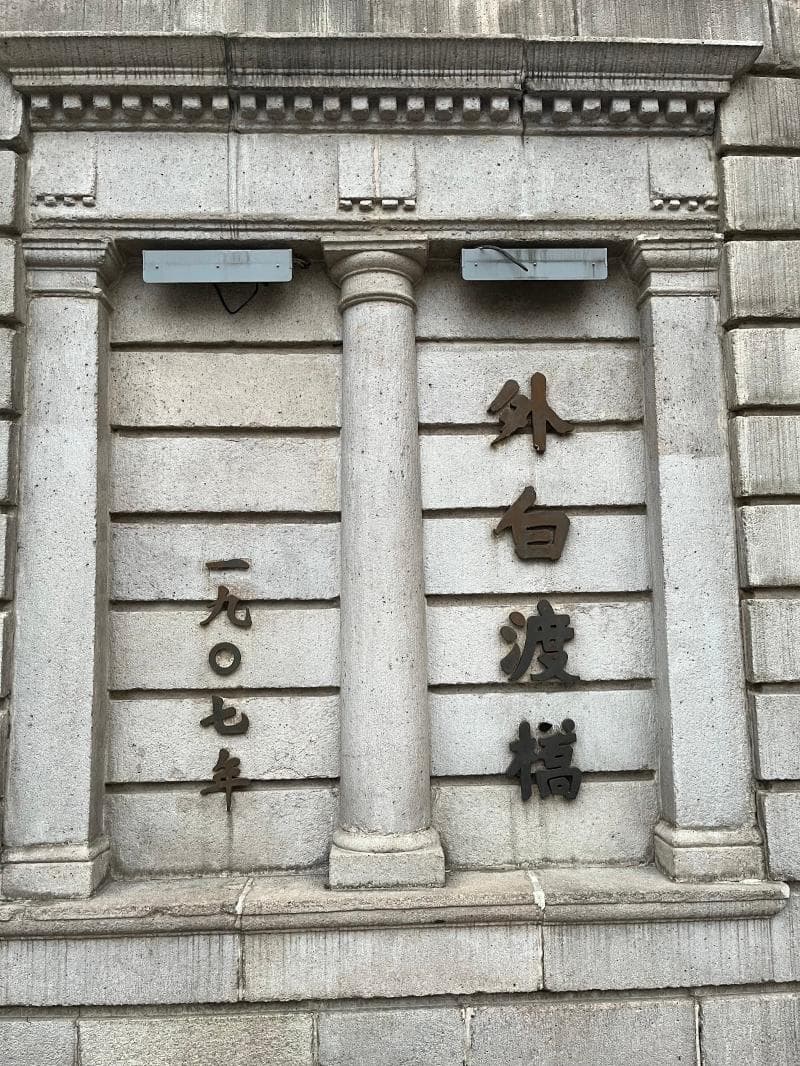
The name 'Waibaidu' itself carries historical weight, meaning 'outer free crossing bridge' or 'outside ferry crossing bridge', a direct reference to the elimination of tolls that once burdened local commuters. The bridge played a significant, albeit somber, role during the Second Sino-Japanese War (1937-1945). It served as a de facto border between the Japanese-occupied territories and the international settlements, becoming a critical escape route for tens of thousands of refugees fleeing south. It also became a painful symbol of humiliation, as locals were often forced to bow to Japanese soldiers stationed there. Recognizing its profound historical and architectural value, the Shanghai Municipal Government officially declared the Waibaidu Bridge an example of Heritage Architecture on February 15, 1994. More recently, in 2008, the bridge underwent an extensive renovation in preparation for the 2010 World Expo, ensuring its longevity and continued splendor.
What Makes It Special
Beyond its utilitarian function, the Waibaidu Bridge captivates with several distinctive qualities. Architecturally, it stands out as China's first all-steel bridge and the sole remaining camelback truss bridge in the country. Its distinctive riveted steel structure is a testament to early 20th-century engineering prowess, showcasing both strength and an elegant, curved profile.
Its strategic location is another key feature. Situated at the critical junction of Suzhou Creek and the Huangpu River, the bridge offers unparalleled panoramic vistas. From its vantage point, visitors can admire the grand colonial-era buildings lining The Bund on one side, juxtaposed against the futuristic skyscrapers of the Pudong district on the other. This unique blend of old and new urban landscapes symbolizes Shanghai's dynamic journey from a historical port to a global metropolis, making the bridge a powerful icon of the city's dual identity.
The bridge's aesthetic appeal is particularly heightened at night, when its structure, along with the surrounding cityscape, is brilliantly illuminated with colorful LED lights, creating a magical spectacle reflected on the water. This makes it a highly sought-after location for photographers aiming to capture Shanghai's iconic skyline.
Stories, Fun Facts & Local Details
Throughout its long history, the Waibaidu Bridge has accumulated several fascinating anecdotes and nicknames. While commonly known as the Garden Bridge in English, it was also colloquially referred to as the 'Beggars' Bridge' or 'Bridge of Sighs' in its earlier days, reflecting the stark contrasts of poverty and grandeur witnessed at this busy crossing.
The bridge's evocative presence has not gone unnoticed by artists and filmmakers. It has graced the silver screen in significant productions such as Ang Lee's espionage thriller 'Lust, Caution' and the film 'Kung Fu Dunk', embedding its image into the cultural fabric of Shanghai. Its appearance in such works, and its general atmosphere, often evoke a sense of nostalgia, reminiscent of classic old Shanghai films.
Remarkably, the bridge has demonstrated incredible resilience, enduring the wear of time, the ravages of war, and the ceaseless flow of traffic, undergoing various maintenance and restoration efforts to preserve its original appearance. Adjacent to the bridge are other historical points of interest, such as Huangpu Park, Shanghai's oldest public park, offering serene green spaces amid the urban bustle. The imposing Art Deco structure of Broadway Mansions, a historic hotel also known as Shanghai Mansions, stands proudly nearby, further rooting the bridge in a rich historical context.
Visitor Perspective
For any traveler exploring Shanghai, the Waibaidu Bridge offers a compelling and easily accessible experience. It is a fantastic spot for a leisurely stroll, particularly in the early morning or evening. Walking across the bridge provides dynamic views of the Bund's historic architecture and the gleaming skyscrapers of Pudong across the Huangpu River. Many visitors find the nighttime illumination of the bridge and the surrounding skyline to be especially breathtaking, creating memorable photographic opportunities.
Compared to some of the more crowded areas of The Bund, the Waibaidu Bridge often provides a slightly more relaxed atmosphere for enjoying the iconic views. As a publicly accessible landmark, there is no admission fee, making it an excellent stop for all visitors. For the best photographs, consider visiting during the 'golden hour' in the late afternoon when the light is soft, or at night to capture the dazzling array of city lights. To avoid larger crowds, weekdays and early mornings are generally recommended.
The bridge is conveniently integrated into the city's public transport network, easily reachable by metro and bus, and serves as an ideal starting or ending point for a comprehensive walking tour of The Bund. Crossing the bridge allows you to experience the transition between the vibrant districts it connects, offering diverse urban panoramas on both sides of the Suzhou Creek.
Coordinates: 121.4857442, 31.2453072
View on Google Maps💬 How Travelers Describe This Place
Based on community votes
Unique
996Photogenic
673Beautiful
585Interesting
143Must See
69
Traveler Stories
Discover memorable experiences shared by travelers who have visited this place.
No traveler stories yet.
Be the first traveler to share what made this place memorable.

Tour
By
Spot
Discover amazing places around the world. Your journey starts here.
Explore
© 2026 TourBySpot. All rights reserved.