Teatro alla Scala
Milan, Italy
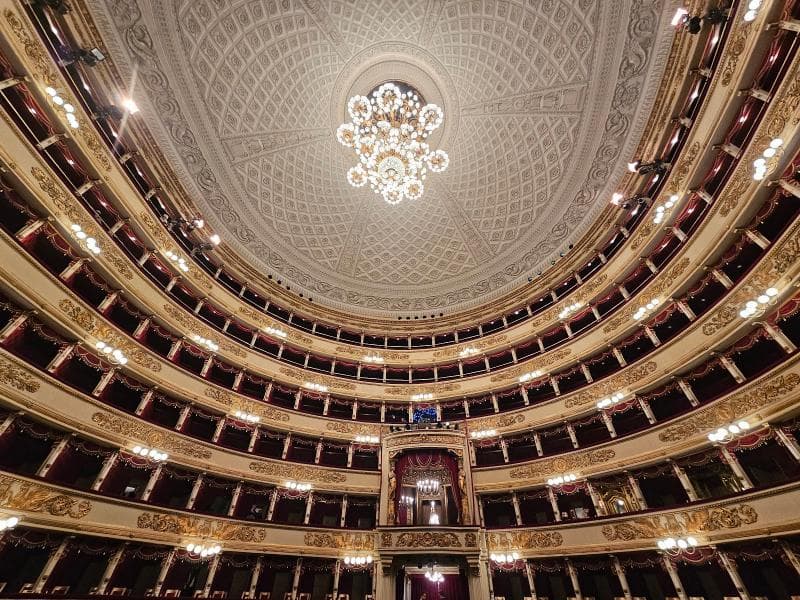
Discover Teatro alla Scala in Milan, Italy – a world-renowned opera house famed for its history, stunning architecture, and exceptional performances.
Overview
Nestled in the vibrant heart of Milan, Italy, Teatro alla Scala, affectionately known as La Scala, stands as a global beacon of operatic and ballet excellence. Since its grand inauguration in 1778, this historic opera house has captivated audiences with unparalleled performances and rich cultural significance. It is not merely a venue but a living symbol of Italy's profound dedication to music and the performing arts, drawing enthusiasts and curious travelers from every corner of the world. La Scala represents an enduring legacy of artistic innovation and tradition.
History & Cultural Background
The story of Teatro alla Scala begins with an unfortunate event: the Royal Ducal Theatre in Milan was destroyed by fire in February 1776. This calamity prompted Empress Maria Theresa of Austria, whose empire then governed Milan, to commission a magnificent new theatre. The project was entrusted to the esteemed Neoclassical architect Giuseppe Piermarini, who designed the impressive structure we see today. The new theatre was constructed on the site of the former church of Santa Maria alla Scala, from which it derives its iconic name. On August 3, 1778, La Scala opened its doors with the premiere of Antonio Salieri's opera 'Europa riconosciuta'.
In its early years, La Scala was more than just an opera house; its foyer often served as a casino, and the auditorium itself was a popular spot for social gatherings and business transactions, even during performances. The theatre underwent significant trials, including severe damage from Allied bombing during World War II in August 1943. However, Milan's commitment to its cultural heritage led to its rapid reconstruction, reopening on May 11, 1946, with a memorable concert conducted by the legendary Arturo Toscanini. More recently, La Scala underwent a major renovation from 2002 to 2004, meticulously preserving its historical integrity while integrating modern amenities.
What Makes It Special
La Scala's unparalleled acoustics are legendary, often cited as among the best in the world, creating a truly immersive experience for every performance. The theatre is home to its own distinguished ensembles, including the La Scala Theatre Chorus, La Scala Theatre Ballet, La Scala Theatre Orchestra, and the Filarmonica della Scala orchestra. Furthermore, the renowned La Scala Theatre Academy (Accademia Teatro alla Scala) fosters the next generation of talent in music, dance, stagecraft, and stage management, ensuring the continuation of Italy's rich performing arts traditions.
Throughout its history, La Scala has been the stage for countless world premieres and has hosted performances by many of Italy's greatest operatic artists and numerous finest singers from around the globe. Giuseppe Verdi, one of Italy's most celebrated composers, had a complex but ultimately profound relationship with La Scala, often choosing it for the premieres of his later masterpieces like 'Otello' and 'Falstaff'. La Scala's diverse repertoire, balancing unfamiliar works with beloved classics, further distinguishes it among leading opera houses worldwide.
Stories, Fun Facts & Local Details
A highlight of Milan's cultural calendar is 'La Prima', the opening night of La Scala's opera season on December 7th, honoring Saint Ambrose, Milan's patron saint. This gala is a spectacular social event, attracting celebrities, politicians, and dignitaries in haute couture and black-tie attire. A curious tradition dictates that all performances at La Scala must conclude before midnight, requiring longer operas to begin earlier in the evening. The theatre's design once allowed box owners to lavishly decorate their spaces, transforming them into private salons for socializing. For the keenest opera fans, the 'loggione' or two upper galleries, is considered the best place to experience the performance due to its exceptional acoustics.
Connected to the theatre is the Museo Teatrale alla Scala (La Scala Theatre Museum), which offers a treasure trove of artifacts, costumes, and historical documents. Visitors to the museum can often catch a glimpse of the theatre's magnificent interior from one of the third-order boxes, provided there are no rehearsals or performances in progress. Legend has it that the original grand chandelier crashed during the inaugural performance in 1778, though fortunately, no one was injured. The current chandelier is a lighter replica of the opulent original. Another fun detail: the theatre is said to have secret passages and trapdoors, historically used for dramatic entrances and exits by performers.
Visitor Perspective
Teatro alla Scala is conveniently situated in Milan's city center, facing Piazza della Scala, and just a short walk from the iconic Duomo Cathedral and the elegant Galleria Vittorio Emanuele II. Accessing the theatre is straightforward, with the Duomo Metro Station (Lines M1 and M3) being the closest stop, only a five-minute walk away. For those interested in delving deeper into La Scala's history and artistry, guided tours are available, offering insights into its rich past and impressive collections. It is highly recommended to book performance tickets well in advance, as they are in high demand for this world-renowned institution.
Coordinates: 9.18917, 45.4675
View on Google Maps💬 How Travelers Describe This Place
Based on community votes
Beautiful
954Unique
514Photogenic
316Interesting
196Must See
66
Traveler Stories
Discover memorable experiences shared by travelers who have visited this place.
No traveler stories yet.
Be the first traveler to share what made this place memorable.
Things to see at Teatro alla Scala



Tour
By
Spot
Discover amazing places around the world. Your journey starts here.
Explore
© 2026 TourBySpot. All rights reserved.