Main auditorium
Milan, Italy
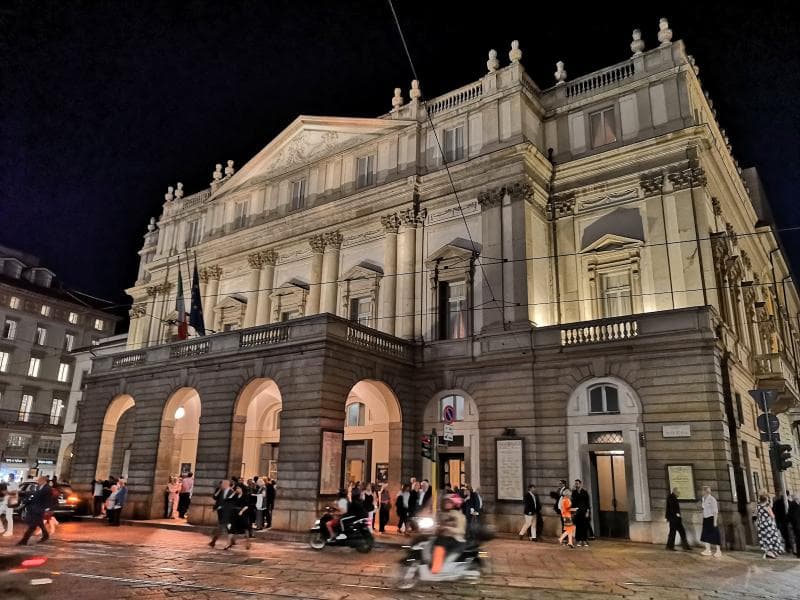
Explore the Main Auditorium of Teatro alla Scala in Milan, Italy. Discover its rich history, stunning neoclassical design, and legendary performances.
Overview
Stepping into the Main Auditorium of Teatro alla Scala in Milan, Italy, is to enter a world where centuries of operatic grandeur and architectural brilliance converge. Often simply referred to as La Scala's auditorium, this iconic space is far more than just a performance hall; it is a living monument to Italian culture and artistic excellence. Designed with a striking neoclassical aesthetic and a distinctive horseshoe shape, the auditorium captivates visitors with its opulent red velvet, shimmering gilded stucco work, and a magnificent central chandelier. It is a place where every detail, from the carefully calibrated acoustics to the tiered boxes, has been meticulously crafted to create an unparalleled theatrical experience. With a seating capacity of approximately 2,015 people, it remains an intimate yet grand setting for the world's most celebrated operas, ballets, and concerts, beckoning travelers to witness history unfold with every note and movement.
History & Cultural Background
The genesis of Teatro alla Scala dates back to the late 18th century. After the Ducal Theatre was tragically destroyed by fire in 1776, Empress Maria Theresa of Austria commissioned the construction of a new, grander venue. The esteemed neoclassical architect Giuseppe Piermarini was entrusted with this monumental task. His design gave birth to the 'Nuovo Regio Ducale Teatro alla Scala,' inaugurated on August 3, 1778, with Antonio Salieri's opera 'Europa riconosciuta.' The theatre was named after the Church of Santa Maria alla Scala, which previously stood on the site. From its earliest days, La Scala quickly established itself as a vibrant social hub for Milanese nobility and the wealthy, even serving as a casino in its foyer and a bustling place for business transactions within the auditorium itself. Throughout its long history, La Scala has endured significant challenges. It suffered considerable damage during the Allied bombing raids of August 1943 in World War II. However, Milan's resilience shone through, and the theatre was rapidly rebuilt, reopening with a memorable concert conducted by the legendary Arturo Toscanini on May 11, 1946. A major renovation between 2002 and 2004, led by architect Mario Botta, further modernized the facilities while meticulously preserving its historic beauty and enhancing its technical capabilities.
What Makes It Special
Beyond its historical significance, the Main Auditorium of Teatro alla Scala is revered for its extraordinary acoustic properties. Piermarini's ingenious design, incorporating specific materials and a unique ceiling structure with wooden rods, created an almost perfect sound box, allowing every nuance of performance to reach the audience with clarity. The horseshoe-shaped layout, characteristic of 18th-century Italian theatres, ensures optimal sightlines from nearly every seat across its four tiers of boxes and two galleries. Each box, once individually decorated by its aristocratic owners, now contributes to the unified aesthetic of crimson and gold that defines the space. The immense stage, one of the largest in Italy, facilitates elaborate productions and complex set designs. Modern enhancements, like the electronic libretto system installed in seats during the 2002-2004 renovation, allow audiences to follow performances in multiple languages, bridging any potential language barriers and enriching the experience for international visitors.
Stories, Fun Facts & Local Details
The Main Auditorium is steeped in fascinating stories. Legend has it that on its opening night in 1778, the grand chandelier ominously crashed to the ground during Salieri's opera; fortunately, no one was injured. The current stunning Bohemian crystal chandelier, with its 383 bulbs, is a faithful copy of the original, rebuilt after the wartime destruction. Another local legend speaks of a 'cursed' third-tier box on the right side of the theatre, said to bring misfortune to those who sit there. Giuseppe Verdi, one of Italy's greatest composers, famously had a contentious relationship with La Scala in his early career, refusing for a time to allow his works to be performed there due to disagreements over musical interpretations. However, he later reconciled, and many of his operas premiered on this very stage. The annual opening night on December 7th, Saint Ambrose's Day (Milan's patron saint), is a highly anticipated and prestigious event, marking the beginning of the opera season with significant cultural and social importance.
Visitor Perspective
For the curious traveler, visiting the Main Auditorium of Teatro alla Scala offers a profound connection to the heart of Italian opera. While attending a performance is the ultimate way to experience its magic, even a daytime visit provides immense insight. The La Scala Theatre Museum, accessible from the theatre's foyer, offers a glimpse into its rich history through collections of costumes, paintings, and historical documents. Crucially, a museum ticket often includes the opportunity to view the majestic auditorium itself from the third-order boxes, provided there are no rehearsals or performances underway. From this vantage point, one can appreciate the scale, the intricate details of the gilded decorations, the lush red velvet, and the impressive stage where countless legends have performed. It's a chance to soak in the atmosphere of a place that has hosted the world's most celebrated artists and premiered iconic works, leaving an indelible mark on the global cultural landscape. The sense of history, the artistic resonance, and the sheer beauty of the space make it an unforgettable stop for anyone exploring Milan.
Coordinates: 9.18955, 45.4674
View on Google Maps💬 How Travelers Describe This Place
Based on community votes
Unique
680Interesting
588Photogenic
566Beautiful
432Must See
316
Traveler Stories
Discover memorable experiences shared by travelers who have visited this place.
No traveler stories yet.
Be the first traveler to share what made this place memorable.

Tour
By
Spot
Discover amazing places around the world. Your journey starts here.
Explore
© 2026 TourBySpot. All rights reserved.