Tajikistan National Library
Dushanbe, Tajikistan
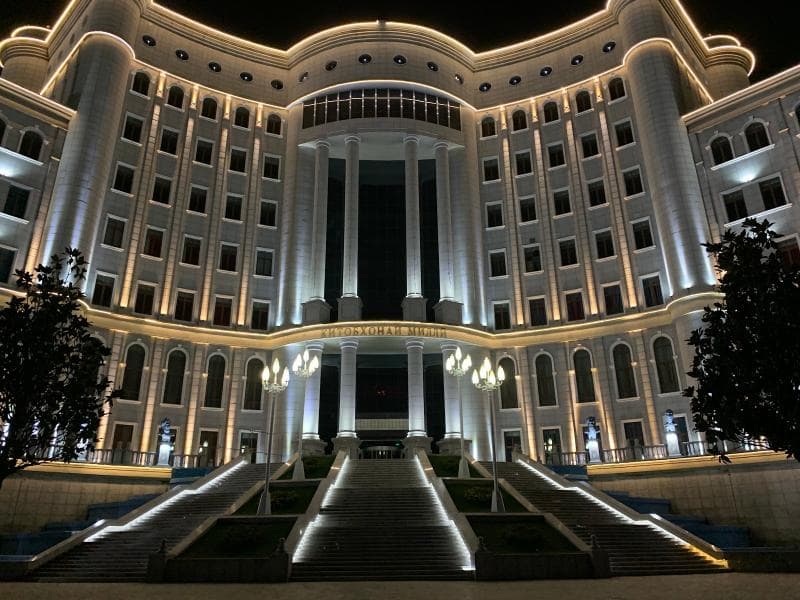
Explore the National Library of Tajikistan in Dushanbe, a stunning architectural marvel and Central Asia's largest library, rich in history and culture.
Overview
The National Library of Tajikistan, nestled in the vibrant heart of Dushanbe, stands as a monumental tribute to knowledge and culture. This architectural marvel is not merely a repository of books, but a grand symbol of national pride and intellectual heritage, recognized as the largest library in Central Asia. Its striking nine-story edifice, designed to resemble an open book, invites locals and travelers alike to explore its vast collections and immerse themselves in the rich tapestry of Tajik history and literature.
Functioning as the country's primary cultural institution, the library is dedicated to preserving the cultural legacy of the Tajik people and serves as a vital research, information, and cultural hub. It houses millions of documents, including a significant collection of manuscripts, periodicals, and modern publications, catering to a diverse readership in multiple languages.
History & Cultural Background
The origins of the National Library of Tajikistan trace back to January 1933, when it was established as a city library in Stalinabad, the former name for Dushanbe. Just a year later, in 1934, it was bestowed with the esteemed name of the classical Persian poet, Abulkasim Ferdowsi, in honor of the millennial anniversary of his epic work, the 'Shahnameh'. This naming underscored its deep connection to the rich literary traditions of the region.
Over the decades, the library grew in significance, eventually receiving the status of the National Library of the Republic of Tajikistan in 1993. A pivotal moment arrived on March 20, 2012, with the grand opening of its impressive new building, a project commissioned by President Emomali Rahmon in 2007. This modern structure replaced the older facility, marking a new era for the preservation and dissemination of knowledge in Tajikistan. The construction of this landmark was partly supported by a Chinese company, symbolizing international cooperation in cultural development.
What Makes It Special
Beyond its impressive size, the National Library of Tajikistan distinguishes itself through its iconic architecture and comprehensive collections. The nine-story building, with its grand facade extending 167 meters and reaching 52 meters in height, is a powerful visual metaphor for an open book, symbolizing the limitless world of knowledge it contains.
In front of its central facade, visitors are greeted by 22 busts honoring prominent figures from Tajik history, literature, science, and culture, creating an evocative 'gallery' of national heroes. Inside, the library boasts numerous reading rooms, with some sources citing 25 or more, and over 274 workstations for readers, alongside several exhibition halls dedicated to ancient manuscripts, rare books, and new literary acquisitions. The library also embraces modern technology, offering an electronic catalog, digital library, and access to a wide array of information and communication technologies, enhancing the research experience for its patrons. Its vast collection includes over three million documents in more than 50 languages, with a particular focus on works in the Tajik language and local history.
Stories, Fun Facts & Local Details
Affectionately referred to as the 'Palace of the Book' in Tajikistan, the National Library is more than just a building; it's a living monument to the nation's intellectual spirit. Its significance is further highlighted by its appearance on the Tajik 200 somoni banknote, solidifying its status as a national icon and a source of collective pride.
The library's Department of Manuscripts holds a particularly valuable collection, preserving a unique treasury of Persian-Tajik literature. This includes original works and ancient manuscripts from renowned scholars and writers of the Middle Ages, such as Rudaki, Ferdowsi, Ibn Sina (Avicenna), Saadi, Omar Khayyam, and Rumi. These priceless artifacts offer a tangible link to centuries of profound intellectual and artistic achievement, reflecting Tajikistan's deep roots in world civilization. The library's commitment to preserving this heritage, combined with its role as a modern research institution, makes it a true crossroads of past and future.
Visitor Perspective
For curious travelers, a visit to the National Library of Tajikistan offers a unique glimpse into the country's cultural heart. The impressive architecture alone is worth the trip, providing excellent photo opportunities, especially of the grand entrance and the busts of historical figures. It's advisable to inquire about guided tours upon arrival, as self-guided exploration may require an access card or a guide. These tours, often available in English, can offer insightful details about the building and its collections.
Exploring the different sections, such as the Iranian literature room, the children's library, or the Braille book collection, reveals the library's diverse offerings. To ensure a peaceful visit and avoid potential crowds, especially school groups, weekday mornings in spring or fall are often recommended. While entry might be free for citizens, there can be a nominal fee for guided tours for international visitors. Visitors are encouraged to dress modestly, reflecting respect for this significant cultural institution.
Coordinates: 68.78366, 38.57337
View on Google Maps💬 How Travelers Describe This Place
Based on community votes
Beautiful
673Photogenic
219Interesting
186Must See
143Unique
80
Traveler Stories
Discover memorable experiences shared by travelers who have visited this place.
No traveler stories yet.
Be the first traveler to share what made this place memorable.
Things to see at Tajikistan National Library



Tour
By
Spot
Discover amazing places around the world. Your journey starts here.
Explore
© 2026 TourBySpot. All rights reserved.