Stradun
Dubrovnik, Croatia
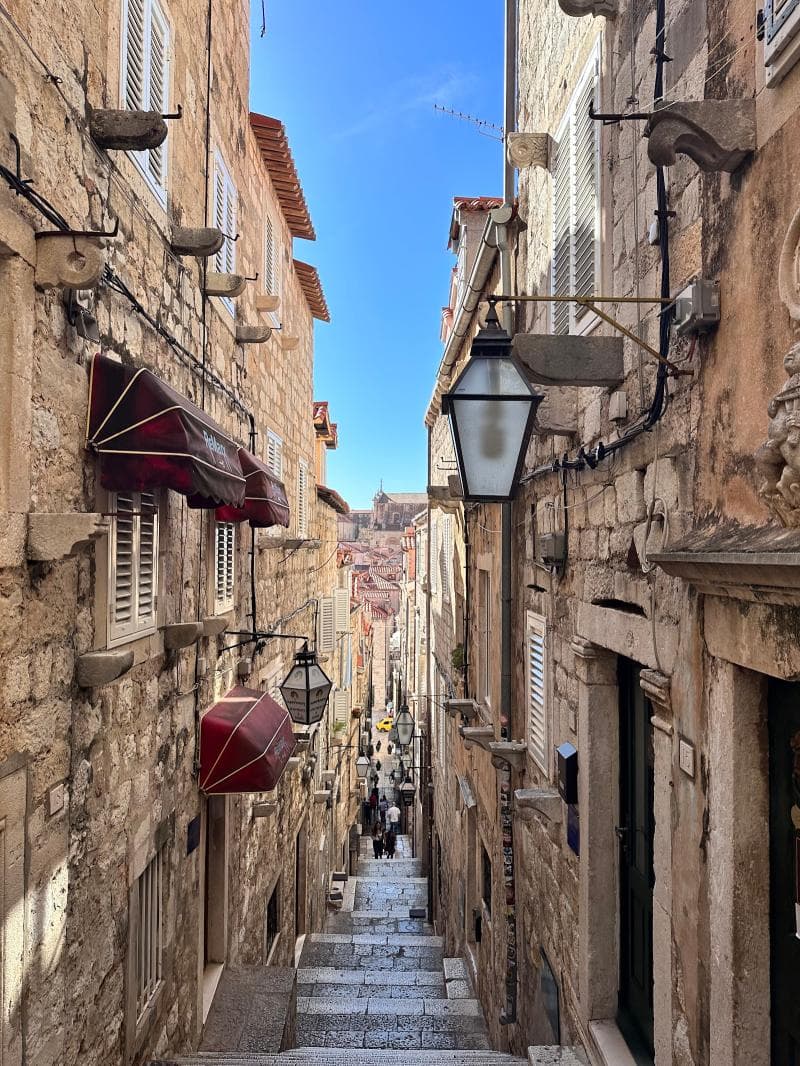
Discover Stradun, the iconic limestone main street in Dubrovnik, Croatia's Old Town. Explore its rich history, Baroque architecture, and vibrant culture. A must-see pedestrian promenade.
Overview
Stradun, also officially known as Placa, is the iconic main street that gracefully bisects the Old Town of Dubrovnik, Croatia. This magnificent pedestrian thoroughfare stretches for approximately 300 meters, connecting the western Pile Gate to the eastern Ploče Gate and Luža Square. Paved with gleaming limestone, Stradun serves as the vibrant central artery of this historic city, a designated UNESCO World Heritage site. It's more than just a street; it is the beating heart of Dubrovnik, a place where history resonates with every step on its polished surface.
History & Cultural Background
The origins of Stradun trace back to a fascinating transformation. In the early Middle Ages, specifically between the 11th and 12th centuries, the area where Stradun now stands was a marshy sea channel. This channel famously separated two distinct settlements: Ragusa, a Roman-era town on a rocky island, and Dubrava, a Slavic settlement located on the mainland. The filling in of this channel was a pivotal moment, as it physically united these communities, laying the groundwork for the consolidated city that would become the renowned Republic of Ragusa. By the 13th century, Stradun had solidified its role as Dubrovnik's main thoroughfare, and its distinctive limestone paving was completed by 1468.
A catastrophic earthquake in 1667, followed by a destructive fire, ravaged much of Dubrovnik, fundamentally reshaping the city's architecture. The rebuilding efforts after this disaster were instrumental in giving Stradun its characteristic uniform Baroque appearance. The Republic of Ragusa enacted strict laws governing the reconstruction, mandating that all new residential buildings along the street adhere to a consistent design: shops on the ground floor, living quarters above, and kitchens often placed in the attics to mitigate fire risks. This meticulous planning resulted in the harmonious and symmetrical facades that travelers admire today. The street's names themselves reflect its rich past; 'Stradun' is derived from the Venetian word 'stradone', meaning 'big street', while 'Placa' originates from the Latin 'plateau', signifying 'broad street'. These names underscore Dubrovnik's historical ties and its significance as a major maritime republic.
What Makes It Special
Stradun's unique allure stems from a blend of natural beauty and thoughtful urban design. The most striking feature is arguably its pavement: flat slabs of polished limestone, not marble as often assumed, worn smooth by centuries of countless footsteps. This stone surface catches the sunlight, creating a luminous, almost pearlescent glow, especially enchanting during early mornings or after rain. The architectural harmony of the Baroque buildings lining the street is another hallmark; their nearly identical facades create a cohesive and visually pleasing corridor that feels both grand and intimate. As a completely pedestrianized zone, Stradun offers a peaceful environment for strolling, free from vehicular traffic, making it an ideal setting for locals and visitors to gather and socialize. It serves as a natural promenade and a central gathering point, connecting many of Dubrovnik's most important landmarks, including the Large Onofrio's Fountain at one end and the Sponza Palace, Church of St. Blaise, Rector's Palace, and Orlando's Column towards the other.
Stories, Fun Facts & Local Details
Stradun is steeped in stories, both ancient and contemporary. It's the stage for Dubrovnik's vibrant cultural life, hosting major events like the world-renowned Dubrovnik Summer Festival, where performances come alive against its historic backdrop. The Feast of St. Blaise, honoring the city's patron saint, sees grand processions fill the street with joyous celebrations. Even New Year's Eve transforms Stradun into a spectacular venue. A fascinating historical detail lies in the uniform architecture: the P-shaped windows on the ground-floor shops were cleverly designed to maximize the display of goods, a testament to Dubrovnik's mercantile past. Another curious feature is that kitchens in the original Baroque houses were typically located in the attics, a fire prevention measure implemented after the devastating 1667 earthquake.
Local lore suggests that 'if you haven't taken a walk across the Stradun, you haven't been in Dubrovnik!', highlighting its indispensable role in the city's identity. More recently, Stradun even played host to an exhibition tennis match between legends John McEnroe and Goran Ivanišević in 2010. When observing locals, you might notice the traditional 'gir' – a leisurely promenade up and down the street, a social ritual of greeting friends and observing daily life.
Visitor Perspective
Experiencing Stradun is a highlight of any visit to Dubrovnik. Its ambiance shifts throughout the day, offering different charms. Early mornings provide a serene setting for photography, with the polished limestone reflecting the soft light and fewer crowds. As the day progresses, the street buzzes with activity, becoming a lively hub of cafes, shops, and street performers. Late afternoons and evenings offer a particularly magical atmosphere as the sun sets and the streetlights illuminate the ancient stone, inviting leisurely strolls and people-watching. While Stradun itself is a flat and easy walk, be mindful that the exceptionally smooth limestone can become quite slippery when wet. Though bustling, especially during peak tourist seasons, stepping into the narrow side streets and alleys leading off Stradun often reveals quieter corners, authentic local establishments, and sometimes even more affordable dining options. For a breathtaking panoramic view of Stradun and the entire Old Town, a walk along Dubrovnik's ancient city walls is highly recommended, offering a bird's-eye perspective of this magnificent street and its surroundings.
Coordinates: 18.10897, 42.64136
View on Google Maps💬 How Travelers Describe This Place
Based on community votes
Must See
948Beautiful
913Photogenic
499Unique
337Interesting
94
Traveler Stories
Discover memorable experiences shared by travelers who have visited this place.
No traveler stories yet.
Be the first traveler to share what made this place memorable.
Things to see at Stradun



Tour
By
Spot
Discover amazing places around the world. Your journey starts here.
Explore
© 2026 TourBySpot. All rights reserved.