Clock Tower
Dubrovnik, Croatia
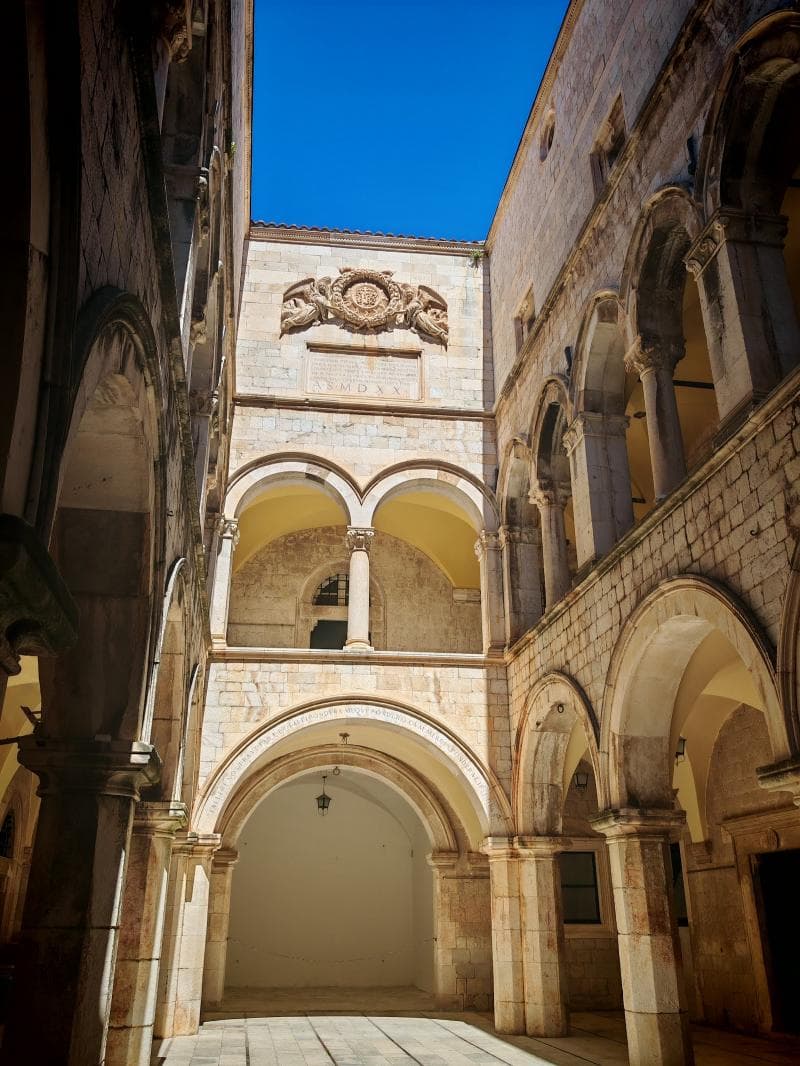
Explore the historic Dubrovnik Clock Tower on Stradun, Croatia. Discover its story, the iconic Green Men, and its role as a resilient symbol in Dubrovnik's Old Town.
Overview
At the bustling eastern end of Stradun, Dubrovnik's main promenade, stands the iconic Clock Tower, a beacon of history and resilience in the heart of the Old Town. Rising gracefully above Luža Square, this 31-meter tall landmark has not only marked time for centuries but has also silently witnessed the ebb and flow of life in this historic Croatian city. Its elegant presence, with a distinct dome and large clock face, makes it an unmissable sight for anyone exploring Dubrovnik's ancient streets.
More than just a timepiece, the Clock Tower is a central feature of Luža Square, surrounded by other significant architectural treasures like the Sponza Palace, the Church of Saint Blaise, and the Orlando Column. It serves as a visual anchor for the Stradun, drawing visitors towards its intricate details and the stories it holds.
History & Cultural Background
The first city bell tower in Dubrovnik was originally constructed in 1444, a testament to the city's meticulous approach to public life and order. This initial structure, while enduring the devastating 1667 Dubrovnik earthquake, began to lean precariously towards the Stradun in the early 19th century, raising safety concerns.
Consequently, the decision was made to dismantle it in 1928, only to meticulously rebuild it in 1929 to faithfully replicate its original design. Even this reconstructed tower faced nature's wrath, suffering damage in the 1979 Montenegro earthquake, necessitating further restoration work between 1987 and 1988. This continuous cycle of construction, destruction, and restoration underscores Dubrovnik's unwavering spirit. The tower's bronze bell, a venerable piece of history, was cast in 1506 by the renowned metal founder Ivan Rabljanin, a master craftsman deeply connected with Dubrovnik's rich past.
What Makes It Special
What truly sets Dubrovnik's Clock Tower apart are the two green bronze figures positioned above the clock face, affectionately known as Maro and Baro, or locally as the 'Zelenci,' meaning 'Green Men.' These mechanical figures, known as jacquemarts, have for centuries performed their simple yet crucial task: striking the bell to mark the hours for a city that thrived on precise timekeeping for trade, council meetings, and daily life.
The present Zelenci are replicas; the original figures, dating from around 1478 and famed for their distinctive green patina acquired over centuries, are now carefully preserved and displayed in the Cultural History Museum within the Rector's Palace. This allows the ritual of timekeeping to continue in the square while safeguarding the fragile originals indoors. Another easily overlooked yet fascinating detail is the small moon-phase display, a subtle nod to an era when public timekeeping encompassed more than just hours, connecting daily rhythms with lunar cycles.
Stories, Fun Facts & Local Details
The 'Zelenci' are more than just bronze statues; they are characters ingrained in Dubrovnik's lore. Their names, Maro and Baro, are deeply local, and their green hue, a result of natural patination, gave them their enduring nickname, the 'Green Men.' For generations, the sound of their hammers striking the bell was not just a signal of the hour, but a constant, reassuring presence that regulated the city's pulse.
Imagine the vibrancy of the Stradun throughout history, with the bells chiming across the marketplace, signaling everything from the opening of city gates to important decrees. The fact that the original figures are deemed so precious they reside in a museum speaks volumes about their historical and cultural value to the people of Dubrovnik. Listening for the distinct chime of the bell, especially at noon, from the open space of Luža Square, offers a sensory connection to this living history.
Visitor Perspective
As a visitor to Dubrovnik, the Clock Tower is an intrinsic part of the Old Town experience. Its prominent position at the end of Stradun makes it a natural focal point as you explore. While interior access is typically not granted, its external beauty and historical significance are profound. Take a moment to stand in Luža Square, gaze up at its elegant architecture, and observe the details of the clock face and the Zelenci.
Consider timing your visit to hear the bell strike the hour, a sound that has echoed through these ancient walls for centuries. From this central vantage point, you are perfectly situated to appreciate the surrounding landmarks, such as the grand Sponza Palace and the ornate Church of Saint Blaise, all contributing to the rich tapestry of Dubrovnik's Old Town. The Clock Tower is a powerful symbol of Dubrovnik's enduring spirit and its commitment to preserving its rich heritage.
Coordinates: 18.11065, 42.64096
View on Google Maps💬 How Travelers Describe This Place
Based on community votes
Interesting
951Beautiful
748Must See
499Photogenic
491Unique
427
Traveler Stories
Discover memorable experiences shared by travelers who have visited this place.
No traveler stories yet.
Be the first traveler to share what made this place memorable.

Tour
By
Spot
Discover amazing places around the world. Your journey starts here.
Explore
© 2026 TourBySpot. All rights reserved.