Evening Promenade Areas
Dubrovnik, Croatia
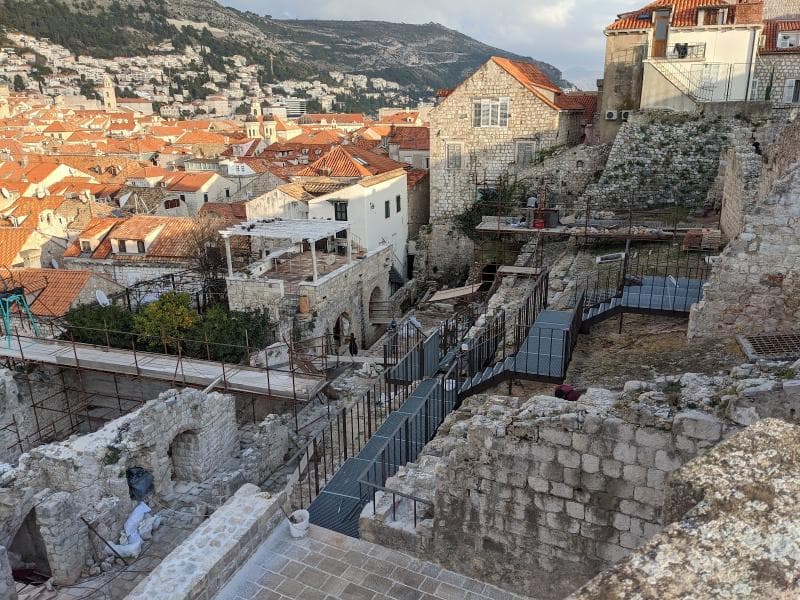
Discover Stradun's enchanting 'Evening Promenade Areas' in Dubrovnik, Croatia. Stroll the historic limestone street as it transforms under twilight.
Overview
Stradun, also known affectionately by locals as Placa, serves as the vibrant main street and the very heart of Dubrovnik's Old Town in Croatia. This iconic limestone-paved thoroughfare stretches approximately 300 meters, connecting the western Pile Gate to the eastern Ploče Gate. While bustling throughout the day, the 'Evening Promenade Areas' of Stradun truly come alive after sunset, transforming into a magical pathway where the city's rich history and present-day charm beautifully converge. It is a completely pedestrianized street, inviting a leisurely pace and a deep immersion into the surrounding ambiance.
As daylight fades, the polished stone of Stradun, worn smooth by centuries of footsteps, begins to reflect the warm glow of streetlights, creating an almost theatrical setting. This transformation marks the shift from a busy daytime attraction to a tranquil evening gathering place for both residents and visitors alike.
History & Cultural Background
The origins of Stradun are rooted in a fascinating historical transformation. What is now this grand promenade was once a narrow sea channel that separated two small settlements: the Roman-Greek island of Ragusa and the Slavic settlement of Dubrava on the mainland. In the 11th and 12th centuries, this channel was gradually filled in, physically uniting the two communities and laying the foundation for the unified city of Dubrovnik.
The street's current elegant Baroque appearance largely dates back to the aftermath of the devastating 1667 earthquake and subsequent fire. This catastrophic event destroyed much of the city, leading the Republic of Ragusa to implement strict building regulations. The result was a remarkable, uniform reconstruction that ensured architectural harmony along Stradun, with houses featuring shops on the ground floor and residential quarters above, all adhering to a consistent design.
For centuries, Stradun has been more than just a street; it has been the economic, social, and cultural artery of Dubrovnik. It has witnessed countless public celebrations, processions—including the revered Feast of Saint Blaise, the city's patron saint—and served as a vital meeting point where news was exchanged and daily life unfolded.
What Makes It Special
Stradun's unique appeal lies in its captivating blend of historical grandeur and intimate, living urban space. The extraordinary limestone pavement, often mistaken for marble, is a testament to its long history, gleaming underfoot and reflecting light beautifully, especially during the 'golden hour' and into the evening.
The architectural uniformity enforced after the 1667 earthquake gives Stradun its distinctive, cohesive aesthetic. Every building contributes to a harmonious streetscape, making it feel less like a museum and more like an active, breathing part of the city. The absence of vehicular traffic further enhances its charm, allowing pedestrians to wander freely, absorb the sounds, and appreciate the intricate details of the facades.
As evening descends, Stradun undergoes a profound transformation. The daytime crowds thin, the pace slows, and a sense of calm permeates the air. The street becomes imbued with a soft, romantic atmosphere, where the illuminated historical buildings create a stunning backdrop for an unhurried stroll.
Stories, Fun Facts & Local Details
The very names of this iconic street tell a story. 'Placa' derives from the Greek and Latin 'platea,' meaning 'street' or 'broad street,' while 'Stradun' is a Venetian term, ironically meaning 'big street,' hinting at its perceived importance rather than its actual length.
A charming local tradition is the 'đir' or 'điravanje,' a leisurely evening promenade up and down Stradun, where locals meet friends, exchange greetings, and simply enjoy watching the world go by. This age-old practice highlights the street's enduring role as a social stage.
One interesting detail often missed are the distinct P-shaped shop windows that line Stradun. These were designed to allow goods to be displayed prominently, with the sill acting as a counter for transactions, reflecting the street's historical commercial importance.
Beyond daily life, Stradun plays host to significant cultural events. The annual Feast of Saint Blaise procession, a UNESCO-recognized intangible cultural heritage, parades through Stradun every February, commemorating the city's patron saint. During the summer, it also becomes a venue for concerts and performances, further solidifying its role as Dubrovnik's cultural heart.
Visitor Perspective
Experiencing Stradun in the evening offers a completely different perspective than during the day. As the sun sets and the city lights flicker on, the polished limestone pavement takes on a pearlescent sheen, reflecting the glow and creating a magical path. Families stroll with ice cream, couples find quiet corners on church steps, and the general rush of the day recedes, giving way to a more relaxed and intimate atmosphere.
The air fills with the murmur of conversations, occasional strains of music from nearby cafes, and the soft echo of footsteps on the ancient stone. It's a time when the historical significance of the buildings feels more palpable, and the stories embedded in every stone seem to whisper in the twilight. An evening promenade on Stradun is not merely a walk; it's an immersion into the soul of Dubrovnik, a chance to connect with its timeless charm and observe the traditional 'korzo'—the social evening walk that has defined coastal Croatian life for generations.
Coordinates: 18.10897, 42.64136
View on Google Maps💬 How Travelers Describe This Place
Based on community votes
Must See
950Beautiful
287Photogenic
255Unique
231Interesting
86
Traveler Stories
Discover memorable experiences shared by travelers who have visited this place.
No traveler stories yet.
Be the first traveler to share what made this place memorable.

Tour
By
Spot
Discover amazing places around the world. Your journey starts here.
Explore
© 2026 TourBySpot. All rights reserved.