Sibelius Monument
Helsinki, Finland
Discover Helsinki's iconic Sibelius Monument, a stunning abstract sculpture in Sibelius Park honoring Finland's national composer, Jean Sibelius.
Overview
Nestled within the serene Sibelius Park in Helsinki, Finland, stands the iconic Sibelius Monument, a compelling tribute to the country's most revered composer, Jean Sibelius (1865-1957). This monumental sculpture, designed by Finnish artist Eila Hiltunen, is a striking example of modern art that has become one of Helsinki's most recognizable landmarks. Its unique abstract form, comprising hundreds of welded steel pipes, aims to capture the essence and spirit of Sibelius's music rather than merely depicting the man himself.
The monument offers visitors a contemplative experience, blending art with nature in a beautiful seaside setting. It is not just a static sculpture but an immersive artwork that subtly interacts with its environment, inviting reflection on Finland's rich cultural heritage and its deep connection to the natural world.
History & Cultural Background
The story of the Sibelius Monument is deeply intertwined with Finland's national identity and a pivotal moment in its art history. Jean Sibelius was a national hero whose music played a significant role in shaping Finnish nationhood during times of Russian rule, becoming an anthem of Finnish nationalism.
Following Sibelius's death in 1957, the Sibelius Society organized a national design competition for a memorial to honor him. The winning entry in 1962 was 'Passio Musicae' by Eila Hiltunen, an abstract design composed of welded steel pipes. This unconventional approach sparked considerable controversy in Finland's then-conservative art scene, as many expected a traditional, figurative statue of the composer.
To address public criticism and bridge the divide between abstract and figurative art, Hiltunen agreed to add a separate, high-relief bust of Sibelius next to the main abstract structure. The completed monument was unveiled on September 7, 1967, and was donated by the Sibelius Society to the City of Helsinki, where it has since been managed by the Helsinki Art Museum.
What Makes It Special
The Sibelius Monument is remarkable for its innovative design and profound symbolism. It consists of approximately 569 to over 600 acid-resistant stainless steel pipes, welded together to create an undulating, wave-like pattern. This impressive structure stands 8.5 meters high, 10.5 meters long, and 6.5 meters deep, weighing a substantial 24 tonnes.
Hiltunen intentionally designed the pipe cluster to symbolically evoke Sibelius's music, a visual expression of his compositions' rugged expressiveness and connection to nature. While some observers liken the pipes to an organ or sound waves, others see reflections of the Finnish landscape, such as birch trees, shore reeds, or even the ethereal northern lights. The monument's material, stainless steel, has ensured it has neither patinated nor corroded over the decades, maintaining its original appearance.
Its creation also marked a significant moment for Finnish sculpture, with Hiltunen pioneering the use of welding techniques, which was seen as a challenge to 1960s social norms, especially for a female artist in a male-dominated field.
Stories, Fun Facts & Local Details
The initial controversy surrounding the monument's abstract nature is a fascinating part of its legacy. Critics argued it did not clearly represent Sibelius, particularly since he composed little organ music, despite the pipes' resemblance to organ pipes. The eventual addition of Sibelius's bust was a direct result of this public debate, a compromise that still sparks discussion among art historians today regarding its visual integration.
A unique aspect of the monument is its subtle interactive quality. Although Hiltunen did not design it as a sound sculpture, the hollow steel pipes can generate soft, resonant sounds when wind passes through them, and they echo voices and birdsong. This acoustic element adds another layer to experiencing Sibelius's musical spirit in a tangible way.
Beyond Helsinki, the monument has garnered international recognition. A smaller version of the Sibelius Monument is located at the UNESCO headquarters in Paris, and sculptural details of the work can be found at the United Nations headquarters in New York. Additionally, a 6.5-meter high section of the monument was displayed at the 1967 World Exhibition in Montreal.
Visitor Perspective
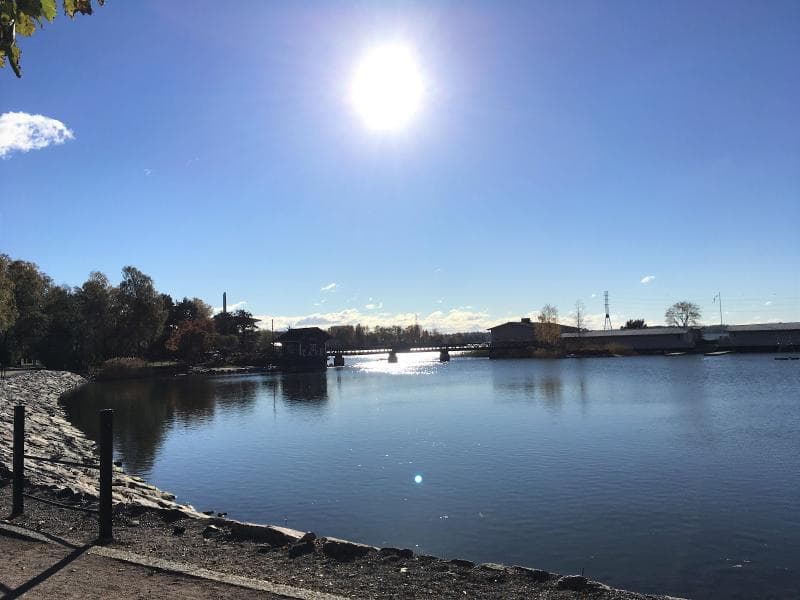
The Sibelius Monument, situated within the picturesque Sibelius Park, offers a peaceful and accessible experience for all visitors. As a public art installation in an open park, entry is free, and it is accessible 24/7 year-round, making it a flexible addition to any Helsinki itinerary.
Visitors can wander through the park, approach the monument freely, and even stand within the cavity of the pipe cluster to experience its scale and acoustics firsthand. The site is wheelchair-friendly and easily reachable by Helsinki's public transport system, including buses and trams, making it convenient for exploration. The monument looks especially striking during daylight hours and takes on different charms across Finland's distinct seasons, whether set against summer's greenery, autumn's colors, or a snowy winter backdrop. Many choose to combine a visit with a stroll along the nearby seaside or a stop at the charming, historic Cafe Regatta, known for its traditional Finnish treats and cozy atmosphere.
Coordinates: 24.913588, 60.182018
View on Google Maps💬 How Travelers Describe This Place
Based on community votes
Interesting
443Must See
414Unique
310Beautiful
277Photogenic
233
Traveler Stories
Discover memorable experiences shared by travelers who have visited this place.
No traveler stories yet.
Be the first traveler to share what made this place memorable.
Things to see at Sibelius Monument



Tour
By
Spot
Discover amazing places around the world. Your journey starts here.
Explore
© 2026 TourBySpot. All rights reserved.