Pipe Sculpture
Helsinki, Finland
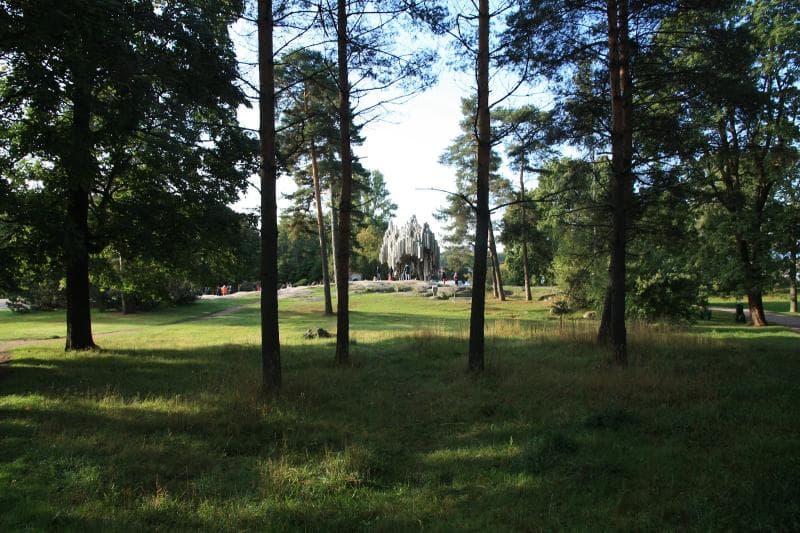
Explore the iconic Pipe Sculpture at Sibelius Monument in Helsinki, Finland. Discover its abstract beauty, historical controversies, and the musical legacy it embodies.
Overview
Within Helsinki's serene Sibelius Park, the remarkable Pipe Sculpture stands as the heart of the Sibelius Monument, a profound tribute to Finland's legendary composer, Jean Sibelius (1865-1957). Unveiled on September 7, 1967, this iconic public artwork was conceived by the pioneering Finnish sculptor Eila Hiltunen.
The Pipe Sculpture, officially titled 'Passio Musicae', is an abstract composition of over 600 individually welded, acid-resistant stainless steel pipes. These hollow tubes vary in length and diameter, forming an undulating, wave-like structure that measures approximately 8.5 meters high, 10.5 meters wide, and 6.5 meters deep. Weighing around 24 tons, its form is often interpreted as evoking organ pipes, ethereal sound waves, or the stark beauty of Finnish nature. A more traditional bust of Sibelius, a sculpted portrait, complements the abstract pipes, adding another layer to this national memorial.
History & Cultural Background
The inception of the Sibelius Monument followed the composer's death in 1957, leading the Sibelius Society to launch a national competition for his memorial. The competition, held in 1961-1962, ignited a significant cultural debate between advocates for abstract art and those demanding a traditional, figurative representation. Eila Hiltunen's groundbreaking abstract design, 'Passio Musicae', ultimately won.
Public reaction to the abstract sculpture was initially controversial. Many Finns anticipated a realistic depiction of Sibelius, and critics questioned the pipes' relevance, noting Sibelius composed little for the organ. This intense discourse led to a compromise: a separate, lifelike bust of Sibelius was later added beside the pipe structure. This historical controversy became an integral part of the monument's story, catalyzing the modernization of Finland's art landscape. Hiltunen herself was a trailblazer, with her pioneering use of welding in sculpture challenging the male-dominated artistic fields of the 1960s.
What Makes It Special
The Pipe Sculpture's profound impact stems from its audacious abstraction, successfully transmuting the ephemeral nature of music into a permanent physical form. Its hundreds of intricately welded and hand-textured stainless steel pipes exemplify Hiltunen's innovative artistry and technical prowess. The use of acid-resistant steel, coupled with specialized treatments, ensures the monument's lasting integrity, resisting corrosion and patination for decades.
Visitors are invited to walk directly among and within the compelling structure, experiencing the artwork's scale and detail immersively. Though not initially designed as a sound sculpture, the hollow pipes often resonate with the wind, producing subtle, almost musical hums and echoes that deepen the connection to Sibelius's compositions. This unique acoustic dimension, combined with the sculpture's visual suggestions of Nordic landscapes—from birch forests to shore reeds—creates a powerful dialogue between Sibelius's legacy, Finnish nature, and contemporary artistic expression.
Stories, Fun Facts & Local Details
Eila Hiltunen's personal dedication to the monument was extraordinary; she meticulously textured each pipe herself, showcasing her belief that artistic authenticity demands direct engagement. Her pioneering welding methods not only defined her style but also opened new avenues for sculpture in Finland.
The monument's original title, 'Credo', evolved into 'Passio Musicae', a name that better encapsulates the passionate spirit of Sibelius's works. The intense public debate it ignited is now a celebrated aspect of its heritage, illustrating Finland's artistic evolution. A smaller, yet equally captivating, version of the Pipe Sculpture, 'Homage to Sibelius', proudly resides at the UNESCO headquarters in Paris, signifying its global artistic recognition. Furthermore, the monument was funded by a nationwide public campaign, which simultaneously enriched Finland's appreciation for Sibelius's music.
Visitor Perspective
The Sibelius Monument and its magnificent Pipe Sculpture remain one of Helsinki's most cherished and photographed landmarks, attracting countless visitors throughout the year. Located within the picturesque Sibelius Park, it offers a tranquil escape for contemplation and exploration. Many visitors are captivated by the sculpture's unique form and the occasional, gentle music produced by the wind through its pipes, describing it as a truly mesmerizing experience.
Access to the monument is free and available at all times, though a visit during daylight hours is highly recommended to fully appreciate its intricate details and the surrounding natural beauty. Early mornings or late afternoons provide ideal conditions for photography and a more serene atmosphere. The sculpture offers diverse photographic opportunities, with dramatic perspectives found by shooting from below. Despite its popularity and potential for crowds, experiencing this artistic marvel—a bold interpretation of music in steel—is consistently highlighted as an unforgettable part of any Helsinki itinerary.
Coordinates: 24.91342, 60.18203
View on Google Maps💬 How Travelers Describe This Place
Based on community votes
Beautiful
886Unique
564Must See
233Interesting
201Photogenic
121
Traveler Stories
Discover memorable experiences shared by travelers who have visited this place.
No traveler stories yet.
Be the first traveler to share what made this place memorable.

Tour
By
Spot
Discover amazing places around the world. Your journey starts here.
Explore
© 2026 TourBySpot. All rights reserved.