Saigon Notre-Dame Cathedral
Ho Chi Minh City, Vietnam
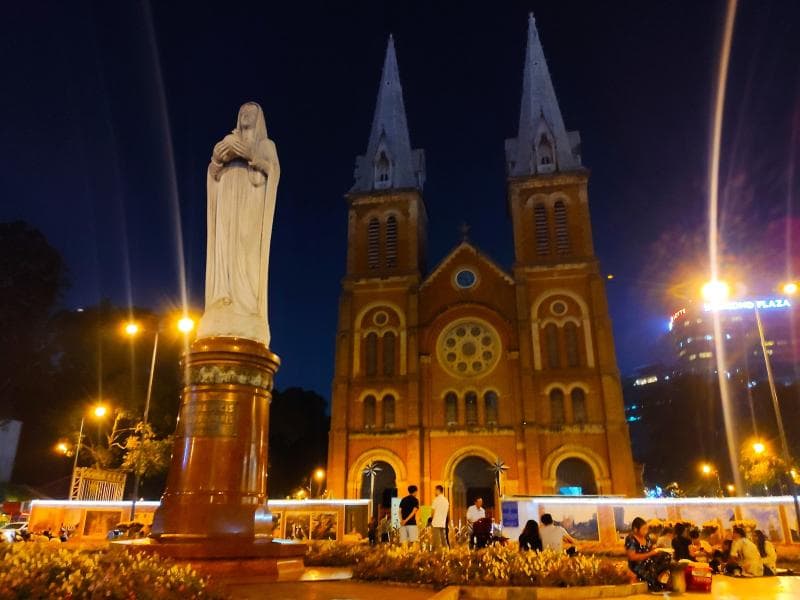
Explore the Saigon Notre-Dame Cathedral in Ho Chi Minh City, Vietnam. Discover its French colonial history, unique architecture, and cultural significance.
Overview
The Saigon Notre-Dame Cathedral, officially known as the Basilica of Our Lady of the Immaculate Conception, stands as an iconic landmark in the heart of Ho Chi Minh City, Vietnam. Located prominently in District 1, directly opposite the historic Saigon Central Post Office, this majestic cathedral is a stunning example of French colonial architecture. Its distinctive red-brick facade and twin bell towers make it a recognizable symbol of the city, attracting both local worshippers and international visitors.
Completed in 1880, the cathedral is more than just a place of worship; it serves as a testament to the city's rich history and the enduring influence of French culture. Despite the bustling urban landscape surrounding it, the cathedral offers a serene architectural marvel that blends Neo-Romanesque and Gothic styles.
History & Cultural Background
The story of the Saigon Notre-Dame Cathedral began during the French colonial era. Following the French conquest of Saigon, a temporary wooden church was initially built in 1863. However, due to termite damage and structural decline, colonial authorities decided to construct a more enduring sanctuary. A design competition was held in 1876, and the project was awarded to French architect J. Bourard, who envisioned a harmonious blend of Romanesque and Gothic styles.
Groundbreaking commenced on October 7, 1877, and the construction was remarkably completed in just three years, culminating in its inauguration on April 11, 1880. All building materials, from the distinctive red bricks to cement and roof tiles, were imported directly from France to ensure authenticity and durability. Initially known as the 'State Cathedral' due to its funding by the French government, it gained its current popular name, Notre-Dame Cathedral, in 1959 after a statue of Our Lady of Peace was installed in its forecourt. Its religious significance was further elevated in 1962 when Pope John XXIII granted it basilica status.
What Makes It Special
The architectural grandeur of Saigon Notre-Dame Cathedral lies in its meticulous design and the quality of its imported materials. The exterior is famously built with red bricks sourced from Marseille and Toulouse, which, remarkably, have retained their vibrant color for over a century despite Vietnam's tropical climate, without the need for plaster coating. This resilience is a key feature that distinguishes it.
The cathedral's impressive twin bell towers soar to a height of 57 to 58 meters, each crowned with a cross, bringing the total height to over 60 meters. These towers house six massive bronze bells, cast in France in 1879, weighing a combined total of 28.9 tons. The foundation of the structure was ingeniously designed to support a weight ten times greater than the entire building, showcasing advanced 19th-century engineering. Uniquely, unlike many other churches in the region, the cathedral stands without surrounding fences or walls, allowing its intricate exterior to be admired freely from the streets.
Stories, Fun Facts & Local Details
One fascinating detail about the cathedral's origins is the fate of its predecessor: an early wooden church built in 1863 was eventually abandoned due to extensive termite damage, prompting the construction of the more robust brick and stone edifice we see today. The six bronze bells within the towers are not merely decorative; they are electrically operated and were designed to ring out their melodies across the city, with their sound reportedly audible up to 10 kilometers away.
In front of the cathedral stands the statue of Our Lady of Peace, installed in 1959. This statue gained international attention in October 2005 when rumors spread of a tear rolling down the Virgin Mary's cheek, drawing thousands of onlookers. Inside, the nave features two main rows of columns, symbolically representing the twelve apostles. The cathedral's location directly across from the equally iconic Saigon Central Post Office creates a compelling architectural dialogue, making this area a historic and photogenic enclave within the city.
Visitor Perspective
For a curious traveler, visiting the Saigon Notre-Dame Cathedral offers a glimpse into both religious heritage and colonial history. There is no entrance fee to admire the exterior and the surrounding grounds. However, due to ongoing restoration work, tourist access to the interior may be restricted. It's advisable to check the official schedule if you plan to enter. Mass services are still held regularly, including an English Mass on Sundays at 9:30 AM, and visitors are welcome to attend respectfully.
To best experience the cathedral and capture its beauty, early morning (7:00 AM – 9:00 AM) or late afternoon (4:30 PM – 6:00 PM) are recommended times, offering cooler temperatures, fewer crowds, and optimal lighting for photography. When visiting, modest dress covering shoulders and knees is encouraged out of respect for its sacred nature. Its central location in District 1 makes it easily accessible and often included in city tours, with the Saigon Central Post Office and Nguyen Hue Walking Street just a short walk away.
Coordinates: 106.69917, 10.77972
View on Google Maps💬 How Travelers Describe This Place
Based on community votes
Must See
847Photogenic
712Beautiful
513Unique
482Interesting
62
Traveler Stories
Discover memorable experiences shared by travelers who have visited this place.
No traveler stories yet.
Be the first traveler to share what made this place memorable.
Things to see at Saigon Notre-Dame Cathedral



Tour
By
Spot
Discover amazing places around the world. Your journey starts here.
Explore
© 2026 TourBySpot. All rights reserved.