Twin Bell Towers
Ho Chi Minh City, Vietnam
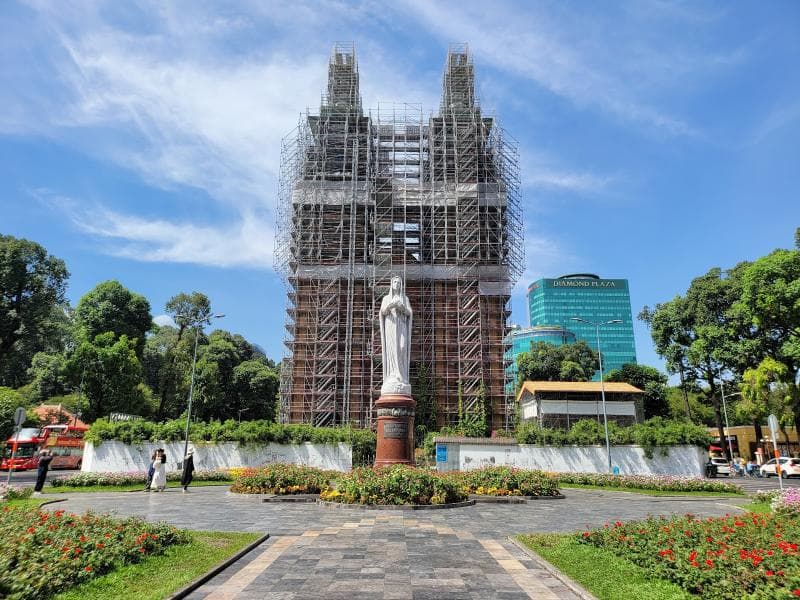
Discover the Twin Bell Towers of Saigon Notre-Dame Cathedral in Ho Chi Minh City, Vietnam, a historic landmark featuring French-imported bells and unique architecture.
Overview
Soaring majestically above the bustling streets of Ho Chi Minh City, the Twin Bell Towers of the Saigon Notre-Dame Cathedral stand as an enduring symbol of French colonial architectural heritage and a spiritual landmark. These iconic towers, an integral part of the larger Notre-Dame Cathedral Basilica of Saigon, pierce the Vietnamese skyline, drawing the eye with their distinctive red-brick facade and commanding presence. Located in the heart of District 1, they form a striking juxtaposition against the city's modern pulse, offering a glimpse into a rich and layered past. While the cathedral itself is a masterpiece of neo-Romanesque and Gothic design, the Twin Bell Towers are particularly captivating, housing a historic collection of bronze bells whose chimes once resonated across the urban landscape.
History & Cultural Background
The story of the Twin Bell Towers is intertwined with the construction of the Saigon Notre-Dame Cathedral, an ambitious project initiated during the French colonial era. The main cathedral structure was erected between 1877 and 1880, designed by architect Jules Bourard with all building materials, including the vibrant red bricks, meticulously imported from France. However, the imposing bell towers as we see them today were not part of the original design. They were a later addition, completed in 1895. Initially standing at 36.6 meters without roofs, architect Gardes later enhanced them with iron spires, elevating their height significantly. It was also in this period that the cathedral's six bronze bells, manufactured in France and shipped to Saigon in 1879, were installed within the newly completed towers. This architectural evolution reflects the colonial ambition to establish a grand religious edifice, mirroring European cathedrals and serving as a central point for the Catholic community in Indochina.
What Makes It Special
The Twin Bell Towers are distinguished by several remarkable features. Reaching approximately 57 meters to the tip of their spires, or 60.5 meters when including the crosses atop them, they were once among the tallest structures in downtown Saigon. The vibrant, unfading red bricks used in their construction, imported from Toulouse and Marseille, France, are a testament to superior craftsmanship and have retained their color for over a century, defying the tropical climate. Inside the towers reside six massive bronze bells, each tuned to a different note of the C Major Scale. With a combined weight of nearly 30 metric tons, these bells were cast in France and are electrically operated, a testament to late 19th-century engineering. Between the twin structures, a large mechanical clock, manufactured in Switzerland in 1887 and weighing around one ton, functions reliably, making it one of Ho Chi Minh City's oldest working public clocks. The sheer scale, the imported materials, and the intricate details of the bells and clockwork all contribute to the towers' unique architectural and historical significance.
Stories, Fun Facts & Local Details
The bells of the Notre-Dame Cathedral, housed within these twin towers, hold a special place in the city's memory. While they are rarely rung today, their combined chime once echoed powerfully across Ho Chi Minh City, audible from up to 10 kilometers away. Historically, only the three smallest bells were rung on regular weekdays and for Sunday services. It is said that all six bells would only be rung together on very special occasions, such as Christmas Eve, creating a resonant sound that would blanket the city in festive cheer. This rare full peal would undoubtedly have been a significant event, deeply embedding the towers' auditory presence into the local consciousness. The enduring quality of the imported French bricks is also a fun fact; despite over a century of tropical heat and monsoon rains, they remarkably retain their original hue without discoloration. This resilience highlights the quality of materials and foresight of the builders, ensuring the towers remain a prominent, colorful landmark.
Visitor Perspective
For any curious traveler in Ho Chi Minh City, observing the Twin Bell Towers offers a profound connection to the city's past and its enduring spiritual core. Although interior access to the cathedral, and thus closer inspection of the bells, may be limited due to ongoing restoration work, the exterior view alone is magnificent. Standing in Paris Commune Square, visitors can appreciate the towering scale and intricate details of the Romanesque revival architecture. The sight of the bold red bricks and the elegant spires against the vibrant Vietnamese sky provides a moment of reflection amidst the urban bustle. The towers serve as a silent testament to a bygone era, their stoic beauty inviting contemplation on the confluence of cultures that shaped this dynamic city. Even without hearing the full peal of the bells, their visual impact speaks volumes about the history and resilience embodied within these cherished structures.
Coordinates: 106.69917, 10.77972
View on Google Maps💬 How Travelers Describe This Place
Based on community votes
Photogenic
542Interesting
516Unique
326Must See
247Beautiful
171
Traveler Stories
Discover memorable experiences shared by travelers who have visited this place.
No traveler stories yet.
Be the first traveler to share what made this place memorable.

Tour
By
Spot
Discover amazing places around the world. Your journey starts here.
Explore
© 2026 TourBySpot. All rights reserved.