Statue Of Virgin Mary
Ho Chi Minh City, Vietnam
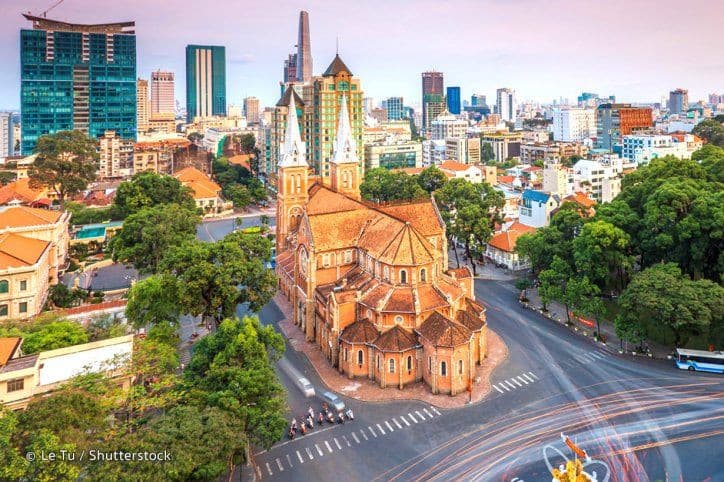
Discover the Statue of Virgin Mary, 'Our Lady of Peace,' at Saigon Notre-Dame Cathedral in Ho Chi Minh City, Vietnam. Explore its history, cultural significance, and the intriguing story of the 2005 'weeping' phenomenon.
Overview
Nestled in the bustling heart of Ho Chi Minh City, Vietnam, the Statue of Virgin Mary stands majestically in front of the iconic Saigon Notre-Dame Cathedral. Officially known as the statue of 'Our Lady of Peace' (Regina Pacis), this white granite sculpture is not merely an artistic embellishment but a profound symbol of faith and a significant landmark within the city's historical landscape. It serves as a spiritual anchor for Vietnam's Catholic community and draws countless visitors, both local and international, who come to admire its serene presence and the grandeur of the cathedral it precedes.
The statue, with its eyes gazing skyward and hands holding a globe surmounted by a cross, embodies a prayer for peace for Vietnam and the world. Its prominent position in Paris Commune Square, opposite the historic Saigon Central Post Office, makes it an unmissable part of exploring District 1's French colonial architectural heritage. Though often admired for its aesthetic grace, the statue holds deeper layers of meaning, intertwined with Vietnam's religious history and memorable local narratives.
History & Cultural Background
The history of the Statue of Virgin Mary is closely tied to the Saigon Notre-Dame Cathedral itself, a testament to French colonial influence built between 1863 and 1880. The cathedral, originally named Saigon Church, received its current designation in 1959, a year that marked a significant addition to its facade.
In 1959, Bishop Joseph Pham Van Thien, then overseeing the Saigon parish, commissioned the 'Our Lady of Peace' statue, crafted from granite in Rome. Upon its arrival in Saigon on February 16, 1959, a ceremony was held to install the statue on an empty plinth that had previously held a different, controversial statue. It was Bishop Pham Van Thien who penned the prayer 'Notre-Dame bless the peace to Vietnam' which was recited during its inauguration. The installation of this 4.6-meter tall, eight-ton white granite sculpture officially cemented the name 'Notre-Dame Cathedral,' reflecting its new spiritual centerpiece.
What Makes It Special
What sets this Statue of Virgin Mary apart is not just its grandeur and Italian craftsmanship, but its deep symbolic resonance within Vietnamese Catholicism. Carved from white granite, its unpolished surface is intentionally designed to be viewed from a distance, conveying a sense of enduring purity and strength. The statue's posture, with eyes looking towards the heavens and hands gently holding the globe, represents the Virgin Mary's intercession for global peace, a particularly poignant sentiment in a nation that has endured decades of conflict.
Beyond its spiritual significance, the statue is an integral part of the cathedral's architectural ensemble, complementing the distinctive red bricks imported from Toulouse and Marseille, which give the cathedral its unique hue. It creates a harmonious balance with the cathedral's impressive 58-meter tall twin bell towers, making the entire complex a visual landmark that proudly blends European Gothic and Romanesque styles with the Vietnamese urban landscape.
Stories, Fun Facts & Local Details
Perhaps the most compelling story associated with the Statue of Virgin Mary unfolded in October 2005. Rumors began to circulate that the statue had 'wept,' with witnesses claiming to have seen a tear streak down its right cheek. This phenomenon quickly attracted thousands of people, leading to massive crowds that disrupted traffic in the city center for days, reflecting the deep devotion and spiritual curiosity of the local populace. Although the Catholic Church in Vietnam, including figures like Father Dương Đình Bích and Father Nguyễn Công Danh, investigated and ultimately dismissed the claims as unfounded, attributing them to natural weathering or light reflections, the incident left an indelible mark. It added a layer of mystique to the statue and cathedral, transforming a religious artifact into a subject of urban legend and collective memory.
Another fascinating detail is that the plinth where the statue now stands was not always empty. Before 1945, it held a bronze statue of Pigneau de Behaine, also known as the Bishop of Adran, guiding Prince Cảnh, the son of Emperor Gia Long. This earlier statue was removed in 1945, leaving the foundation vacant until the arrival of 'Our Lady of Peace' in 1959.
Visitor Perspective
For visitors to Ho Chi Minh City, the Statue of Virgin Mary and the Saigon Notre-Dame Cathedral offer a moment of tranquility amidst the city's vibrant energy. The square in front of the cathedral, where the statue is located, has become a popular gathering spot. It's common to see locals enjoying the shade, young couples taking pre-wedding photographs, and tourists marveling at the architecture.
While the interior of the cathedral may have restricted access due to ongoing restoration work, the exterior and the statue remain fully accessible. Visitors are encouraged to observe respectful behavior, especially during mass times, and to appreciate the site as an active place of worship. The area around the cathedral is also a hub for other significant landmarks, including the Saigon Central Post Office, making it an ideal starting point for a cultural exploration of District 1.
The statue, with its solemn gaze and symbolic embrace of peace, invites contemplation and stands as a beautiful representation of enduring faith and hope in the heart of a dynamic city. It is a quiet survivor of history, a place where the past and present converge, offering a unique glimpse into Vietnam's rich cultural and religious tapestry.
Coordinates: 106.699019, 10.779786
View on Google Maps💬 How Travelers Describe This Place
Based on community votes
Must See
671Photogenic
663Unique
617Beautiful
220Interesting
161
Traveler Stories
Discover memorable experiences shared by travelers who have visited this place.
No traveler stories yet.
Be the first traveler to share what made this place memorable.

Tour
By
Spot
Discover amazing places around the world. Your journey starts here.
Explore
© 2026 TourBySpot. All rights reserved.