Sacred Monkey Forest Sanctuary
Bali, Indonesia
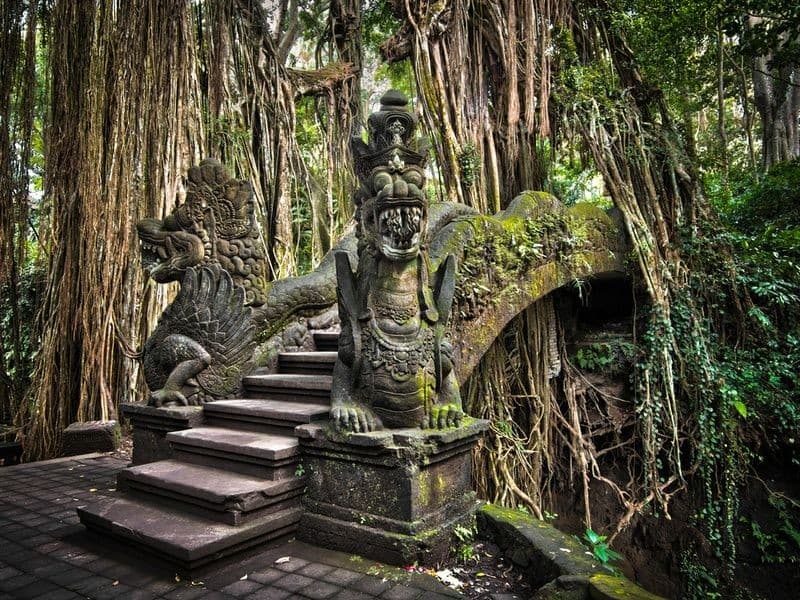
Explore the Sacred Monkey Forest Sanctuary in Ubud, Bali – a spiritual nature reserve home to long-tailed macaques, ancient temples, and rich Balinese culture.
Overview
The Sacred Monkey Forest Sanctuary, officially known as Mandala Suci Wenara Wana, is a truly unique destination nestled in the heart of Ubud, Bali, Indonesia. This captivating site serves as both a lush nature reserve and a deeply significant Hindu temple complex. Spanning approximately 12.5 to 30.8 acres (about 12.5 hectares), it provides a protected habitat for over 1,000 Balinese long-tailed macaques (Macaca fascicularis) that roam freely within its bounds. More than just a tourist attraction, the sanctuary is considered a vital spiritual, educational, and conservation center by the local Padangtegal village community.
History & Cultural Background
The origins of the Sacred Monkey Forest Sanctuary trace back to the 14th century, specifically the era of the Pejeng or early Gelgel dynasty, when Padangtegal Village was founded. The villagers have long regarded these grounds as sacred, believing them to be inhabited by benevolent spirits and powerful gods. This reverence extends to the monkeys, who are seen as sacred animals, symbolizing protection and mischief, fostering a unique connection between humans and wildlife. Balinese Hindu beliefs, which emphasize the balance between humans, nature, and the spiritual world, are central to the sanctuary's existence. It operates on the philosophy of Tri Hita Karana, a fundamental Hindu principle meaning 'Three ways to reach spiritual and physical well-being.' This concept promotes harmonious relationships between humans and other humans, humans and their environment, and humans with the Supreme God.
Within the forest are three principal ancient Hindu temples, believed to have been constructed around 1350 AD, that reflect centuries of Balinese Hinduism. These intricately designed, moss-covered shrines include:
- Pura Dalem Agung Padangtegal: This is the main temple, often referred to as the 'Great Temple of Death,' located in the southwestern part of the sanctuary. It is dedicated to Sang Hyang Widhi in the manifestation of Shiva, the god of transformation and destruction, and plays an important role in the spiritual life of the local community, including cremation ceremonies.
- Pura Beji: Situated near a sacred spring in the northwestern part, this temple is used for purification rituals (melukat), associated with the goddess Ganges.
- Pura Prajapati: Located in the northeastern section, this temple is associated with traditional burial and mass cremation ceremonies, particularly dedicated to the god Prajapati.
While visitors are generally not permitted to enter the inner sanctums of these sacred temples, their architectural beauty and spiritual significance are palpable from the outside.
What Makes It Special
The Sacred Monkey Forest stands out for its remarkable harmony between a thriving monkey population, ancient spiritual sites, and a diverse natural environment. It is a living testament to the Tri Hita Karana philosophy, showcasing a unique coexistence between humans, wildlife, and their divine connections. The sanctuary's dense jungle acts as a vital 'green lung' for Ubud, contributing to cleaner air and preserving a rich ecosystem. It is home to over 115 to 186 species of trees, many of which are considered holy and used in various Balinese spiritual practices. Efforts are continuously made to preserve its natural beauty, promote responsible tourism, and raise awareness about its cultural and environmental importance, serving as a conservation and research center for studying monkey behavior and forest preservation.
Stories, Fun Facts & Local Details
The Balinese long-tailed macaques (Macaca fascicularis) are the stars of the sanctuary, with their playful antics and complex social structures. They are divided into several groups, or 'kingdoms,' each with its own territory within the forest, and exhibit fascinating social behaviors, including grooming for hygiene and bond-strengthening. These monkeys are revered by locals, sometimes associated with the Hindu Monkey God, Lord Hanuman. The sanctuary’s management protects the monkeys and ensures their health, feeding them a specific diet of bananas, coconuts, corn, cucumber, and sweet potato.
Among the hundreds of tree species, some hold special significance, like the Majegan, used exclusively for shrines, and the Berigin, whose leaves are part of cremation ceremonies. The Pule Bandak tree is particularly notable, embodying the spirit of the forest and used for powerful ceremonial masks without harming the tree itself. The sanctuary is not just for wildlife; it regularly hosts religious ceremonies and traditional rituals, strengthening the bond between the inhabitants and their environment. Entrance fees are reinvested into maintaining the sanctuary, supporting both the environment and the local community, making it a model for sustainable tourism.
Visitor Perspective
Visiting the Sacred Monkey Forest Sanctuary offers a chance to connect with nature and observe captivating monkey behavior amidst ancient temples and lush jungle pathways. While the monkeys are accustomed to human presence, it is crucial to remember they are wild animals, and respectful interaction is paramount. Visitors are advised to secure all belongings, as the monkeys are curious and may attempt to snatch items like bags or food. Direct eye contact, sudden movements, and especially feeding the macaques (beyond what is provided by staff) are prohibited to maintain their natural behavior and health. Wearing comfortable walking shoes is recommended due to uneven paths. The sanctuary's staff are present to assist visitors and ensure safety guidelines are followed. The best times to visit are typically in the mornings when temperatures are cooler and the monkeys are active, or late afternoons for a quieter experience, though monkeys might be less visible then. The overall experience is an immersive journey into Bali's spiritual traditions and natural beauty, offering a unique blend of wild encounters and cultural insights.
Coordinates: 115.259, -8.5175
View on Google Maps💬 How Travelers Describe This Place
Based on community votes
Unique
963Must See
897Interesting
723Beautiful
463Photogenic
274
Traveler Stories
Discover memorable experiences shared by travelers who have visited this place.
No traveler stories yet.
Be the first traveler to share what made this place memorable.
Things to see at Sacred Monkey Forest Sanctuary


Tour
By
Spot
Discover amazing places around the world. Your journey starts here.
Explore
© 2026 TourBySpot. All rights reserved.