Monkey Feeding Areas
Bali, Indonesia
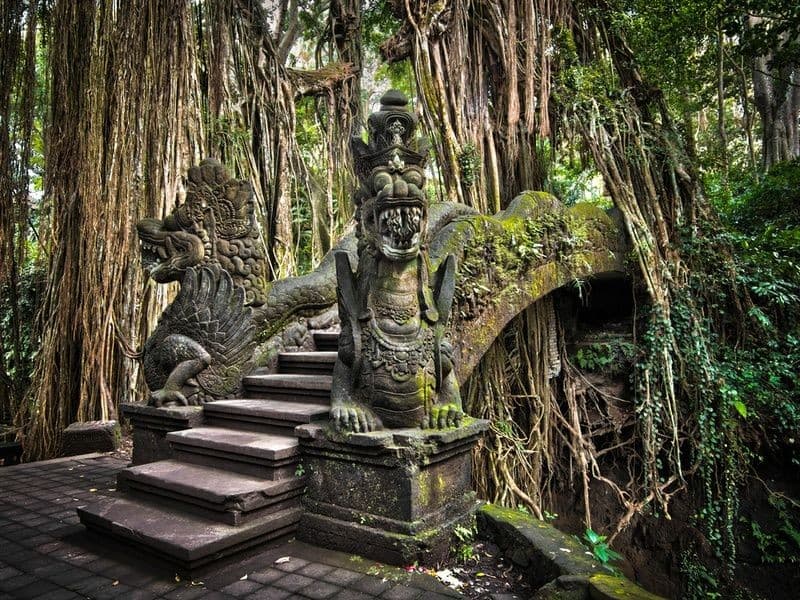
Explore the Monkey Feeding Areas at Sacred Monkey Forest Sanctuary in Ubud, Bali, Indonesia. Learn about staff-led feeding, cultural context, and responsible visitor observation.
Overview
Deep within the lush, verdant heart of Ubud, Bali, lies the Sacred Monkey Forest Sanctuary, a unique blend of nature, spirituality, and wildlife. While many visitors are eager to engage directly with the sanctuary's lively inhabitants, the 'Monkey Feeding Areas' within this esteemed location are primarily designated spaces where the sanctuary's dedicated staff provide nourishment to the resident Balinese long-tailed macaques. This approach ensures the monkeys receive a healthy, controlled diet and maintains their natural behaviors, while also safeguarding both the animals and the visitors. It is not a free-for-all feeding ground for tourists, but rather a supervised operation critical to the well-being of over a thousand macaques that call this forest home. Visitors can witness these fascinating feeding routines, gaining insight into the daily lives and social structures of these intelligent primates in a responsible and respectful manner.
History & Cultural Background
The Sacred Monkey Forest Sanctuary, officially known as Mandala Suci Wenara Wana, is more than just a wildlife attraction; it is a vital spiritual and conservation site. Its origins trace back to the 14th century, intertwined with Balinese culture and the philosophy of Tri Hita Karana. This ancient Hindu principle emphasizes the harmonious relationship between humans and God, humans and their environment, and humans with each other. The forest and its inhabitants are considered sacred, embodying a living example of this philosophy. The presence of the monkeys is steeped in local beliefs, with these animals symbolizing guardianship and playing a role in maintaining the balance between physical and spiritual realms. The sanctuary actively conserves rare plants and animals and serves as a natural laboratory for studying monkey social interactions, highlighting its deep cultural and scientific importance.
What Makes It Special
What makes the Monkey Feeding Areas, and indeed the entire sanctuary, truly special is the commitment to responsible co-existence between humans and wildlife. Unlike locations where uncontrolled feeding can lead to aggressive or unhealthy animal behavior, the sanctuary's policy ensures the macaques' health and safety. The monkeys are fed a specialized diet of sweet potatoes, bananas, coconut, and papaya leaves by staff, typically three times a day. This controlled feeding prevents them from becoming reliant on human snacks, which are often detrimental to their health, and minimizes aggressive interactions over food. Visitors, therefore, observe monkeys exhibiting more natural foraging behaviors within their forest habitat, navigating among ancient temples and lush tropical trees. This provides a more authentic and educational experience, allowing a glimpse into the macaques' intricate social dynamics rather than just a casual interaction.
Stories, Fun Facts & Local Details
The Balinese long-tailed macaques (Macaca fascicularis) are incredibly clever creatures. They have learned to associate certain objects, like plastic bags or shiny items, with potential food, often leading to their playful, yet sometimes mischievous, attempts to 'steal' them. There are over 1,200 macaques living in the sanctuary, divided into several distinct groups, each with its own territory. Observing these groups, especially during staff feeding times, offers a fascinating look into their hierarchical social structures and communication methods. For instance, direct eye contact with a monkey can be perceived as a sign of aggression in their world, a fun yet crucial detail for visitors to remember. The forest itself is home to 186 species of trees, some considered holy and used in Balinese spiritual practices, such as the Pule Bandak tree, believed to embody the forest's spirit. These ecological and behavioral details enrich the visitor's understanding far beyond a simple wildlife encounter.
Visitor Perspective
For visitors, understanding the purpose of the Monkey Feeding Areas is key to an enjoyable and safe experience. It is strictly prohibited for tourists to feed the monkeys directly. This rule is paramount for both visitor safety and the well-being of the macaques. Visitors are advised not to bring food or drinks into the forest, secure all belongings (especially small, shiny objects, glasses, or hats), and avoid direct eye contact or sudden movements that could be misinterpreted by the monkeys. If a monkey does approach or jump on a visitor, the best course of action is to stay calm, stand up slowly, and walk away, or seek assistance from the ever-present staff. By respecting these guidelines, visitors can appreciate the natural habitat and observe the macaques' playful antics and social interactions from a safe distance, making for a memorable and enriching visit to this sacred Balinese sanctuary.
Coordinates: 115.255, -8.518
View on Google Maps💬 How Travelers Describe This Place
Based on community votes
Interesting
995Must See
989Unique
603Beautiful
581Photogenic
388
Traveler Stories
Discover memorable experiences shared by travelers who have visited this place.
No traveler stories yet.
Be the first traveler to share what made this place memorable.

Tour
By
Spot
Discover amazing places around the world. Your journey starts here.
Explore
© 2026 TourBySpot. All rights reserved.