Temple Courtyards
Bali, Indonesia
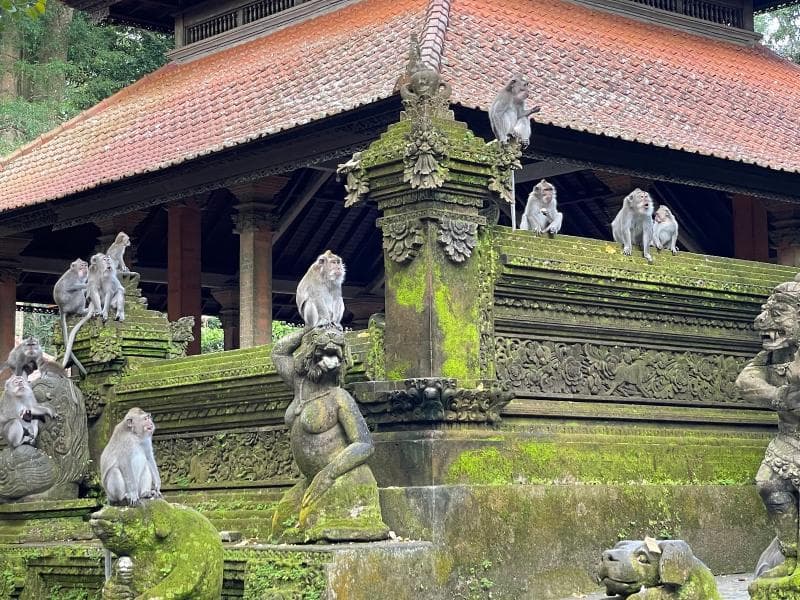
Explore the sacred Temple Courtyards of Sacred Monkey Forest Sanctuary in Ubud, Bali, Indonesia, rich in history, culture, and ancient spiritual meaning.
Overview
Deep within the lush, ancient jungle of the Sacred Monkey Forest Sanctuary in Ubud, Bali, lie the revered Temple Courtyards. This unique destination, officially known as Mandala Suci Wenara Wana, is more than just a wildlife reserve; it is a profound spiritual and ecological site managed by the local Padangtegal village community. It encompasses approximately 12.5 hectares and is home to over 1,200 Balinese long-tailed macaques, who are considered sacred by the local people.
The sanctuary is a harmonious blend of nature and spirituality, where ancient trees tower over moss-covered statues and intricate temple structures. Visitors are invited to explore winding stone paths that lead through a dense canopy, offering glimpses into a world where humans, nature, and the spiritual realm coexist in balance, a concept central to Balinese Hinduism known as Tri Hita Karana.
History & Cultural Background
The origins of the Sacred Monkey Forest Sanctuary and its temple courtyards trace back to the 14th century, during the Pejeng dynasty. The village of Padangtegal was established as a spiritual and agricultural settlement, guided by the Tri Hita Karana philosophy.
The temples within the sanctuary were constructed around 1350, serving as crucial centers for worship and reflection for the Balinese Hindu community. For generations, residents recognized the forest as a 'wena wana' or sacred natural sanctuary, believing it to be inhabited by gods and ancestral spirits. The long-tailed macaques, in turn, were considered spiritual guardians, further reinforcing the sacred character of the forest. In the late 20th century, specifically by 1982, the community formally designated the area as the Sacred Monkey Forest Sanctuary to protect both its rich ecosystem and cultural heritage.
There are three principal temples within the complex, each playing a specific role in the village's spiritual and ceremonial life:
- Pura Dalem Agung Padangtegal: This is the main temple, located in the southwestern part of the sanctuary. It is dedicated to Lord Shiva, who is revered as the 'Recycler' or 'Transformer.' It also serves as the primary site for funeral ceremonies, including the significant mass cremation ceremonies held every five years.
- Pura Prajapati: Situated near the forest cemetery, this temple is associated with cremation ceremonies and is dedicated to Prajapati, the deity of creation and caretaker of mortal life.
- Pura Beji: Found in the northwestern section, this is a holy spring temple used for purification rituals and is dedicated to Goddess Ganga, whose waters are believed to possess cleansing powers.
What Makes It Special
The Temple Courtyards are not merely ancient structures; they are living testaments to Balinese Hinduism, intricately woven into the natural landscape. What makes them truly special is the seamless integration of spirituality with the natural world. The moss-covered stones, intricate carvings, and towering banyan trees create an ethereal atmosphere that feels suspended in time.
The entire sanctuary embodies the philosophy of Tri Hita Karana, fostering a harmonious relationship between humans, nature, and the divine. The temples stand as silent guardians, while the lively macaques add a dynamic, almost magical, element to the sacred space. Visitors can witness traditional Balinese architecture adorned with ancient sculptures, some depicting mythological creatures and guardians, that enhance the mystical ambiance of the forest. The spiritual energy felt here is often described as profound, connecting visitors to Bali's deep cultural roots.
Stories, Fun Facts & Local Details
One fascinating aspect is the belief that the monkeys symbolize guardianship and are revered as manifestations of the Hindu Monkey God, Lord Hanuman. This belief underscores the respect and protection afforded to these creatures within the sanctuary. The forest itself is a rich source of botanical wonders, with specific trees holding deep spiritual significance. For instance, the Majegan tree is exclusively used for building shrines, and the Berigin tree's leaves are integral to cremation ceremonies. Of particular note is the Pule Bandak, a tree believed to embody the forest's spirit and whose wood is used to craft powerful masks for temple ceremonies, without harming the tree itself.
The main temple, Pura Dalem Agung Padangtegal, sometimes referred to as the 'Temple of Death,' plays a critical role in the Balinese cycle of life and death. Every five years, the village conducts a mass cremation ceremony here, a solemn and significant event. This ritual, deeply rooted in tradition, allows families to collectively honor their deceased. While visitors cannot enter the inner sanctums of the temples unless participating in a religious ceremony, the exterior courtyards and paths offer ample opportunity to observe the architectural beauty and spiritual practices from a respectful distance.
Visitor Perspective
For many visitors, stepping into the Temple Courtyards within the Sacred Monkey Forest Sanctuary is like entering another realm – a place where nature's serenity meets spiritual grandeur. The experience is often described as both enchanting and humbling, offering a unique opportunity to witness Balinese culture and spirituality firsthand. While the playful antics of the macaques are a major draw, many leave deeply impressed by the serene beauty and historical depth of the temples.
To fully appreciate the spiritual significance, travelers are encouraged to observe the quiet reverence of local worshippers. Modest clothing is recommended, particularly when near the temple areas. It is important to remember that these are active places of worship, not mere tourist attractions. While visitors can explore the courtyards, access to the temple interiors is generally restricted to those participating in religious ceremonies. Maintaining a respectful demeanor and observing the guidelines provided by the sanctuary staff ensures a meaningful and harmonious visit to these sacred grounds.
Coordinates: 115.255, -8.518
View on Google Maps💬 How Travelers Describe This Place
Based on community votes
Must See
276Interesting
152Photogenic
33Beautiful
30Unique
16
Traveler Stories
Discover memorable experiences shared by travelers who have visited this place.
No traveler stories yet.
Be the first traveler to share what made this place memorable.

Tour
By
Spot
Discover amazing places around the world. Your journey starts here.
Explore
© 2026 TourBySpot. All rights reserved.