Dalem Agung Temple
Bali, Indonesia
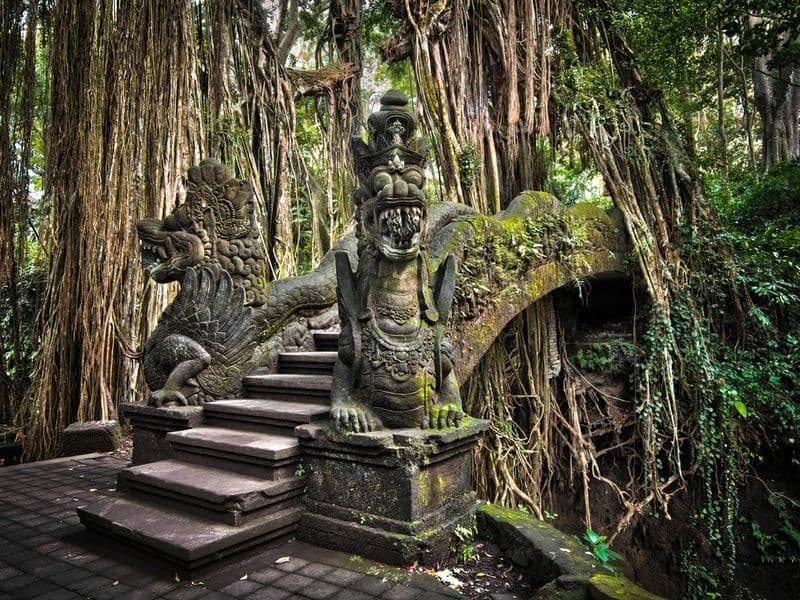
Explore Dalem Agung Temple in Bali's Sacred Monkey Forest Sanctuary, Ubud. Discover its ancient history, spiritual role, and stunning Balinese architecture.
Overview
Deep within the verdant embrace of Bali's Sacred Monkey Forest Sanctuary in Ubud, lies the revered Dalem Agung Temple, a site of profound spiritual significance and architectural beauty. Often referred to as Pura Dalem Agung Padangtegal, this temple is not merely a structure but a living testament to Balinese Hinduism and its deep connection to nature and the cycle of life and death. It stands as one of three principal temples within the sanctuary, serving as the main temple for the local community of Padangtegal village. Its mystical aura, enhanced by the surrounding ancient trees and the playful presence of long-tailed macaques, offers a unique glimpse into Bali's rich cultural tapestry.
History & Cultural Background
The origins of Dalem Agung Temple are steeped in antiquity, believed to have been constructed around the mid-14th century, coinciding with the rise of the Pejeng or Gelgel Dynasty in Bali. This places it among Ubud's oldest temples, playing a crucial role in the spiritual life of the local community for centuries. Traditionally, every Balinese village maintains a set of three temples, each with a distinct purpose. The Dalem Agung Temple functions as the 'Pura Dalem,' or 'Temple of the Dead,' a vital component in this sacred trio. It is dedicated to Sang Hyang Widhi in the personification of Shiva, the Recycler or Transformer, and is often associated with Dewa Mahadewa. This dedication underscores its primary role in rituals concerning death, ancestral rites, and cremation ceremonies, symbolizing the transformative aspect of life's continuous cycle.
What Makes It Special
What truly sets Dalem Agung Temple apart is its intricate blend of spiritual purpose, architectural grandeur, and harmonious coexistence with nature. The temple's design showcases traditional Balinese craftsmanship, featuring ornate stone carvings, elaborate gateways known as candi bentar, and moss-covered walls that evoke a sense of timelessness. These carvings often depict deities, mythical creatures, and even guardian statues, reflecting the rich mythology of Bali. Its primary function as a site for death and cremation ceremonies makes it a profound spiritual hub, a place where the community seeks to facilitate the peaceful transition of souls to the afterlife. The temple's location within the Sacred Monkey Forest, where hundreds of long-tailed macaques roam freely, adds another layer of mystique. These monkeys are not just wildlife; they are considered sacred and believed to be spiritual guardians of the sanctuary, forming an integral part of the temple's unique atmosphere.
Stories, Fun Facts & Local Details
One of the most significant and profound events associated with Dalem Agung Temple is the communal cremation ceremony, known as 'Ngaben,' which traditionally occurs every five years. During this solemn occasion, the remains of deceased village members are cremated, with ashes later released into the river, marking a critical step in the Balinese understanding of the soul's journey. The forest itself contributes significantly to these rituals; certain trees are held sacred, like the 'Majegan,' whose wood is exclusively used for building shrines, and the 'Berigin,' whose leaves are incorporated into cremation ceremonies. The 'Pule Bandak' tree, believed to house the spirit of the forest, provides wood for powerful masks used only within the temple. The monkeys, often seen as manifestations of Hindu monkey gods like Hanuman, add a lively, yet spiritually significant, dimension to the temple grounds. Their presence reinforces the Balinese philosophy of 'Tri Hita Karana,' emphasizing harmony between humans, nature, and the divine.
Visitor Perspective
While the inner sanctums of Dalem Agung Temple are reserved for active worship by the local community, visitors to the Sacred Monkey Forest Sanctuary can still appreciate its exterior beauty and spiritual significance from designated public paths. As you walk along the main paved loop in the southwestern part of the forest, the temple's grand split gate, intricate carvings, and moss-draped structures offer a captivating sight. Observing the daily offerings, such as 'canang sari' and incense, provides a quiet insight into ongoing Balinese religious practices. This area of the Monkey Forest often feels calmer and more contemplative compared to the busier sections, allowing for a moment of reflection amidst the lush environment. Respectful behavior and adherence to dress codes are encouraged to honor the sacredness of the site. Most visitors spend between 5 to 15 minutes admiring the temple's facade, a brief but meaningful stop that highlights the spiritual heart of the monkey forest.
Coordinates: 115.258383, -8.518822
View on Google Maps💬 How Travelers Describe This Place
Based on community votes
Beautiful
540Must See
410Interesting
147Unique
114Photogenic
19
Traveler Stories
Discover memorable experiences shared by travelers who have visited this place.
No traveler stories yet.
Be the first traveler to share what made this place memorable.

Tour
By
Spot
Discover amazing places around the world. Your journey starts here.
Explore
© 2026 TourBySpot. All rights reserved.