Royal Castle
Warsaw, Poland
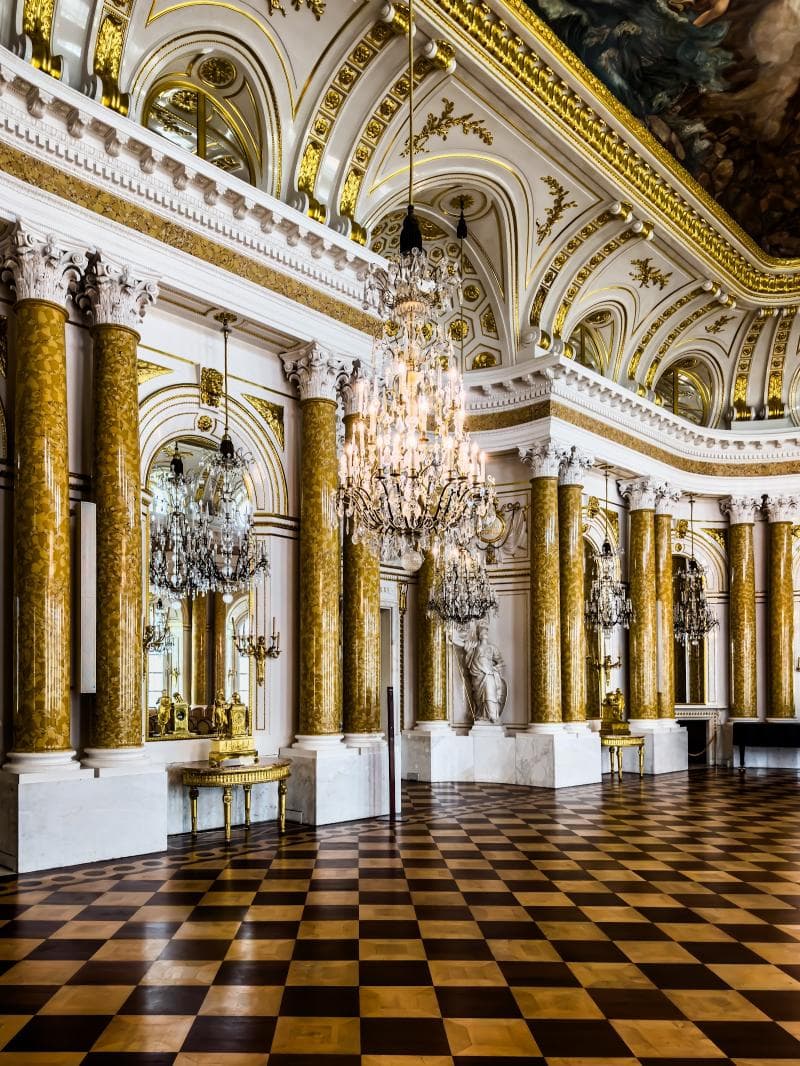
Explore the Royal Castle in Warsaw, Poland. Discover centuries of Polish history, from royal residence to its post-war reconstruction, a true symbol of resilience.
Overview
The Royal Castle in Warsaw, Poland, stands as a magnificent testament to a nation's enduring spirit and rich heritage. Located prominently in Castle Square, at the threshold of the historic Old Town, this former official residence of Polish monarchs now functions as a state museum and a vibrant cultural institution. Its distinctive architecture, a blend of Mannerist, Baroque, and Neoclassical styles, immediately captures attention. Recognized as a UNESCO World Heritage Site, the Royal Castle is not merely a collection of opulent rooms but a profound symbol of Poland's identity and resilience through centuries of tumultuous history.
History & Cultural Background
The origins of the Royal Castle trace back to the 14th century, when it began as a wooden stronghold of the Dukes of Masovia, with the construction of the Great Tower. It evolved significantly, especially after Masovia's incorporation into the Kingdom of Poland. The castle's golden era commenced when King Sigismund III Vasa relocated Poland's capital from Kraków to Warsaw in 1596. Between 1598 and 1619, he oversaw its grand expansion, solidifying its role as the permanent seat of Polish kings and the center of state power.
Over centuries, the Royal Castle bore witness to pivotal moments in Polish history. It was within its walls, specifically in the Senate Chamber, that the Constitution of 3 May 1791 was drafted and adopted, a groundbreaking document that was Europe's first and the world's second codified national constitution. After Poland regained independence in 1918, the castle became the residence of the Polish head of state and president.
The castle's most tragic chapter unfolded during World War II. Following the 1944 Warsaw Uprising, German forces systematically bombed and demolished the Royal Castle on Hitler's explicit orders, seeking to eradicate Polish culture and spirit. However, this act of destruction only strengthened the resolve of the Polish people. A monumental national effort, fueled by public donations from Poles worldwide, led to its meticulous reconstruction between 1971 and 1984, restoring it to its former glory.
What Makes It Special
The Royal Castle's uniqueness lies in its profound narrative of destruction and rebirth. Its reconstruction, achieved with an extraordinary dedication to historical accuracy, relied heavily on salvaged original fragments, detailed archives, and remarkably, the precise 18th-century vedute (city views) painted by Bernardo Bellotto, known as Canaletto, whose works served as invaluable blueprints for the city's rebirth.
Today, the castle houses an exceptional collection of Polish and European art. Visitors can explore lavishly re-created interiors, including the majestic Throne Room, the Grand Ballroom (Great Assembly Hall), and the Royal Apartments. A highlight is the Canaletto Room, where Bellotto's detailed views of 18th-century Warsaw are displayed, offering a poignant glimpse into the city's past and the incredible effort behind its resurrection. The castle also proudly exhibits the Lanckoroński Collection, featuring two masterpieces by Rembrandt: 'Girl in a Picture Frame' and 'A Scholar at his Writing Table'. The 60-meter-tall Clock Tower, with its distinctive green cupola, stands as an enduring symbol of the Polish capital.
Stories, Fun Facts & Local Details
One of the more charming historical tidbits involves King Stanisław August Poniatowski, the last Polish monarch, who hosted his famous 'Thursday Dinners' at the castle. These intellectual and artistic gatherings brought together leading poets, writers, and artists of the Enlightenment era, fostering a vibrant cultural exchange. The decision to rebuild the castle after its wartime devastation was a deeply emotional and collective act for the Polish nation. It was a visible manifestation of their determination to reclaim their heritage and independence, relying on millions of small donations from ordinary citizens and expatriates around the world. The accuracy of Canaletto's paintings meant that Warsaw could truly rise from its ashes, almost exactly as it was before the war.
Adjacent to the castle in Castle Square stands Sigismund's Column, one of Poland's oldest secular monuments, erected in honor of King Sigismund III Vasa, who made Warsaw the capital. The castle is also adjoined by the charming Copper-Roof Palace, which historically served as another royal residence and is often part of a more extensive visit. For those seeking tranquility, the Royal Gardens, both upper and lower, situated behind the castle, offer a beautiful, free-to-enter green space perfect for a reflective stroll with views over the Vistula River.
Visitor Perspective
Visiting the Royal Castle offers a deeply immersive journey into Polish history and art. Situated centrally in Castle Square, it's easily accessible and a natural starting point for exploring Warsaw's Old Town. Most visitors allocate about 1.5 to 2 hours for the main 'Royal Route' (also known as the 'Castle Route'), which covers the essential chambers and art collections. It is highly recommended to purchase tickets online in advance, especially during peak seasons, as entry is typically via timed slots to manage visitor flow. Audio guides are available in multiple languages and often included, providing rich contextual information as you explore.
For those interested in the artistic and governmental aspects, there are specific tours like the Museum Tour, which focuses on art connoisseurs and history enthusiasts, showcasing parliamentary chambers and significant paintings. The castle offers free admission on Wednesdays, though queues might be longer on these days. Photography is permitted inside, provided no flash is used. A complimentary cloakroom is available for bags and outerwear, a convenient amenity for travelers. The experience is designed to be engaging, making the Royal Castle a must-see for anyone seeking to understand the heart and soul of Warsaw and Poland.
Coordinates: 21.0142, 52.2478
View on Google Maps💬 How Travelers Describe This Place
Based on community votes
Interesting
965Must See
862Photogenic
629Beautiful
443Unique
184
Traveler Stories
Discover memorable experiences shared by travelers who have visited this place.
No traveler stories yet.
Be the first traveler to share what made this place memorable.
Things to see at Royal Castle



Tour
By
Spot
Discover amazing places around the world. Your journey starts here.
Explore
© 2026 TourBySpot. All rights reserved.