Throne Room
Warsaw, Poland
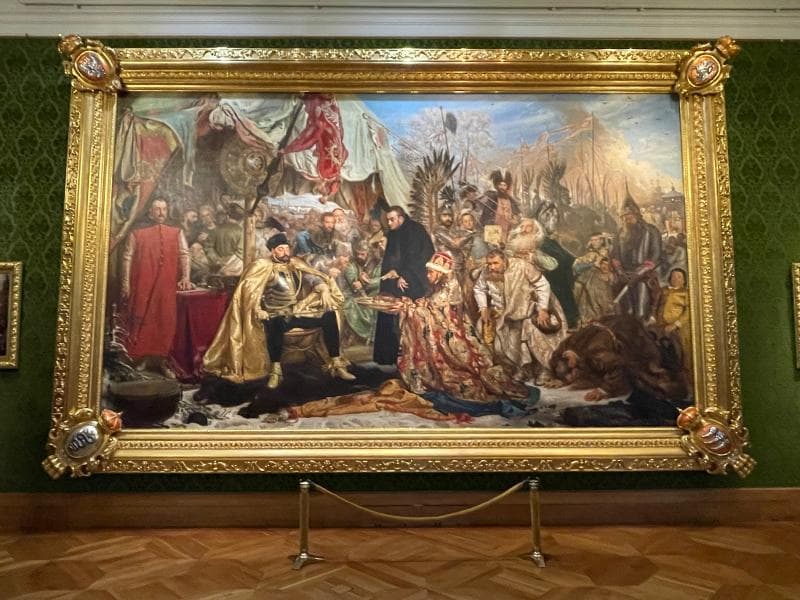
Discover the majestic Throne Room within Warsaw's Royal Castle, a symbol of Poland's royal heritage and enduring spirit, meticulously reconstructed after WWII.
Overview
The Royal Castle in Warsaw, a phoenix risen from the ashes of war, holds within its majestic walls a chamber of profound historical significance: the Throne Room. This opulent space, more than just a beautifully adorned room, stands as a powerful symbol of Poland's sovereignty, its enduring spirit, and the legacy of its monarchs. Located within the heart of the reconstructed castle, the Throne Room beckons visitors to step back in time and witness the grandeur where kings once presided over matters of state. It's a place where history resonates through every meticulously restored detail, offering a tangible connection to Poland's royal past and its journey through centuries of triumphs and tribulations.
History & Cultural Background
The Royal Castle itself has a history stretching back to the 14th century, evolving from a ducal stronghold to the primary residence of Polish monarchs when King Sigismund III Vasa moved the capital from Kraków to Warsaw in the early 17th century. The Throne Room, as visitors experience it today, primarily reflects the Neoclassical style and the vision of Poland's last king, Stanisław August Poniatowski. Its design was implemented between 1784 and 1786, forming part of the 'Great Apartment' of representative interiors. This period marked a significant era in Polish history, including the drafting of the May 3rd Constitution, Europe's first codified national constitution, within the Castle's walls.
Tragically, like much of Warsaw, the Royal Castle, including the Throne Room, suffered catastrophic destruction during World War II. It was systematically bombed and later blown up by German forces in September 1944 as an act of revenge following the Warsaw Uprising. The sheer scale of destruction left the castle in ruins. However, the Polish people, with immense national effort and donations, undertook a monumental reconstruction project starting in 1971, with the castle officially opening to the public in phases through the 1980s. The Throne Room's painstaking restoration was a testament to this unwavering determination to reclaim and preserve national heritage.
What Makes It Special
What truly distinguishes the Throne Room is not merely its lavish appearance, but the powerful story of resilience it embodies. The room is characterized by its striking crimson damask, which envelops the walls, creating an atmosphere of regal authority and warmth. Above the majestic throne, twenty-two gilded eagles, each wearing a crown, proudly proclaim the glory of the Polish monarchy. These eagles are not just decorative elements; they are powerful symbols that have their own dramatic history, stolen during wartime and painstakingly recovered or recreated. The throne itself, while perhaps not as elevated as some might imagine, rests on a subtly raised platform, drawing all attention to the seat of power. The meticulous attention to detail in its reconstruction, relying on historical plans, preserved fragments, and even Canaletto's paintings of Warsaw, ensures that visitors experience a space that is as close to its 18th-century glory as possible. It is a masterpiece of historical recreation, standing as a vivid symbol of Poland's enduring spirit.
Stories, Fun Facts & Local Details
One fascinating detail surrounding the Throne Room involves the luxurious textiles that adorn it. The original crimson damask, embroidered with silver eagles and royal monograms, was a bespoke commission from the renowned Lyon-based manufactory, Camille Pernon & Cie, between 1785 and 1786. This firm was a leading supplier of opulent silks and embroideries to royal courts across Europe, highlighting the international stature of the Polish court. The fate of the gilded eagles is another captivating tale. After the fall of the Polish-Lithuanian Commonwealth, they were altered and even taken to Moscow at one point, only to be returned later under the Treaty of Riga. Tragically, in October 1939, they were again stolen by the Nazi occupiers. The painstaking effort to find surviving eagles or recreate them was a crucial part of the reconstruction, signifying a powerful act of national retrieval and pride. The strategic placement of mirrors in the room, a common architectural technique of the era, cunningly amplifies the sense of space and grandeur, making the room feel even larger and more impressive than it is.
Visitor Perspective
Stepping into the Throne Room today, one cannot help but be struck by its profound sense of history and enduring beauty. The rich colors, the shimmering gold, and the sheer scale of the room transport a curious traveler to an era of royal decrees and grand ceremonies. It's an immersive experience that allows you to imagine the monarchs and dignitaries who once graced this very spot, debating the fate of a nation. The room serves as a poignant reminder of Poland's turbulent past and its extraordinary capacity for rebirth. Visitors often find themselves lingering, reflecting on the historical weight and the artistic triumph represented by this remarkable chamber. It's a mandatory stop for anyone seeking to understand the heart of Polish royalty and the resilience of the Polish spirit, offering a powerful emotional connection to the past.
Coordinates: 21.014167, 52.247778
View on Google Maps💬 How Travelers Describe This Place
Based on community votes
Interesting
915Must See
211Unique
123Beautiful
74Photogenic
53
Traveler Stories
Discover memorable experiences shared by travelers who have visited this place.
No traveler stories yet.
Be the first traveler to share what made this place memorable.

Tour
By
Spot
Discover amazing places around the world. Your journey starts here.
Explore
© 2026 TourBySpot. All rights reserved.