Great Assembly Hall
Warsaw, Poland
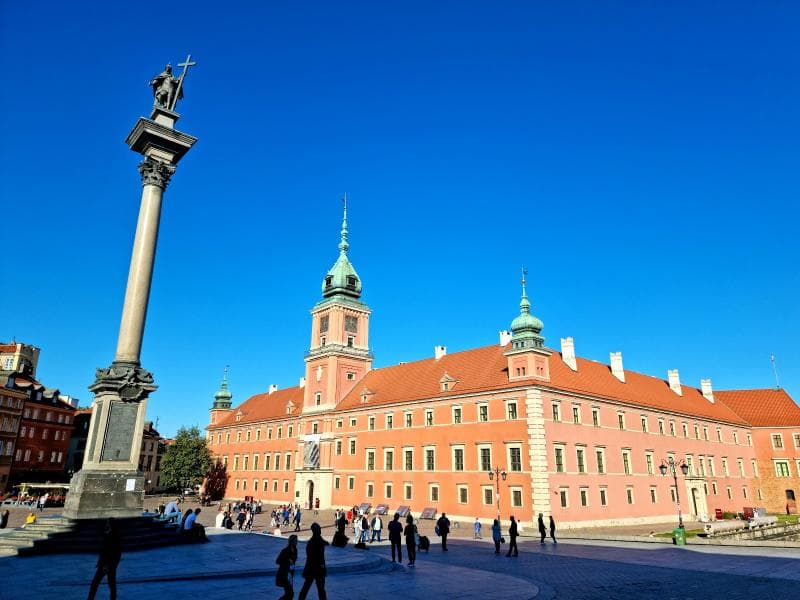
Explore the magnificent Great Assembly Hall in Warsaw's Royal Castle, a meticulously reconstructed symbol of Polish history and neoclassical grandeur.
Overview
Stepping into the Great Assembly Hall, also known as the Ballroom or Great Hall, within Warsaw's Royal Castle is like entering a portal to a bygone era of regal splendor and profound historical significance. This magnificent chamber, nestled within the meticulously reconstructed Royal Castle, stands as a testament to Poland's rich past and its remarkable resilience. It is not merely a grand room, but a vibrant tableau where the heartbeat of 18th-century Polish society once echoed through lavish celebrations and pivotal state affairs. From grand balls and elaborate feasts to concerts and theatrical performances, this hall was the epicentre of court life during the reign of King Stanisław August Poniatowski. Today, it continues to host significant cultural events, allowing visitors to experience its majesty firsthand and connect with centuries of Polish heritage.
History & Cultural Background
The story of the Great Assembly Hall is intricately woven into the fabric of the Royal Castle's tumultuous history. While the castle's origins trace back to the 14th century, its transformation into the grand royal residence we see today, particularly its interiors, largely took place in the 18th century under King Stanisław August Poniatowski. It was during his enlightened reign, specifically between 1777 and 1781, that architects Domenico Merlini and Jan Christian Kamsetzer designed the hall's lavish neoclassical aesthetic, often referred to as the 'Stanisław August style'. This period marked a cultural flourishing, and the hall was conceived as a stage for the monarch's vision for a modern, enlightened Poland. However, this architectural and cultural zenith was tragically interrupted by the ravages of World War II. The Royal Castle, including the Great Assembly Hall, was systematically destroyed by German forces, particularly after the Warsaw Uprising in 1944, reduced to rubble in a devastating act aimed at erasing Polish identity. The Poland that emerged from the war undertook the monumental task of rebuilding its capital. The castle's reconstruction, initiated in 1971 and completed in 1984, was a nationwide effort, funded by public contributions and driven by an unwavering spirit of national pride. The Great Assembly Hall was meticulously restored to its 18th-century glory, relying on invaluable historical documents, architectural drawings, and even the detailed urban landscapes painted by Bernardo Bellotto, known as Canaletto, who had captured the castle's pre-war appearance.
What Makes It Special
The Great Assembly Hall is distinguished by its sheer scale and the breathtaking opulence of its neoclassical design. As the largest and most magnificent hall within the Royal Castle, it immediately captivates visitors with its grandeur. Its most striking features include seventeen pairs of elegant Corinthian columns that line the perimeter, creating a sense of majestic rhythm and classical harmony. Overhead, twenty sparkling crystal chandeliers and an equal number of appliques cast a brilliant glow, illuminating the richly adorned space. The decorative scheme is further enhanced by intricate gilded acanthus leaves and other exquisite stucco work, adding layers of refined detail.
A particularly unique element is the large marble medallion featuring a portrait of King Stanisław August Poniatowski himself, thoughtfully flanked by allegorical personifications of Peace and Justice. This artistic detail served to visually articulate the core ideals that guided the monarch's reign and his aspirations for the nation. Furthermore, the ceiling is graced by the monumental painting 'The Disentanglement of Chaos' by Marcello Bacciarelli, an artist whose work significantly defined the royal interiors. This masterpiece visually represents the Enlightenment ideals of order and reason prevailing over disorder, a fitting motif for a hall where state decisions were made and culture flourished. The hall's painstaking reconstruction, accurately replicating its 18th-century decor, further amplifies its special status, making it a powerful symbol of rebirth and historical fidelity.
Stories, Fun Facts & Local Details
Imagine the rustle of silk gowns and the clinking of champagne flutes during the grand balls that once filled this hall. The Great Assembly Hall was the setting for legendary court life, hosting not only formal state ceremonies but also vibrant social gatherings that defined Warsaw's cultural landscape. It's fascinating to consider that the very space where kings presided over feasts and danced with their courtiers now welcomes visitors from around the world, occasionally even hosting modern musical performances, echoing its past functions.
A poignant detail connected to the hall, and indeed the entire castle, is its miraculous rebirth. The fact that this opulent room, along with the rest of the Royal Castle, was painstakingly rebuilt from literally a pile of rubble after its deliberate destruction in WWII, speaks volumes about the Polish spirit. It was not just a reconstruction of a building, but a rebuilding of a national soul. Every gilded detail and every restored fresco in the Great Assembly Hall is a testament to this incredible act of collective will and historical preservation, a truly powerful and moving story that gives this beautiful space an even deeper resonance.
Visitor Perspective
For the curious traveler, the Great Assembly Hall offers an immersive journey into Polish royal history and artistry. Upon entering, visitors are often struck by the sheer scale and luminosity of the space, a sensory experience amplified by the sparkle of chandeliers and the gleam of gilded decorations. Take a moment to appreciate the intricate details of the Corinthian columns and the subtle allegories embedded in the artwork, particularly Marcello Bacciarelli's impressive ceiling painting, 'The Disentanglement of Chaos'. Observing the marble medallion with King Stanisław August's portrait offers a direct connection to the monarch who envisioned this room.
Standing in the Great Assembly Hall provides an opportunity to reflect on the historical events that unfolded within these walls – from state assemblies to lavish entertainment. It's a place where history feels alive, not just through preserved artifacts but through the very atmosphere of grandiosity and resilience. Visitors should allow ample time to simply absorb the environment, perhaps imagining the echoes of past celebrations or solemn decrees. The hall is a highlight of any visit to the Royal Castle, embodying both the aesthetic achievements of Poland's past and the indomitable spirit of its people. It's an inspiring space that leaves a lasting impression, a true jewel in the crown of Warsaw's historical treasures.
Coordinates: 21.0142, 52.2478
View on Google Maps💬 How Travelers Describe This Place
Based on community votes
Must See
639Beautiful
569Interesting
476Photogenic
465Unique
128
Traveler Stories
Discover memorable experiences shared by travelers who have visited this place.
No traveler stories yet.
Be the first traveler to share what made this place memorable.

Tour
By
Spot
Discover amazing places around the world. Your journey starts here.
Explore
© 2026 TourBySpot. All rights reserved.