Clock Tower
Warsaw, Poland
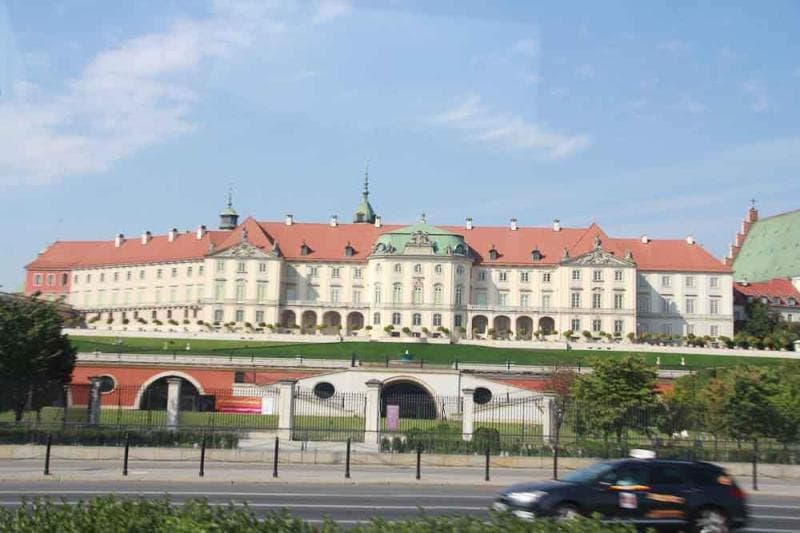
Discover the iconic Clock Tower of the Royal Castle in Warsaw, Poland. Learn its powerful story of destruction and rebirth, a symbol of the city's resilience.
Overview
Perched atop Sigismund's Tower, the Clock Tower of the Royal Castle in Warsaw is more than just a time-telling device; it is a profound symbol of the city's enduring spirit and resilience. This distinguished landmark, an integral part of the Royal Castle, overlooks the historic Castle Square, marking the entrance to Warsaw's Old Town. Its chimes have echoed through centuries of Polish history, witnessing moments of glory and profound tragedy. For any curious traveler, understanding this clock tower offers a unique window into the soul of Warsaw, a city that has repeatedly risen from the ashes.
The tower, with its distinctive green cupola, stands proudly at approximately 60 meters high, making it a prominent feature of the Warsaw skyline. It serves as a constant reminder of the historical ebb and flow that has shaped the Polish capital, deeply intertwined with the fate of the Royal Castle itself. Visiting this site provides not only a glimpse into architectural grandeur but also a tangible connection to the narrative of a nation.
History & Cultural Background
The story of the Royal Castle's Clock Tower begins in 1622, when the first mechanical clock was installed on the New Royal Tower, also known as Sigismund's Tower. This made it one of the earliest public clocks in the Polish capital, a technological marvel for its time. The clock featured four copper dials adorned with gilded numbers and hands. There is some historical debate regarding its original craftsman, with some sources crediting Warsaw watchmaker Jan Sulej, and others pointing to master Gerardo Priami from Florence.
The clock tower, like the entire Royal Castle, faced numerous adversities throughout its history. It suffered significant damage during the Swedish Deluge in the mid-17th century. However, its most poignant moment arrived on September 17, 1939. During intense German artillery shelling and air raids on Warsaw, the clock tower caught fire. At precisely 11:15 AM, the clock's hands froze, marking the tragic moment the castle began its path to devastation. The hands remained stuck at this time until 1944, when Nazi forces systematically blew up what remained of the castle.
What Makes It Special
What truly distinguishes the Clock Tower is its extraordinary story of rebirth. After the complete destruction of the Royal Castle during World War II, a decision to reconstruct the national monument was made on January 20, 1971. The clock's reconstruction was paramount to this monumental undertaking. It was not merely a mechanical repair but a symbol of national hope and determination. The current clock, a traditional mechanical mechanism, was built through a significant social initiative by the Clock Building Team, part of the Guild of Goldsmiths, Watchmakers, Opticians, Engravers, and Bronziers of Warsaw.
On July 19, 1974, at the symbolic time of 11:15 AM, the hands of the Royal Castle's clock began to move again. This event marked a profound moment, as the clock became the first fully functioning element of the then-rebuilding Royal Castle. Its reactivation symbolized Warsaw's enduring spirit and its triumphant return from wartime ruin, drawing thousands of residents who witnessed this emotional restart.
Stories, Fun Facts & Local Details
The time 11:15 AM holds an almost mythical status in Warsaw's collective memory. It is the exact moment the clock stopped on that fateful day in 1939, and it is the precise moment it was restarted 35 years later. This deliberate act of restarting the clock at the very moment it ceased to function created a powerful narrative of continuity and remembrance.
The rebuilding effort for the clock was a testament to Polish craftsmanship and collaboration. The mechanism for the new clock was designed by Marek Górski, in cooperation with Professor Zdzisław Mrugalski. The two bells, responsible for striking the hours and quarters, were crafted by bell founder Antoni Kruszewski and his sons. Each of the four clock faces features gilded circles with gilded Roman numerals. Intriguingly, the center of each dial depicts a sun with a different expression – sadness, neutrality, a slight smile, and joy – reflecting the various moods of the city. The intricate gilding of the dials and hands alone required a total of 14 kilograms of gold.
Visitor Perspective
As you stand in Castle Square today, looking up at the Clock Tower, it's impossible not to feel the weight of history and the triumph of the human spirit. The clock's steady rhythm, heard across the square, is a testament to perseverance. It silently yet powerfully narrates Warsaw's dramatic past and its phoenix-like resurgence. The tower serves as a crucial orientation point in the Old Town, its timeless presence a comforting anchor in a city that has seen so much change. When you visit, take a moment to observe the different 'moods' of the sun on each clock face, a subtle artistic detail that adds another layer of meaning to this iconic landmark. It truly encapsulates the resilience of Warsaw and its people.
Coordinates: 21.0142, 52.2478
View on Google Maps💬 How Travelers Describe This Place
Based on community votes
Photogenic
698Must See
476Beautiful
465Unique
276Interesting
126
Traveler Stories
Discover memorable experiences shared by travelers who have visited this place.
No traveler stories yet.
Be the first traveler to share what made this place memorable.

Tour
By
Spot
Discover amazing places around the world. Your journey starts here.
Explore
© 2026 TourBySpot. All rights reserved.