Riga Cathedral
Riga, Latvia
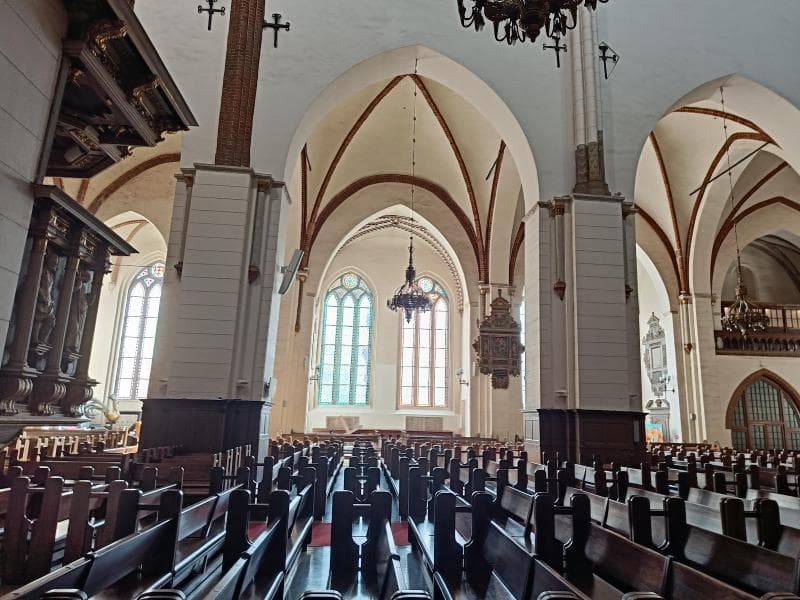
Discover Riga Cathedral, Latvia's largest medieval church, blending Romanesque, Gothic, and Baroque styles. Explore its history and iconic 6,718-pipe organ in the heart of Riga.
Overview
Nestled in the historic heart of Riga, Latvia, Riga Cathedral, formally known as The Cathedral Church of Saint Mary, stands as a profound symbol of the city's enduring history and cultural richness. As the seat of the Archbishop of the Latvian Evangelical Lutheran Church, it is not only a significant religious site but also the largest medieval church in the Baltic states, attracting visitors with its captivating blend of architectural styles and centuries of stories [3, 4, 16]. Its imposing presence contributes to Riga's designation as a UNESCO World Heritage Site [2, 3].
History & Cultural Background
The story of Riga Cathedral began on June 25, 1211, when its foundation stone was laid by Bishop Albert of Riga, a pivotal figure in the region's conversion to Christianity [2, 4, 20]. Originally conceived in the Romanesque style, the cathedral's construction evolved over centuries, incorporating elements from various architectural periods [2, 14]. After an initial wooden church likely burned down, construction on the present brick structure accelerated in 1215 [13, 20].
Throughout its long history, the cathedral has undergone numerous transformations, reflecting the political and religious shifts in Latvia [14, 15]. Gothic additions and renovations were made in the 15th and 16th centuries, followed by Baroque elements, including an 18th-century Baroque tower [3, 14]. The interior was also adapted in the 17th century to align with Lutheran traditions [2]. During the Soviet era, the cathedral temporarily served as a concert hall, a testament to its adaptability, before being restored to its religious function after Latvia regained independence [15, 16].
What Makes It Special
Riga Cathedral is a magnificent architectural tapestry, showcasing Romanesque, Gothic, Baroque, and even some Art Nouveau influences [5, 14, 16]. Its design is a 'palimpsest' of architectural styles, with thick Romanesque walls and rounded arches in its oldest sections, contrasted with pointed Gothic arches and vaulted ceilings added in later periods [18]. The massive Western tower, standing 90 meters tall, is a prominent feature of Riga's skyline [14].
However, what truly sets Riga Cathedral apart is its extraordinary pipe organ. Built by the renowned German company E.F. Walcker & Co. between 1883 and 1884, it was once considered the largest organ in the world [8, 9, 14]. With 124 stops, 4 manuals and pedals, and an astounding 6,718 pipes, some reaching over 10 meters in length, it is a masterpiece of late Romantic organ building and one of the most valuable historic organs globally [7, 9, 10]. The organ's technical and artistic performance is highly regarded, offering an incredible and unsurpassed acoustic experience during concerts [7].
Stories, Fun Facts & Local Details
One charming and iconic detail of Riga Cathedral is the weathercock, or rooster, perched atop its spire [3, 4, 16]. This golden rooster, weighing about 86 kilograms, traditionally serves as a weather vane, but in Christian tradition, it also symbolizes vigilance against evil, driving away negativity with its morning 'song' [3]. An older rooster that once adorned the spire is now on display inside the cathedral [16].
The grandeur of the E.F. Walcker & Co. organ is further enhanced by its association with music history. It is said that Franz Liszt composed a piece specifically for its inauguration in 1884 [8]. Inside the cathedral complex, visitors can also explore the Museum of the History of Riga and Navigation, which houses over 500,000 archival items chronicling 800 years of Riga's past [3, 6]. The cathedral's cloister, an early Gothic structure from the 13th century, is one of the few preserved in Central and Eastern Europe and contains archaeological exhibitions [13, 18].
Visitor Perspective
For any curious traveler, Riga Cathedral offers a deeply enriching experience. The cathedral is open daily for visitors, though specific hours should be checked as they can vary by season [3, 5, 11]. General admission often includes access to the Romanesque cloister [3]. A highlight for many is attending one of the regular organ concerts, known as 'Concerto Piccolo' recitals, which provide a chance to hear the magnificent Walcker organ in action [5, 18]. These concerts are held frequently, especially during summer, and tickets can be booked in advance [3, 18].
Located in the heart of Riga's Old Town, a UNESCO World Heritage site, the cathedral is easily accessible and forms a natural focal point for exploring other historical landmarks like the House of the Blackheads and St. Peter's Church [2, 15, 16, 18]. Guided tours are available for those seeking in-depth insights into its history and architecture, and the cathedral strives to be accessible to people with special needs, though some assistance may be required [5, 11].
Coordinates: 24.10444, 56.94917
View on Google Maps💬 How Travelers Describe This Place
Based on community votes
Photogenic
879Must See
723Unique
482Interesting
396Beautiful
274
Traveler Stories
Discover memorable experiences shared by travelers who have visited this place.
No traveler stories yet.
Be the first traveler to share what made this place memorable.
Things to see at Riga Cathedral



Tour
By
Spot
Discover amazing places around the world. Your journey starts here.
Explore
© 2026 TourBySpot. All rights reserved.