Main Nave
Riga, Latvia
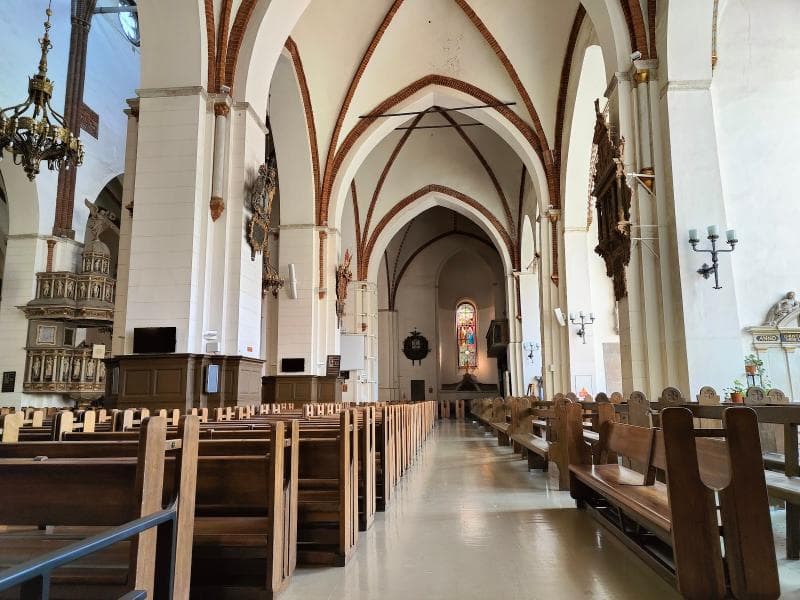
Explore the Main Nave of Riga Cathedral in Riga, Latvia. Discover its rich history, unique architecture, and cultural significance.
Overview
The Main Nave of Riga Cathedral, nestled in the heart of Riga, Latvia, serves as the majestic central axis of one of the Baltic region's largest and most historically significant medieval churches. This grand space, formally part of The Cathedral Church of Saint Mary, is a testament to centuries of architectural evolution and cultural shifts. Conceived in 1211, the cathedral initially blended Romanesque robustness with emerging Gothic elegance, with the Main Nave eventually being elevated to define its basilica form. Visitors entering this sacred space are immediately struck by its impressive scale and the palpable sense of history embedded within its ancient walls. It functions not only as a spiritual center for the Evangelical Lutheran Church of Latvia but also as a renowned venue for world-class musical performances, drawing locals and travelers alike into its timeless embrace.
History & Cultural Background
The foundation stone of Riga Cathedral was ceremonially laid on July 25, 1211, by Bishop Albert von Buxhövden, making it a cornerstone of Riga's development. Initially, the design reflected Romanesque principles, characterized by thick walls and rounded arches. However, as architectural styles evolved, particularly in the 14th and 15th centuries, the cathedral underwent a significant transformation. The walls of the central nave were raised, converting the original hall church into a basilica and establishing the nave as the primary interior thoroughfare, flanked by side aisles. This reconstruction showcased a unique fusion of international Gothic techniques, brought by skilled masons from Germany, and local Baltic building traditions.
Throughout its long existence, the Main Nave has witnessed a dynamic history, mirroring Latvia's own turbulent past. It began as a Catholic place of worship, serving as the spiritual heart of the region and hosting numerous significant religious ceremonies, including coronations and funerals. With the Protestant Reformation, the cathedral transitioned to Lutheranism. A particularly interesting period was during the Soviet occupation from 1939 to 1989, when religious services were prohibited, and the entire cathedral, including the Main Nave, was repurposed as a concert hall. Following Latvia's regained independence in 1991, the cathedral was rightfully restored to its religious function, proudly serving the Evangelical Lutheran Church of Latvia once more.
What Makes It Special
The Main Nave of Riga Cathedral stands out due to several distinctive features, primarily its sheer size as part of the largest medieval church in the Baltics. Its architectural journey from a Romanesque hall church to a Gothic basilica is evident in the intricate blend of styles visible today. The elevation of the central nave walls during the 14th and 15th centuries created the soaring spaciousness that characterizes the interior.
Walking through the Main Nave, one cannot help but notice the 14th-century columns adorned with various coats of arms, offering a visual timeline of historical patronage and noble families connected to the cathedral. Above, stained glass windows filter light, casting a serene glow that highlights the architectural details and the impressive vaulted ceilings. At the far end, the magnificent Walcker organ, inaugurated in 1884 with its 6,718 pipes, dominates the space, contributing an unparalleled acoustic richness that makes the nave an exceptional concert venue.
Stories, Fun Facts & Local Details
The cathedral holds many fascinating stories and details. For instance, the very name 'Dome Cathedral' is a historical quirk; 'Dom' is a German word for cathedral, making 'Dome Cathedral' somewhat redundant yet charmingly entrenched in local parlance. A prominent symbol of Riga, the golden rooster weathercock atop the cathedral's spire is not just ornamental; according to local Christian tradition, it acts as a vigilant protector against evil, driving away malevolent forces with its morning song. This rooster, weighing around 86 kilograms, has become an iconic emblem of the city.
A less visible but significant historical detail lies beneath the Main Nave's floor. In the 18th century, burials within churches were prohibited for sanitary reasons, leading to the raising of the cathedral's floor level. This decision subtly altered the internal dynamics of the space but preserved it for future generations. The cathedral's versatility is also notable; its period as a Soviet concert hall allowed its grand organ to be preserved and appreciated, ensuring that the Main Nave continued to host performances even when religious services were forbidden.
Visitor Perspective
Stepping into the Main Nave of Riga Cathedral offers a truly immersive historical and cultural experience. The vastness and grandeur of the space immediately command attention, drawing the eye upward to the intricate Gothic vaults and the soft light filtering through the windows. The nave provides a central focal point, guiding visitors through the cathedral's story, from its Romanesque origins to its Gothic transformations.
For those interested in history and architecture, the interplay of different construction periods is evident, offering tangible insights into medieval craftsmanship. Music lovers will find the acoustics within the Main Nave to be extraordinary, especially during one of the frequent organ concerts, which fill the entire space with resonant melodies. Guided tours and audio guides are available, enriching the visit by providing detailed narratives of the cathedral's past. Located conveniently within Riga's UNESCO-listed Old Town, the cathedral is easily accessible, making it an essential stop for any curious traveler seeking to connect with the spiritual and artistic heritage of Latvia.
Coordinates: 24.10444, 56.94917
View on Google Maps💬 How Travelers Describe This Place
Based on community votes
Interesting
934Beautiful
879Unique
741Must See
396Photogenic
276
Traveler Stories
Discover memorable experiences shared by travelers who have visited this place.
No traveler stories yet.
Be the first traveler to share what made this place memorable.

Tour
By
Spot
Discover amazing places around the world. Your journey starts here.
Explore
© 2026 TourBySpot. All rights reserved.