Cloister
Riga, Latvia
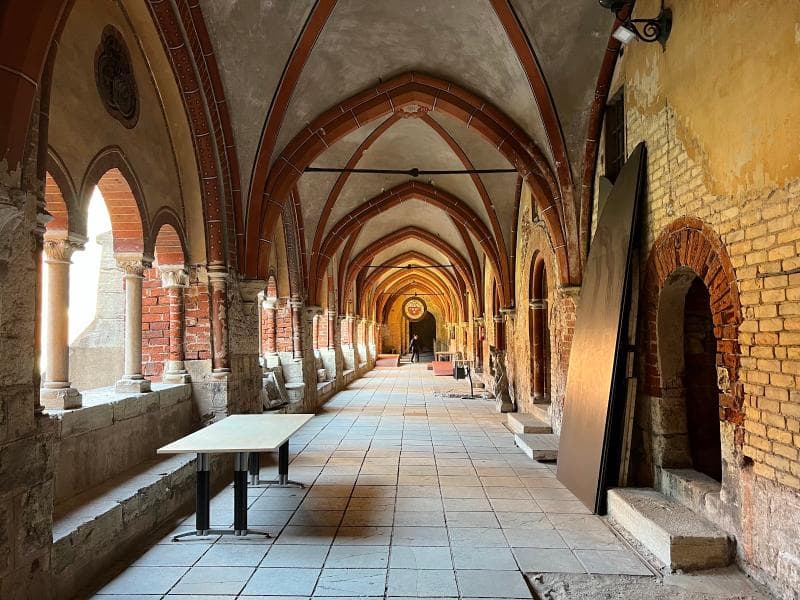
Explore the historic Cloister of Riga Cathedral in Riga, Latvia. Discover medieval Early Gothic architecture and ancient artifacts in this serene cultural gem.
Overview
Stepping into the Cloister of Riga Cathedral in Riga, Latvia, is like journeying back in time to a tranquil corner of medieval Europe. This beautifully preserved cross-vaulted gallery offers a serene escape within the bustling Old Town, providing a glimpse into the monastic life that once thrived here. Integrated within the larger Riga Cathedral complex, the Cloister also serves as an evocative exhibition space for the Museum of the History of Riga and Navigation, bridging centuries of history and culture. It stands as one of the best-preserved medieval architectural spaces in Riga, and indeed, one of the few surviving early Gothic cloisters in Central and Eastern Europe.
Originally designed to connect the Riga Cathedral (or Dome Cathedral) with its adjacent monastery, the Cloister provided a covered walkway for the Cathedral Chapter, the college of clerics who resided there. Today, its arcaded galleries invite visitors to wander and discover a rich tapestry of artifacts, from ancient stone fragments to historical displays, all housed within its hallowed walls.
History & Cultural Background
The story of the Cloister is deeply intertwined with the founding and evolution of Riga Cathedral itself. Construction began in the 13th century, initiated by Bishop Albert, who laid the foundation stone of Riga Cathedral on July 25, 1211. The Cloister was built in the Early Gothic style, a testament to the architectural prowess of the era, and was an integral part of the original monastic layout.
This sacred space once provided a quiet ambulatory for the monks of the Cathedral Chapter, allowing them to meditate and move between the church and other monastic buildings in all weather. Over the centuries, Riga Cathedral, and by extension its Cloister, witnessed significant transformations. The city's embrace of the Protestant Reformation in 1521 dramatically reshaped the cathedral's theological purpose and physical appearance. While many Catholic artifacts were removed from the main cathedral during this period, the Cloister retained much of its structural integrity and continued to evolve alongside the city.
Extensive reconstruction and renovation works on both the church and the Cloister took place between 1881 and 1914, solidifying their present-day appearance. During the Soviet occupation of Latvia in the 20th century, the Cathedral was even converted into a concert hall, showcasing its adaptability through challenging historical periods.
What Makes It Special
What truly sets the Cloister apart is its remarkable state of preservation as a 13th-century Early Gothic structure, a rarity in the Baltic region and Central/Eastern Europe. Its cross-vaulted galleries are adorned with intricate carvings of flowers, leaves, and figures of people, birds, and other animals, offering a beautiful display of medieval craftsmanship. The Cloister’s architecture itself tells a story, featuring a blend of Romanesque arches and Gothic vaulting, reflecting the centuries of modifications and additions that shaped the wider Cathedral complex.
Beyond its architectural beauty, the Cloister houses a significant part of the Museum of the History of Riga and Navigation. This integration turns a historical passageway into a vibrant museum gallery, displaying a vast collection of artifacts that trace Riga's 800-year history. Visitors can explore everything from archaeological finds and stone fragments salvaged from the cathedral over time to a 12th-century stone baptismal font. It is this dual role — as a historical architectural marvel and a repository of the city's past — that makes the Cloister a truly special destination.
Stories, Fun Facts & Local Details
The Cloister holds some fascinating tales and unique exhibits. One notable artifact on display is the original cathedral rooster weathercock from the 1595 tower. These distinctive roosters, common on Riga's older churches, served not only as wind vanes but also as symbols of vigilance, believed to ward off evil spirits with their morning crow.
Walking through the Cloister, you might encounter an eclectic collection of items that feel like a 'historical rummage', ranging from ancient plaques and gravestones to cannons and statues. These diverse displays offer an unexpected journey through the city's past, providing a tangible link to the lives and events that shaped Riga. The very atmosphere of the Cloister evokes the quiet contemplation of monastic life, offering a unique immersion into the medieval period that is both educational and deeply moving. It's a place where history feels alive, echoing with the footsteps of those who walked these paths centuries ago.
Visitor Perspective
For any curious traveler, the Cloister of Riga Cathedral is an essential part of exploring Riga's Old Town. Accessible directly from the main Cathedral, entry to this historical space is typically included with your Cathedral ticket, making it an easily integrated part of your visit. Many visitors describe it as an 'absolute must-stroll spot', praising its tranquil ambiance and the immersive medieval experience it offers. The low Gothic arcades surrounding a small courtyard create a peaceful environment perfect for quiet reflection away from the city's hustle and bustle.
Beyond its architectural charm, the Cloister provides a comprehensive insight into Riga's layered history through its extensive museum exhibits. It offers a deeper context to the landmarks you see throughout the city, making it particularly rewarding for history enthusiasts. Whether you're captivated by the detailed carvings, the diverse historical artifacts, or simply the peaceful solitude, the Cloister offers a memorable journey into the heart of Riga's enduring heritage.
Coordinates: 24.10444, 56.94917
View on Google Maps💬 How Travelers Describe This Place
Based on community votes
Beautiful
791Photogenic
613Unique
514Must See
457Interesting
207
Traveler Stories
Discover memorable experiences shared by travelers who have visited this place.
No traveler stories yet.
Be the first traveler to share what made this place memorable.

Tour
By
Spot
Discover amazing places around the world. Your journey starts here.
Explore
© 2026 TourBySpot. All rights reserved.