Religious Art Collections
Riga, Latvia
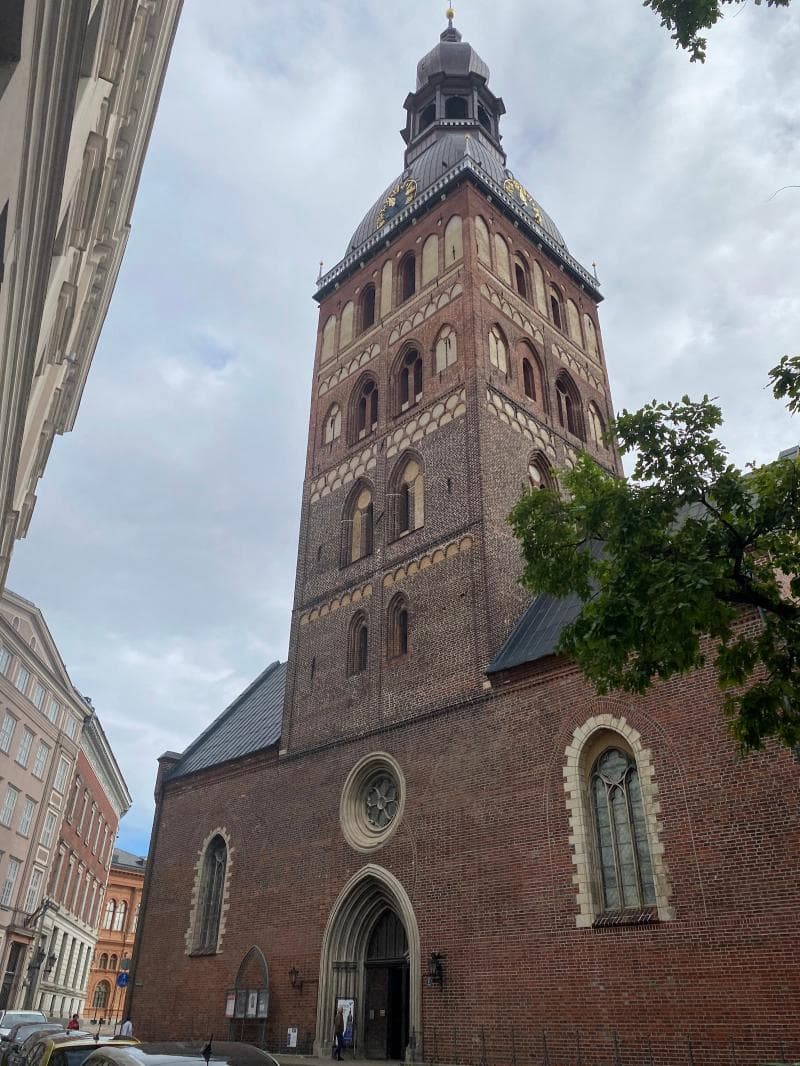
Explore the Religious Art Collections of Riga Cathedral in Riga, Latvia, delving into centuries of sacred history, intricate art, and cultural artifacts.
Overview
Nestled in the heart of Riga, Latvia, the Riga Cathedral stands as a monumental testament to centuries of spiritual devotion, architectural evolution, and artistic expression. Within its venerable walls and the adjoining historic cloister, a fascinating array of religious art collections awaits the curious traveler. While not a separate, distinctly named 'Religious Art Collection' gallery, the entire complex acts as a living museum, housing a wealth of sacred artifacts and artistic details that chronicle its profound religious journey. These collections, seamlessly integrated into the cathedral's fabric and presented through the Museum of the History of Riga and Navigation, offer a unique glimpse into the spiritual and cultural heritage of the Baltic region.
Visitors will discover an amalgamation of Romanesque, Gothic, Baroque, and even Art Nouveau influences, each style contributing to the visual narrative of faith. From ancient archaeological finds to intricately carved wooden elements, monumental grave slabs, and remnants of once-grand altarpieces, the religious art within Riga Cathedral provides a rich tapestry of history and devotion. It represents not only the artistry of different eras but also the profound religious shifts that have shaped Latvia.
History & Cultural Background
The story of Riga Cathedral begins in 1211, when Bishop Albert von Buxhövden laid its foundation stone, intending it as a cornerstone for the new city and a center for spreading Christianity during the Northern Crusades. Initially a Roman Catholic institution, the cathedral's early centuries saw the accumulation of numerous Catholic artworks and devotional objects. However, a pivotal transformation occurred in 1521 when Riga embraced the Protestant Reformation. This religious upheaval dramatically altered the cathedral's purpose and its physical appearance. Many elaborate Catholic artifacts, including altarpieces and religious statues, were either removed or modified to align with Protestant principles, which typically favored a more austere approach to church decoration.
Despite these changes, the cathedral continued to be a repository of significant religious items. Over the centuries, subsequent renovations and architectural additions, such as the construction of the monastery and the cathedral school, further enriched its historical footprint. The cloister, an important architectural feature from the 13th century, initially connected the cathedral with the monastery. After the Reformation, the monastic buildings ceased to exist, but the cloister remained, eventually becoming a crucial space for the Museum of the History of Riga and Navigation to exhibit artifacts linked to the cathedral's past.
What Makes It Special
The religious art collections at Riga Cathedral are special precisely because they are intertwined with the very structure and history of the building itself. Beyond the grand architecture, visitors can explore the ornate interiors adorned with various sculptures and carvings that tell their own stories. Notable features include intricate stained glass windows, which, despite replacements and restorations over time, continue to bathe the interior in colored light, depicting biblical scenes or symbolic motifs. The detailed pulpit, a testament to master craftsmanship, stands as a prominent piece of religious artistry.
A significant portion of these 'collections' can be experienced within the Cross Gallery (cloister), which now serves as an exhibition space for the Museum of the History of Riga and Navigation. Here, one finds an extraordinary assortment of historical artifacts directly related to the cathedral's religious and civic life. These include ancient grave slabs, some bearing inscriptions or carvings of religious significance, and fragments of stone and metal decorations from lost parts of the cathedral or other historical buildings. Intriguingly, archaeological finds from the cathedral grounds, such as the 'Salaspils stone head,' a hypothetical Liv idol, are also on display, connecting the site to even older spiritual practices predating Christianity in the region.
The famous Walcker organ, inaugurated in 1884, while primarily a musical instrument, is itself a masterpiece of artistic and religious craftsmanship, featuring elaborate wooden carvings from the 17th and 18th centuries and representing a pinnacle of sacred musical tradition.
Stories, Fun Facts & Local Details
One of the enduring symbols of Riga Cathedral is its iconic weathercock atop the spire. Historically, these weathercocks served not only as wind vanes but also as protective symbols. The current weathercock, a replica of earlier ones, watches over the city, a silent guardian that has witnessed centuries of Riga's history, including its religious transformations. Another captivating aspect is the architectural 'mishmash' resulting from continuous modifications and rebuilds. This blend of Romanesque arches, Gothic vaulting, Baroque flourishes, and even hints of Art Nouveau in later repairs, tells a story of adaptation and resilience, reflecting the diverse periods of spiritual and artistic influence in Latvia.
The cloister itself, a serene oasis within the bustling city, was once a covered walkway for the monastic community. Today, it offers a peaceful environment to contemplate the gravitas of the historical artifacts. Among these, the numerous grave slabs offer poignant glimpses into the lives of individuals from Riga's past, many of whom were deeply religious figures or influential citizens connected to the church. These stones often feature symbols or inscriptions that provide insights into medieval Christian beliefs and funerary art.
Visitor Perspective
Exploring the religious art collections at Riga Cathedral is an immersive journey through time and faith. As you step inside, the sheer scale and intricate details immediately command attention. Take your time to walk through the main nave, observing the artistry of the pulpit and the subtle light filtering through the stained glass. Venture into the cloister to discover the more tangible historical artifacts housed by the Museum of the History of Riga and Navigation. Each grave slab, each fragment of ancient decoration, and every archaeological find has a story to tell about Riga's spiritual past and its inhabitants.
The experience is less about a formal gallery viewing and more about uncovering layers of history within a living, sacred space. Visitors can appreciate how different eras have left their mark, creating a unique dialogue between past and present. The collections evoke a sense of reverence and wonder, prompting reflection on the enduring power of faith and the artistry it inspires. Whether you are an art enthusiast, a history buff, or a spiritual seeker, the religious art and artifacts of Riga Cathedral offer a deeply meaningful cultural encounter in the heart of Latvia.
Coordinates: 24.10444, 56.94917
View on Google Maps💬 How Travelers Describe This Place
Based on community votes
Photogenic
457Interesting
252Beautiful
147Must See
114Unique
19
Traveler Stories
Discover memorable experiences shared by travelers who have visited this place.
No traveler stories yet.
Be the first traveler to share what made this place memorable.

Tour
By
Spot
Discover amazing places around the world. Your journey starts here.
Explore
© 2026 TourBySpot. All rights reserved.