Dome Square Entrance
Riga, Latvia
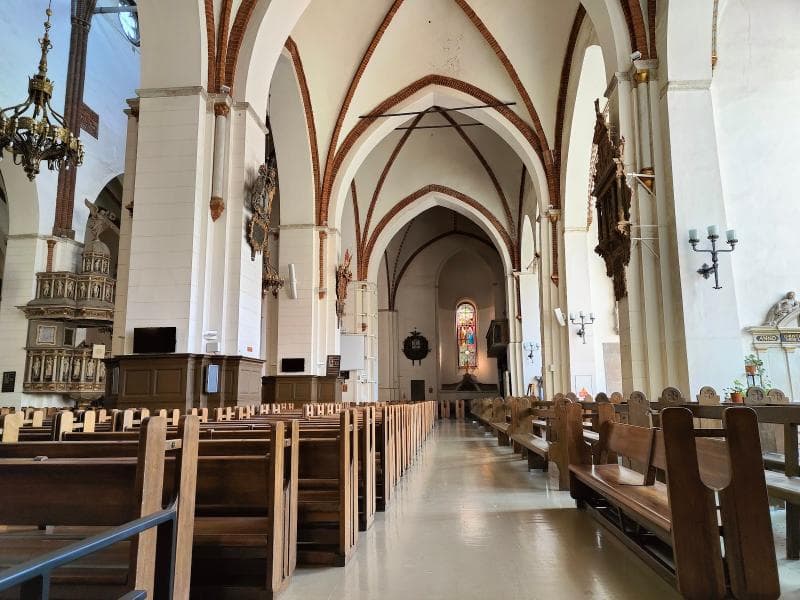
Explore Riga Cathedral's Dome Square Entrance in Latvia, a historic gateway to the Baltic's largest medieval church, rich in history and culture.
Overview
The Dome Square Entrance, nestled within the grandeur of Riga Cathedral in Riga, Latvia, serves as a magnificent gateway to centuries of history and culture. Dome Square, known locally as Doma laukums, is the largest and most central square in Riga's Old Town, acting as a vibrant heart where seven historic streets converge. This expansive cobblestone plaza is not merely a path to the cathedral but an integral part of the visitor's experience, providing the perfect vantage point for appreciating the cathedral's impressive facade. It's a place where the past gracefully intertwines with the present, inviting travelers to step into Riga's rich narrative.
The Riga Cathedral itself, formally known as The Cathedral Church of Saint Mary, stands as a towering testament to the city's enduring legacy. Founded in 1211, it is recognized as the largest medieval church in the Baltic States and serves as the seat of the Archbishop of the Latvian Evangelical Lutheran Church. The main entrance, facing Dome Square, is where many visitors begin their exploration of this architectural marvel and cultural institution.
History & Cultural Background
The story of Riga Cathedral begins with its foundation stone laid by Bishop Albert of Riga on July 25, 1211. Over the centuries, the cathedral evolved, incorporating Romanesque, Gothic, Baroque, and even Art Nouveau architectural styles, making it a unique 'encyclopedia of architectural styles' within its walls. The oldest sections retain Romanesque characteristics, while Gothic elements were added during expansions, and an 18th-century Baroque tower now crowns the structure.
Dome Square's current appearance is relatively younger than the cathedral. Its development began in the late 19th century when several buildings were razed to create an unobstructed view of the cathedral's grand entrance portals. The square officially acquired its name in 1885, with its construction completed by 1936. During the Soviet era, Riga Cathedral was used as a concert hall, its religious functions temporarily suspended until Latvia regained independence in 1991, when services resumed. Dome Square also holds significant historical weight, notably as a central gathering point during the 1991 Barricades, where thousands of Latvians converged to protect their newly declared independence.
What Makes It Special
The Dome Square Entrance offers more than just access; it provides a profound sense of arrival at one of the Baltic's most significant cultural landmarks. What makes this spot truly special is the harmonious blend of the expansive square, which allows for full appreciation of the cathedral's immense scale and diverse architectural tapestry, and the cathedral's internal wonders. The cathedral boasts one of Europe's largest and most famous pipe organs, built by Walcker in 1882-83, featuring thousands of pipes that produce an awe-inspiring sound. This instrument continues to be a major draw, with regular concerts held within the cathedral.
The square itself is a vibrant public space, surrounded by historic buildings like the Riga Bourse House, and constantly abuzz with activity. It serves as an open-air stage for various cultural events, festivals, and popular Christmas markets, making it a dynamic intersection of art, history, and daily life. The vista from Dome Square also allows visitors to admire the cathedral's distinctive weathercock, a symbol of Riga that has adorned its spire for centuries.
Stories, Fun Facts & Local Details
Local lore tells of a specific marked point within Dome Square from which one can glimpse all three golden cockerels atop Riga's Old Town churches, a charming detail that adds a layer of discovery to your visit. The word 'Dome' in the cathedral's name is derived from the German 'Dom,' meaning cathedral, making 'Dome Cathedral' a historically descriptive, albeit somewhat redundant, term.
Beneath the floor of the cathedral's nave lie centuries-old carved tombstones, a quiet historical record of medieval merchants and bishops that visitors can literally walk upon. The cathedral's cloister houses the Museum of the History of Riga and Navigation, offering further insight into the city's past and the cathedral's role within it. This intricate history includes a period during the Soviet occupation when the cathedral functioned solely as a concert hall, a pragmatic move that ironically helped preserve its magnificent organ and structure.
Visitor Perspective
Approaching Riga Cathedral from Dome Square offers a truly immersive experience. The sheer size and architectural complexity of the building, a patchwork of styles spanning eight centuries, captivate the eye. As you enter, the vastness of the nave and the potential for resonant acoustics, especially during an organ concert, are palpable. A typical visit might take an hour or two, allowing time to explore the interior, appreciate the stained glass windows, and perhaps visit the Romanesque cloister.
The square is easily accessible on foot from other Old Town attractions, making it a natural focal point for exploration. While the exterior, with its red brick and impressive tower, is captivating, stepping inside and experiencing the atmosphere—be it through a quiet contemplation or the thunderous sound of the organ—is essential. Remember to check the cathedral's official website for current visiting hours and concert schedules, as these can vary.
Coordinates: 24.10444, 56.94917
View on Google Maps💬 How Travelers Describe This Place
Based on community votes
Unique
540Must See
470Beautiful
410Photogenic
147Interesting
114
Traveler Stories
Discover memorable experiences shared by travelers who have visited this place.
No traveler stories yet.
Be the first traveler to share what made this place memorable.

Tour
By
Spot
Discover amazing places around the world. Your journey starts here.
Explore
© 2026 TourBySpot. All rights reserved.