Praça Do Comércio
Lisbon, Portugal
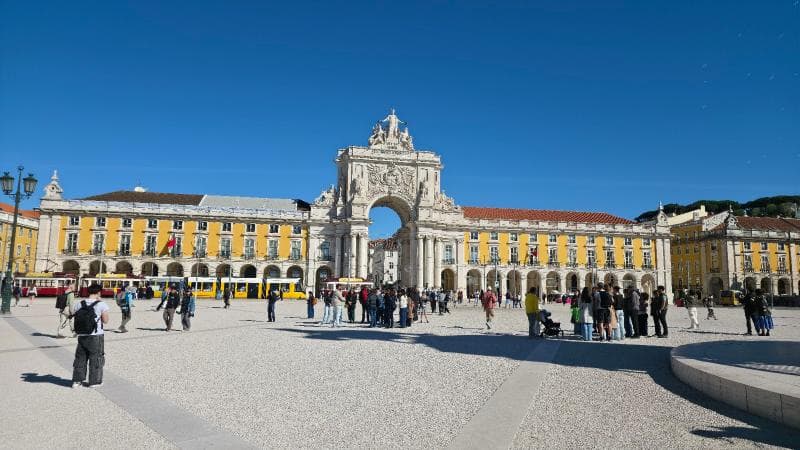
Explore Praça do Comércio in Lisbon, Portugal – an iconic riverside square, rich in history, architectural grandeur, and cultural significance.
Overview
Praça do Comércio, also affectionately known by locals as Terreiro do Paço, stands majestically as Lisbon's grandest square, opening dramatically onto the Tagus River estuary. This expansive, U-shaped plaza is more than just a historical landmark; it's the symbolic gateway to Portugal's capital, where the city truly meets the sea. Surrounded by elegant, arcaded yellow buildings, the square's symmetrical design and impressive scale immediately capture the attention of visitors, offering stunning views and a vibrant atmosphere.
Strategically positioned in the heart of Lisbon's Baixa district, Praça do Comércio serves as a vital hub, connecting the city's grid-like downtown with the waterfront. It's a place where history resonates with every step, and where the bustling energy of contemporary Lisbon unfolds against a backdrop of architectural splendor.
History & Cultural Background
Before the devastating earthquake of 1755, the area now occupied by Praça do Comércio was home to the Paço da Ribeira, the Royal Palace of Lisbon, a magnificent residence built by King Manuel I in the 16th century. This palace, along with its extensive library and art collection, was entirely destroyed by the seismic event and subsequent tsunami and fires.
The square's current form is a testament to the vision of Sebastião José de Carvalho e Melo, the Marquis of Pombal, who orchestrated the comprehensive reconstruction of Lisbon's downtown after the catastrophe. He transformed the former 'Palace Yard' (Terreiro do Paço) into the 'Commerce Square' (Praça do Comércio), reflecting a new economic and social order that prioritized the trading, financial, and bourgeois classes crucial for the city's revival. The design embraced anti-seismic construction techniques and a rational, geometric layout, making it a pioneering example of 18th-century urban planning.
In June 1910, just months before the establishment of the Portuguese Republic, Praça do Comércio was classified as a National Monument of Portugal, recognizing its profound historical and architectural significance.
What Makes It Special
What truly sets Praça do Comércio apart is its harmonious blend of monumental architecture and its unparalleled connection to the Tagus River. The U-shaped complex of yellow buildings, adorned with arcades, creates a grand, embracing space. At its northern end stands the majestic Rua Augusta Arch, a triumphal arch designed to welcome those entering the city. This arch is crowned by statues representing Glory rewarding Valour and Genius, with figures below symbolizing Portugal's great rivers, the Tagus and the Douro. Visitors can ascend to the arch's viewing platform for breathtaking panoramic views of the square, the Baixa district, and the river.
In the geometric center of the square, facing the river, is the imposing bronze equestrian statue of King José I, sculpted by Joaquim Machado de Castro and unveiled in 1775. This was the first monumental statue dedicated to a king in Lisbon and remains a focal point of the plaza. Towards the river, the Cais das Colunas, a flight of marble steps flanked by two columns, once served as the noble entrance to the city, where dignitaries arriving by boat would disembark directly into the square.
Stories, Fun Facts & Local Details
- Despite its official name, many locals still fondly refer to the square as Terreiro do Paço, honoring its past as the site of the royal palace.
- The equestrian statue of King José I depicts him riding over serpents, a powerful allegory of his reign overcoming the chaos and tragedy of the 1755 earthquake.
- The Rua Augusta Arch, though part of the original Pombaline plan, was only completed in 1873, nearly a century after the square's initial reconstruction.
- The historic Martinho da Arcada café-restaurant, established in 1782 and considered Lisbon's oldest, is located under the northern arcade and was a beloved haunt of the famous Portuguese poet Fernando Pessoa.
- The Cais das Colunas, with its two distinctive columns, has welcomed many significant figures, including Queen Elizabeth II, who disembarked here in 1957.
- Tragically, Praça do Comércio was the scene of the assassination of King Carlos I and his heir, Prince Luís Filipe, on February 1, 1908, a pivotal event that hastened the end of the Portuguese monarchy.
- The buildings surrounding the square, originally intended for government offices regulating customs and port activities, now house various cultural institutions, shops, cafes, and restaurants, alongside some remaining governmental departments.
Visitor Perspective
For any traveler to Lisbon, Praça do Comércio is an unmissable destination, offering a captivating blend of history, culture, and scenic beauty. It's an ideal starting point for exploring the city, especially the Baixa district, with its grid of bustling streets. You can stroll along the riverfront promenade, enjoy the lively atmosphere with street performers, or relax at one of the many cafes and restaurants within the square or its arcades, savoring Portuguese cuisine.
Beyond its open spaces, the square provides access to several engaging attractions. Visit the Lisboa Story Centre for an interactive journey through the city's history, including the 1755 earthquake. Explore the Museu da Cerveja (Beer Museum) or the Centro Interpretativo da História do Bacalhau (Codfish History Interpretation Centre) for unique insights into Portuguese culture. Climbing the Arco da Rua Augusta is highly recommended for unparalleled photo opportunities and panoramic vistas. Wear comfortable shoes, allocate ample time to soak in the ambiance, and prepare to be enchanted by this iconic Lisbon landmark.
Coordinates: -9.136822, 38.70827
View on Google Maps💬 How Travelers Describe This Place
Based on community votes
Unique
896Photogenic
550Must See
102Beautiful
95Interesting
28
Traveler Stories
Discover memorable experiences shared by travelers who have visited this place.
No traveler stories yet.
Be the first traveler to share what made this place memorable.
Things to see at Praça Do Comércio



Tour
By
Spot
Discover amazing places around the world. Your journey starts here.
Explore
© 2026 TourBySpot. All rights reserved.