Statue Of King José I
Lisbon, Portugal
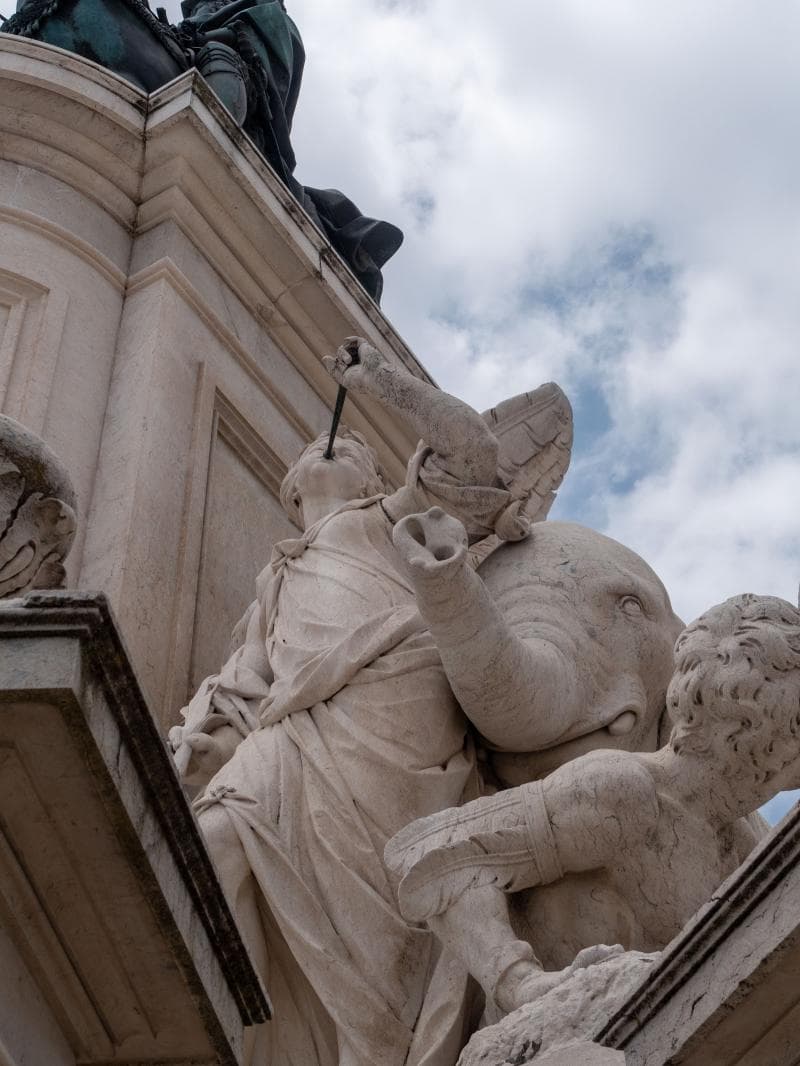
Explore the historic Equestrian Statue of King José I in Lisbon's Praça do Comércio, a symbol of Portugal's resilience after the 1755 earthquake.
Overview
At the heart of Lisbon's magnificent Praça do Comércio stands the Equestrian Statue of King José I, a commanding bronze monument that is much more than a mere depiction of a monarch. This iconic statue serves as a powerful symbol of Lisbon's enduring spirit and resilience, commemorating the city's dramatic reconstruction following the devastating 1755 earthquake. Positioned majestically facing the Tagus River, it is a focal point of one of Europe's grandest squares, inviting visitors to delve into a rich tapestry of history, art, and national pride.
Sculpted by the renowned Joaquim Machado de Castro, the monument stands an impressive 14 meters high, combining the equestrian figure with an elaborately decorated limestone pedestal. It was a groundbreaking work for its time, marking several firsts in Portuguese art and engineering, and remains a testament to the vision that rebuilt a city from its ashes.
History & Cultural Background
The story of the Statue of King José I is inextricably linked to one of Lisbon's most cataclysmic events: the All Saints' Day earthquake of November 1, 1755. This disaster, followed by tsunamis and fires, left much of the city, including the royal Ribeira Palace which once stood on the site of Praça do Comércio, in ruins.
In the wake of this destruction, King José I, often known as 'the Reformer', entrusted his chief minister, Sebastião José de Carvalho e Melo – later the Marquês de Pombal – with the monumental task of rebuilding Lisbon. Pombal's vision was for a modern, earthquake-resistant city, and the new Praça do Comércio was designed as its grand, commercial gateway.
The idea for a central monument to King José I was part of this ambitious reconstruction. While initial designs were prepared by architect Eugénio dos Santos, the execution of the bronze equestrian statue was ultimately commissioned to Joaquim Machado de Castro, a leading Portuguese sculptor. The colossal bronze figure was cast in a single pour on October 15, 1774, a remarkable technical achievement for the era, and was unveiled on June 6, 1775, coinciding with the King's 61st birthday.
What Makes It Special
The Statue of King José I holds a unique place in Portuguese history and art. It was the very first equestrian statue cast in Portugal and the first public monument in the country dedicated to a living person. Its creation demonstrated advanced metallurgical techniques, being one of the first monumental statues in the world to be cast in a single, continuous pour of copper alloy.
Artistically, the statue depicts King José I with a regal bearing, atop his horse, which has a raised front hoof, conveying a sense of dynamic motion. Crucially, writhing snakes are crushed beneath the horse's hooves, an allegorical detail representing order triumphing over chaos – a direct reference to Lisbon's recovery from the 1755 earthquake. The elaborate limestone pedestal, designed by Reinaldo Manuel dos Santos, features allegorical figures of Triumph and Fame. Fame is depicted driving an elephant over a human figure, symbolizing Asia and Africa, while Triumph leads a horse over another figure, representing Europe and America, reflecting Portugal's historical maritime influence and global reach.
Stories, Fun Facts & Local Details
One fascinating detail about King José I himself is that following the 1755 earthquake, he developed severe claustrophobia and refused to live within solid walls. For the remainder of his reign, the royal court resided in an elaborate complex of tents and pavilions on the hills of Ajuda. This personal experience underscores the profound impact of the disaster that the statue indirectly commemorates.
Another intriguing aspect is the medallion featuring the bust of the Marquês de Pombal on the front of the statue's pedestal. While initially part of the design, it was removed in 1777 after King José I's death and Pombal's fall from power, only to be restored in 1833. This detail highlights the political complexities and the immense influence Pombal wielded during the reconstruction period. The bas-relief on the opposite side of the pedestal, titled 'Royal Generosity', symbolically shows a crowned female figure guiding a personified Lisbon, depicted as a fallen woman, towards rebuilding, assisted by Commerce, Providence, and Architecture.
Visitor Perspective
Standing in the center of Praça do Comércio, the Statue of King José I offers a prime vantage point for appreciating the grandeur of the square and its historical significance. Visitors often gather around its base, admiring the intricate details of Machado de Castro's work and the allegorical figures that tell a deeper story of national triumph. The statue's position provides excellent photo opportunities, framed by the symmetrical yellow buildings of the square and the sweeping views of the Tagus River.
It serves as a silent guardian, overseeing the vibrant daily life of Lisbon, from bustling tourists to local events. Its commanding presence anchors the Praça do Comércio, making it an unmissable landmark and a powerful reminder of a city's ability to rebuild and thrive against all odds.
Coordinates: -9.136462, 38.707509
View on Google Maps💬 How Travelers Describe This Place
Based on community votes
Unique
981Beautiful
795Must See
753Photogenic
439Interesting
66
Traveler Stories
Discover memorable experiences shared by travelers who have visited this place.
No traveler stories yet.
Be the first traveler to share what made this place memorable.

Tour
By
Spot
Discover amazing places around the world. Your journey starts here.
Explore
© 2026 TourBySpot. All rights reserved.