Riverfront Promenade
Lisbon, Portugal
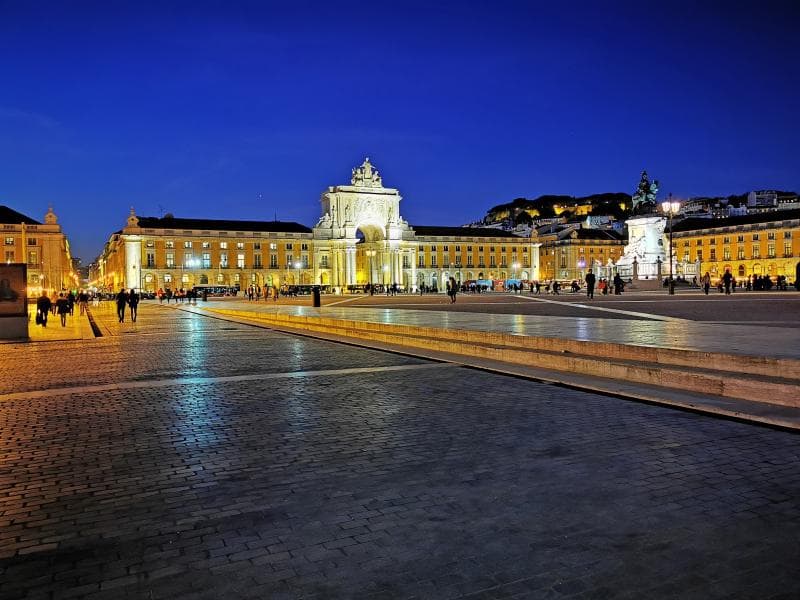
Explore Lisbon's Riverfront Promenade at Praça do Comércio. Discover Cais das Colunas, rich history, stunning Tagus River views, and architectural grandeur in Portugal's capital.
Overview
At the majestic Praça do Comércio in Lisbon, Portugal, travelers discover more than just a grand square; they encounter a pivotal connection to the Tagus River: the Riverfront Promenade, famously embodied by the Cais das Colunas. This iconic sub-spot at the southern edge of the Praça do Comércio offers a breathtaking panorama of the vast Tagus estuary, serving historically and emotionally as Lisbon's gateway to the world. It is a place where the city's rich past gracefully meets its vibrant present, inviting visitors to step directly to the water's edge and soak in centuries of maritime history and stunning natural beauty.
The Praça do Comércio itself, also known by its older name Terreiro do Paço, is one of Europe's largest and most significant squares. Its U-shaped architectural embrace opens directly to the river, a deliberate design choice that underscores Lisbon's enduring relationship with the sea. The Riverfront Promenade here is not merely a path but a symbolic threshold, where land and water merge, offering unparalleled views and a tangible link to Portugal's Age of Discoveries.
History & Cultural Background
The history of the Riverfront Promenade and the Praça do Comércio is inextricably linked to one of Lisbon's most dramatic events: the devastating earthquake and tsunami of 1755. Before this catastrophe, the area was home to the Paço da Ribeira, the Royal Palace, which, along with much of the city, was tragically destroyed.
The subsequent reconstruction, masterminded by Sebastião José de Carvalho e Melo, the Marquis of Pombal, and designed by architect Eugénio dos Santos, reimagined Lisbon's downtown, known as the Baixa Pombalina. The Praça do Comércio was reborn as a symbol of the city's resilience and a new era focusing on commerce, replacing the old royal seat. The Cais das Colunas, as part of this grand rebuilding, emerged as the formal maritime entrance to Lisbon. Its marble steps and elegant columns were strategically placed to welcome dignitaries and royalty arriving by water, reinforcing Portugal's status as a formidable seafaring nation. It became the ceremonial 'door' to Lisbon, where merchant ships would once unload their goods directly onto the square, making it a crucial hub for maritime trade.
What Makes It Special
The Riverfront Promenade at Praça do Comércio, dominated by the Cais das Colunas, holds a unique allure. What makes it truly special is its dual identity as both a historical monument and a living, breathing part of the city. The two imposing columns, from which the quay derives its name, are said to be replicas of those found in Solomon's Temple, symbolizing wisdom and devotion. They stand as silent sentinels, framing the expansive view of the Tagus River. The broad marble steps descend gracefully into the water, providing an immediate and intimate connection to the estuary, a feature that feels profoundly integrated with the square's overall design.
This riverfront area is a visual testament to Lisbon's grand urban planning, providing a harmonious balance between the impressive Pombaline architecture of the square's surrounding buildings and the natural beauty of the river. It's a place designed to impress, whether one arrived by sea centuries ago or approaches it today from the bustling city streets, offering a sense of openness and grandeur that few other urban spaces can match.
Stories, Fun Facts & Local Details
The Cais das Colunas has witnessed countless historical moments and holds some fascinating stories. Perhaps one of the most memorable was the arrival of Queen Elizabeth II in 1957, who disembarked here, using the Cais das Colunas as the royal entrance to Portugal. This event solidified its reputation as a place of ceremonial significance.
Interestingly, the columns themselves have had an eventful past. They were initially constructed as part of the post-earthquake reconstruction but were later taken down in the late 19th century, only to be replaced in 1929. More recently, during metro expansion works in 1997, they were temporarily removed once again and meticulously reinstalled in 2008, ensuring their continued presence at this historic site. This resilience mirrors Lisbon's own history of rebuilding and renewal. While Cais das Colunas is the direct riverfront of Praça do Comércio, the broader scenic waterfront promenade, Avenida Ribeira das Naus, stretches west towards Cais do Sodré, hinting at the vast maritime history that unfolded along these banks. The locals often refer to the entire square by its older name, Terreiro do Paço, a subtle nod to the royal palace that once stood here, keeping its memory alive.
Visitor Perspective
For the curious traveler, the Riverfront Promenade at Praça do Comércio is an essential experience in Lisbon. Standing on the Cais das Colunas, one can truly feel the scale of the Tagus River, which is so wide it is sometimes mistaken for the sea. The expansive views extend across the water, providing a sense of calm amidst the city's energy. It's a prime spot for a leisurely stroll, particularly as the day draws to a close, when the setting sun bathes the river and the square's ochre-colored facades in a golden glow, creating a truly picturesque scene.
Beyond the scenic beauty, the promenade offers a unique vantage point to appreciate the architectural grandeur of the Praça do Comércio and the Arco da Rua Augusta that frames its northern end. Imagining the historical arrivals of dignitaries, the bustling maritime trade, and the city's resilience after the 1755 earthquake adds layers of meaning to the visit. It feels like stepping onto a stage where history was made, offering both a moment of tranquil reflection and a deeper understanding of Lisbon's soul.
Coordinates: -9.1365, 38.7076
View on Google Maps💬 How Travelers Describe This Place
Based on community votes
Photogenic
753Must See
747Beautiful
302Interesting
172Unique
79
Traveler Stories
Discover memorable experiences shared by travelers who have visited this place.
No traveler stories yet.
Be the first traveler to share what made this place memorable.

Tour
By
Spot
Discover amazing places around the world. Your journey starts here.
Explore
© 2026 TourBySpot. All rights reserved.