Arco Da Rua Augusta
Lisbon, Portugal
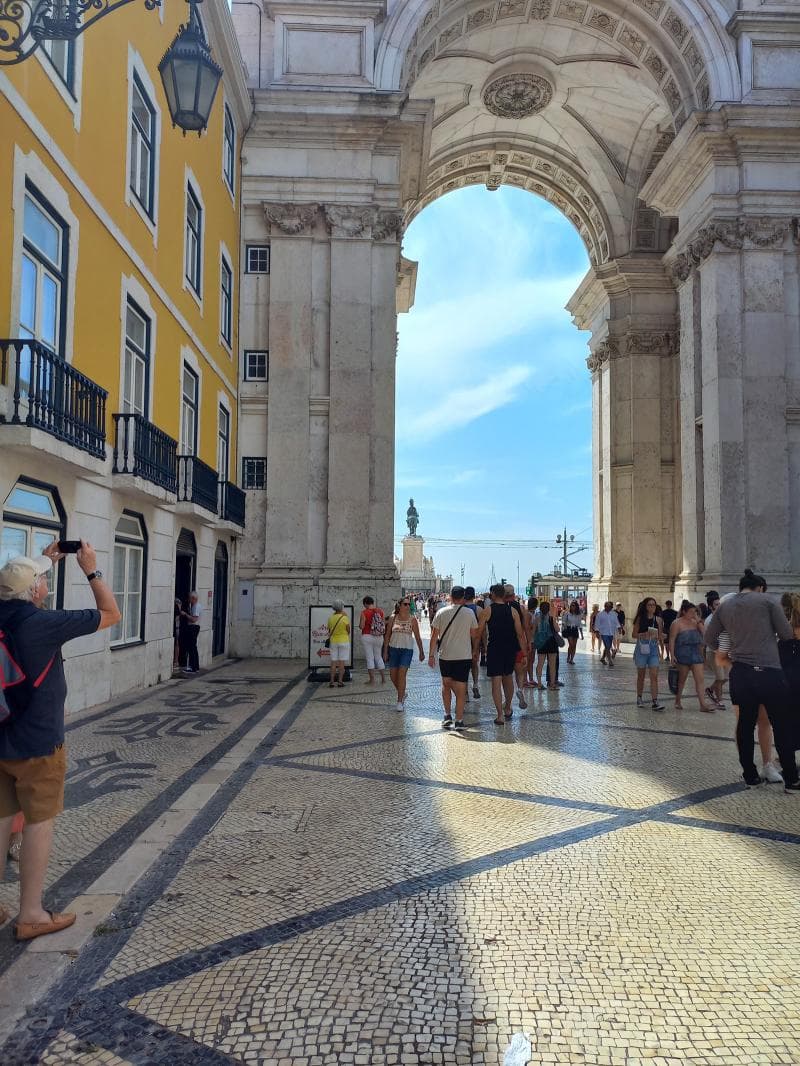
Discover Lisbon's Arco da Rua Augusta, a symbol of resilience. Explore its history, stunning architecture, and panoramic views from its viewpoint in Praça do Comércio, Portugal.
Overview
Dominating the northern edge of Lisbon's majestic Praça do Comércio, the Arco da Rua Augusta stands as a monumental triumphal arch, a powerful emblem of the city's resilience. This grand structure serves as a magnificent gateway, connecting the expansive riverside square with the lively, pedestrianized Rua Augusta. Primarily commemorating Lisbon's remarkable rebirth after the devastating 1755 earthquake, the arch offers an accessible elevated viewpoint. From here, visitors are treated to unparalleled panoramic vistas that capture the historic heart of Lisbon, making it a compelling highlight for any traveler.
History & Cultural Background
The genesis of the Arco da Rua Augusta is intrinsically tied to one of Portugal's most catastrophic historical events: the 1755 Lisbon earthquake, followed by a tsunami and fires, which left much of the capital in ruins. In its wake, the Marquis of Pombal initiated an ambitious urban reconstruction plan, leading to the geometrically organized Baixa Pombalina. A grand arch, intended to conclude the Praça do Comércio—then known as Terreiro do Paço and the site of the royal palace—was a pivotal part of this new design.
Construction began in 1775, but political changes and other challenges led to its abandonment for nearly a century. Originally envisioned potentially as a bell tower, the concept evolved into the elaborate triumphal arch we admire today. It was finally completed in 1873, with some sources indicating 1875, under the guidance of architect Veríssimo José da Costa. This prolonged construction, spanning over a century, profoundly symbolizes the Portuguese determination to rebuild and redefine their capital from the ashes.
What Makes It Special
The Arco da Rua Augusta showcases a captivating blend of neoclassical grandeur and neo-Baroque details, characterized by its imposing scale and rich sculptural adornment. Its facade is distinguished by six towering columns, reaching approximately 11 meters in height. Atop the arch rests an allegorical sculptural group by French artist Célestin Anatole Calmels, depicting 'Glory crowning Valor and Genius'. The colossal figure of Glory, standing about 23 feet tall, symbolizes victory and honor, flanked by Valor and Genius.
Below this central tableau, statues by Victor Bastos celebrate key figures from Portuguese history: Nuno Alvares Pereira and the Marquis of Pombal on the right, and Vasco da Gama and Viriatus on the left. Two recumbent figures symbolize Portugal's significant rivers, the Tagus and Douro. A notable Latin inscription, 'VIRTVTIBVS MAIORVM VT SIT OMNIBVS DOCVMENTO' (To the virtues of the greatest, so that it may serve as a lesson to all), offers a timeless declaration of national pride. Adding functional elegance, a working clock mechanism is integrated into the arch's north facade, facing Rua Augusta.
Stories, Fun Facts & Local Details
The arch's century-long journey to completion is a testament to its symbolic importance, overcoming numerous obstacles. An intriguing artistic consideration was the necessity for the figures above the arch's high cornice to be colossal; this ensured they were visible and impactful from the ground below.
Beyond its grand appearance, the Arco da Rua Augusta is a storybook in stone. Each sculpted figure and the Latin inscription serve as a constant, tangible reminder of Portugal's profound history, celebrating ancestral virtues, heroic figures, and spirit of recovery and exploration. For a deeper dive into its past, visitors can explore a small exhibition located within the arch itself before ascending to the viewpoint, showcasing its construction and the intricate mechanisms of its historic clock.
Visitor Perspective
Since opening to the public in August 2013, the Arco da Rua Augusta's observation deck has become an essential Lisbon experience. Reaching the top involves a convenient elevator ride, followed by a brief climb up a set of narrow, steep stairs. The reward is immediate: a breathtaking 360-degree panoramic vista. From here, you can absorb the grandeur of Praça do Comércio, observe the busy Tagus River, appreciate the meticulous urban planning of the Baixa district, and distinguish iconic landmarks such as the Castelo de São Jorge and Lisbon's characteristic terracotta rooftops.
Passing beneath the arch, from the monumental Praça do Comércio into the lively Rua Augusta, offers a symbolic journey from historical reverence to vibrant contemporary city life. The arch not only provides a stunning visual experience but also serves as an excellent starting point for exploring the charming pedestrian streets, diverse shops, and inviting cafes of the Baixa district, truly connecting you with the vibrant pulse of Lisbon.
Coordinates: -9.1368, 38.7084
View on Google Maps💬 How Travelers Describe This Place
Based on community votes
Unique
585Must See
550Interesting
546Photogenic
92Beautiful
56
Traveler Stories
Discover memorable experiences shared by travelers who have visited this place.
No traveler stories yet.
Be the first traveler to share what made this place memorable.

Tour
By
Spot
Discover amazing places around the world. Your journey starts here.
Explore
© 2026 TourBySpot. All rights reserved.