Patuxai
Vientiane, Laos
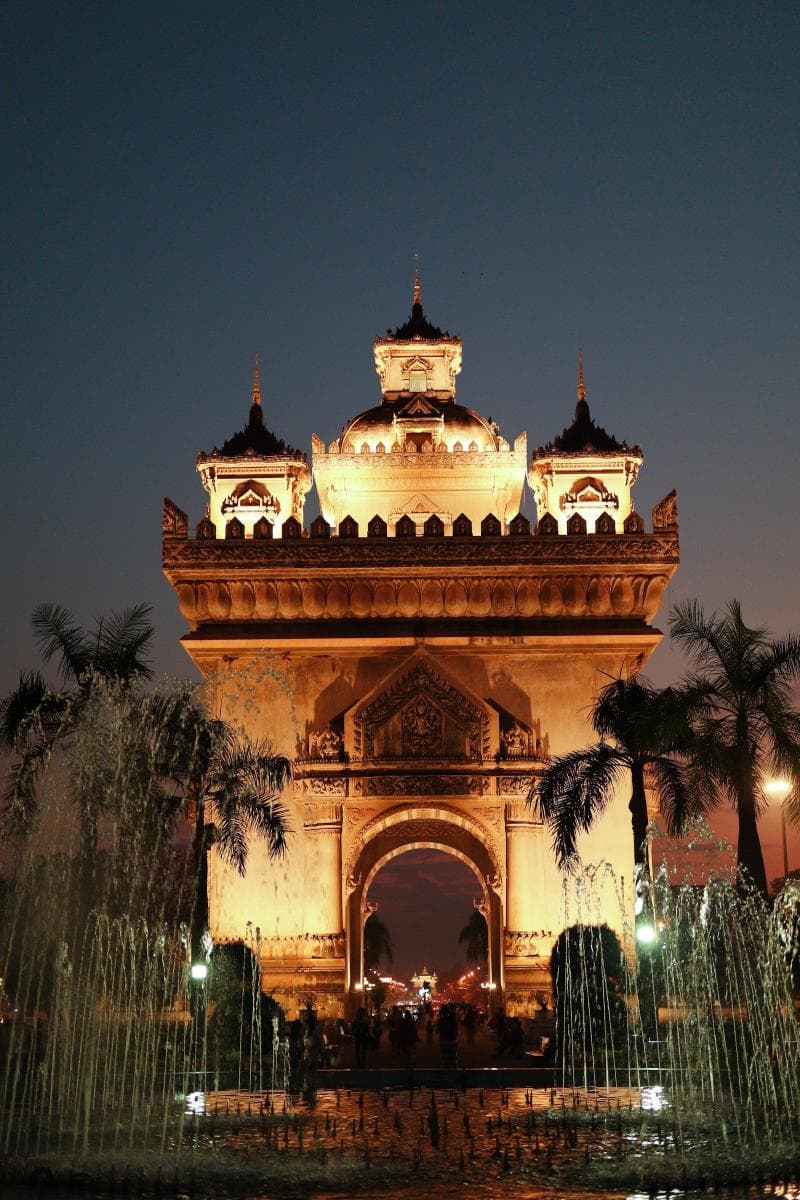
Discover Patuxai, Vientiane's iconic Victory Gate, a war monument blending French grandeur with Lao artistry. Explore its history, unique design, and climb for panoramic city views.
Overview
Patuxai, often referred to as the 'Victory Gate' or 'Gate of Triumph,' stands proudly in the heart of Vientiane, Laos. This monumental arch, whose name is pronounced 'Pah-too-sigh', serves as a powerful symbol of the nation's journey towards independence. Located at the end of the grand Lane Xang Avenue, Patuxai is an unmistakable landmark that captivates visitors with its unique blend of French architectural grandeur and distinctive Laotian artistry. While frequently likened to Paris's iconic Arc de Triomphe, Patuxai asserts its own identity through intricate local designs and deep cultural significance, making it a must-see destination in the Lao capital.
History & Cultural Background
Construction of Patuxai commenced in 1957 and was largely completed by 1968, though some sources indicate construction continuing into the 1960s. Originally named the Anousavary Monument, also known to the French as 'Monument Aux Morts,' it was conceived as a solemn memorial. The monument honors the Laotian soldiers who bravely fought and sacrificed their lives during World War II and the critical war for independence from France, which was achieved in 1949.
A fascinating aspect of Patuxai's history lies in its construction. The monument was built using funds and cement provided by the United States, which had initially intended for these resources to be used for the construction of a new airport runway. However, the Royal Lao Government repurposed these materials for the monument, leading to its enduring local nickname: 'the vertical runway.' This unconventional origin story adds a layer of wry humor to its solemn purpose. The design itself was the vision of Laotian architect Tham Sayasithsena. Following the Pathet Lao's ascent to power in 1975 and the end of the monarchy, the monument was officially renamed Patuxai, signifying their victory and further embedding its role as a symbol of national triumph.
What Makes It Special
What truly sets Patuxai apart is its intricate and deeply symbolic Laotian design, which masterfully integrates Buddhist and Hindu mythological elements into its structure. Unlike its Parisian counterpart, Patuxai features five distinct towers that rise majestically. These five towers are not merely decorative; they symbolize the five principles of peaceful coexistence among nations and, profoundly, the five Buddhist principles of 'thoughtful amiability, flexibility, honesty, honor, and prosperity.'
The exterior of the arch is a canvas of traditional Laotian motifs, adorned with carvings of revered Buddhist symbols and Hindu deities such as Brahma, Vishnu, and Indra. Visitors will notice the graceful figures of apsaras (female spirits of the clouds and waters), kinnaree (mythical half-woman, half-bird creatures), and formidable naga serpents, all contributing to its unique aesthetic. The ceilings beneath the archways are equally captivating, featuring ornate paintings of Hindu gods and other mythological beings, including the three-headed elephant Erawan. Four grand gateways face the cardinal directions, each flanked by decorative ponds designed to represent the open petals of a lotus flower, a tribute to the nation's brave warriors. Even the monument's roof draws inspiration from afar, with elements reminiscent of India's Taj Mahal.
Stories, Fun Facts & Local Details
The 'vertical runway' anecdote remains one of the most endearing stories associated with Patuxai, reflecting a resourceful and perhaps defiant spirit in its construction. The estimated cost of its initial construction was around 63 million kips. For many Lao people, the fact that the monument remained unfinished for some time was seen as a poignant reflection of the country's historical poverty and the ongoing challenges in national development.
Surrounding the monument is the beautifully landscaped Patuxai Park, a tranquil oasis featuring gardens and fountains. Notably, the park hosts a musical fountain, a gift from China, which often provides a lively atmosphere for both locals and tourists. In a gesture of global harmony, the World Peace Gong was installed within the park grounds in 2008. Inside the monument itself, visitors can explore various levels that house souvenir shops, offering local handicrafts and mementos, making it a place where history and commerce intertwine.
Visitor Perspective
For those eager to fully experience Patuxai, climbing to its upper levels is a highlight. Visitors can ascend through internal staircases to various galleries and ultimately to a rooftop observation deck. While there is no elevator in all areas, some reports indicate an elevator providing access to upper levels, offering a less strenuous climb for some. From this vantage point, sweeping panoramic views of Vientiane unfold, showcasing the city's low skyline, the bustling Lane Xang Avenue, and on clear days, even glimpses of the Mekong River and the distant hills of Thailand.
Entry to the surrounding grounds and park is free, but a modest fee is charged to climb the monument's tower. Patuxai generally welcomes visitors from approximately 8:00 AM or 8:30 AM to 4:30 PM or 5:00 PM, though it's always advisable to check current operating hours. A visit of one to two hours is typically recommended to fully appreciate both the monument and its surrounding park. Patuxai's central location on Lane Xang Avenue makes it easily accessible by foot, bus, or tuk-tuk. For photographers, sunrise and sunset offer the most enchanting lighting, casting a golden glow upon this enduring symbol of Laotian pride.
Coordinates: 102.61861, 17.97056
View on Google Maps💬 How Travelers Describe This Place
Based on community votes
Photogenic
896Beautiful
102Unique
102Interesting
95Must See
87
Traveler Stories
Discover memorable experiences shared by travelers who have visited this place.
No traveler stories yet.
Be the first traveler to share what made this place memorable.
Things to see at Patuxai



Tour
By
Spot
Discover amazing places around the world. Your journey starts here.
Explore
© 2026 TourBySpot. All rights reserved.