Viewing Balconies
Vientiane, Laos
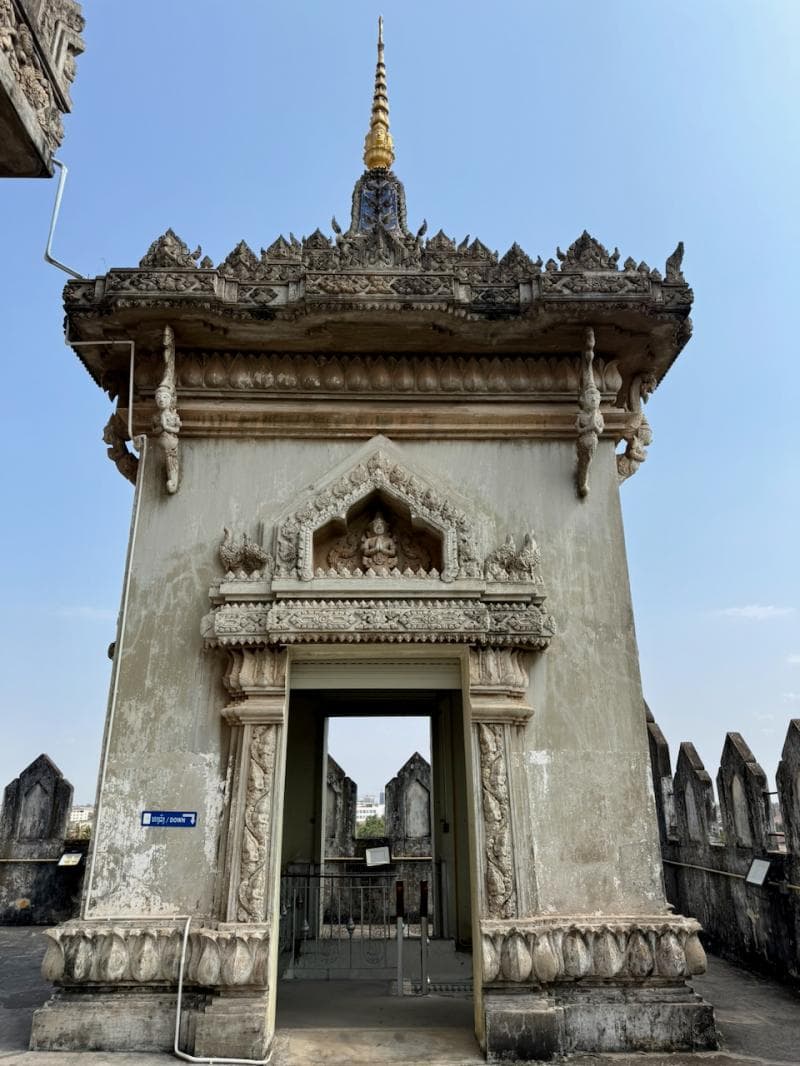
Discover the 'Viewing Balconies' of Patuxai in Vientiane, Laos, for panoramic city views. Explore its history as the 'Victory Gate' and unique Lao architecture.
Overview
Perched majestically at the heart of Vientiane, Laos, Patuxai stands as an iconic symbol of national pride and resilience. Often referred to as the 'Victory Gate' or 'Arc de Triomphe of Vientiane,' this grand monument uniquely blends traditional Lao artistry with classic European triumphal arch design. While its imposing structure commands attention from afar, it is the interior's 'Viewing Balconies' that truly unveil the city's charm. Ascending through the monument offers not just a journey upward, but an immersive experience, culminating in panoramic vistas of Vientiane's sprawling urban landscape and the verdant surroundings. It serves as a profound war memorial, dedicated to those who bravely fought for Laos's independence, and simultaneously functions as a vibrant cultural beacon and a favorite spot for locals and curious travelers alike.
History & Cultural Background
The construction of Patuxai began in 1957 and was largely completed by 1968, a period of significant historical transition for Laos. Originally known as the Anousavali Monument, it was erected to honor the Laotian soldiers who sacrificed their lives during World War II and the subsequent war for independence from France, which concluded in 1949. A fascinating, and often recounted, detail of its history is the origin of its building materials. The monument was constructed using funds and cement provided by the United States, which had intended these resources for the expansion of Vientiane's airport to serve as a base during the Vietnam War. However, the Royal Lao Government ingeniously redirected these resources to build the monumental arch, earning Patuxai the playful local nickname, the 'vertical runway'. After the Pathet Lao victory in 1975, the monument was renamed Patuxai, meaning 'Victory Gate,' further cementing its symbolic significance.
What Makes It Special
What truly sets Patuxai apart from its Parisian inspiration is its deeply embedded Laotian identity. While reminiscent of the Arc de Triomphe, its design is richly adorned with indigenous motifs and symbolism. The monument's exterior features intricate carvings of mythological creatures such as the half-bird, half-woman Kinnari, and the protective Naga serpents, along with delicate lotus motifs, all steeped in Buddhist and Hindu traditions. The ceilings beneath the arches are not plain but painted with vibrant depictions of Hindu deities like Brahma and Vishnu. Atop the structure, five towers rise, representing the five principles of peaceful coexistence among nations and five core Buddhist virtues: thoughtful amiability, flexibility, honesty, honor, and prosperity. The surrounding Patuxai Park enhances its appeal, featuring beautifully landscaped gardens, musical fountains, and walking paths that create a tranquil oasis in the city.
Stories, Fun Facts & Local Details
Beyond its historical gravitas, Patuxai is a place brimming with local stories and intriguing facts. The 'vertical runway' anecdote, born from the unexpected repurposing of American concrete, is a testament to Lao ingenuity and a source of quiet amusement. The monument was designed by Tham Sayasithsena, a Laotian architect whose vision infused the European arch concept with distinct national characteristics. Inside the monument, as visitors ascend, they'll find small souvenir shops on various levels, offering local handicrafts and trinkets, transforming the climb into a treasure hunt. The Patuxai Park, particularly in the evenings, comes alive with locals exercising, strolling, and enjoying the musical fountain show, providing a glimpse into daily Vientiane life. It's a place where the past is honored, and the present is enjoyed, all under the watchful gaze of the Victory Gate.
Visitor Perspective
For any curious traveler, the journey to Patuxai's 'Viewing Balconies' is an essential Vientiane experience. The ascent, typically via staircases, although elevators are also available, offers a unique internal perspective of the monument's structure. As you climb, you pass through the interior, observing the embedded Buddha images and ornate ceiling art up close. Reaching the upper floors and the main observation deck is rewarding. From these balconies, an unobstructed, 360-degree panorama of Vientiane unfolds before your eyes. You can trace the tree-lined Lane Xang Avenue, spot prominent government buildings and temples, and appreciate the city's generally low-rise skyline, extending towards the Mekong River and, on clear days, even catching glimpses of the distant Thai hills. Early mornings or late afternoons are often recommended for cooler weather and softer light, ideal for photography and avoiding the midday heat, making the visit both comfortable and picturesque.
Coordinates: 102.61861, 17.97056
View on Google Maps💬 How Travelers Describe This Place
Based on community votes
Beautiful
965Photogenic
743Unique
629Must See
184Interesting
176
Traveler Stories
Discover memorable experiences shared by travelers who have visited this place.
No traveler stories yet.
Be the first traveler to share what made this place memorable.

Tour
By
Spot
Discover amazing places around the world. Your journey starts here.
Explore
© 2026 TourBySpot. All rights reserved.