Main Arch
Vientiane, Laos
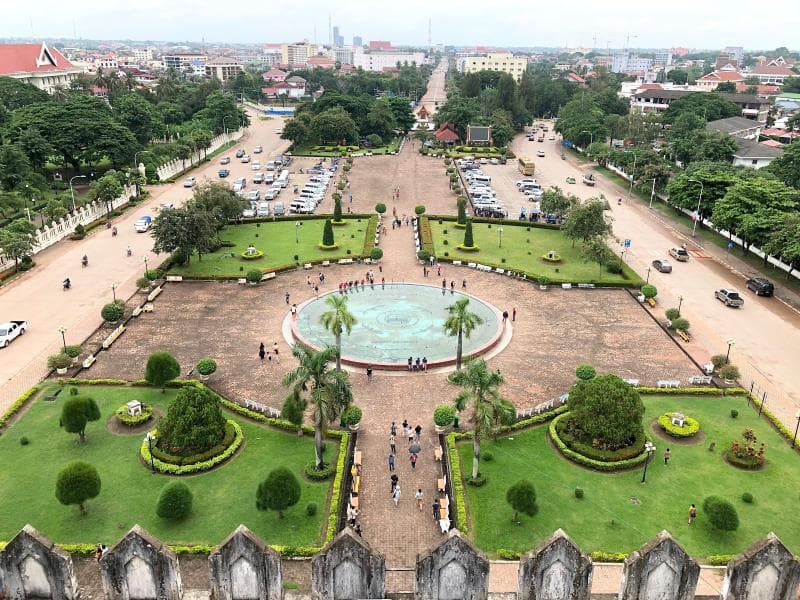
Explore the Main Arch (Patuxai Victory Gate) in Vientiane, Laos, a majestic monument blending French and Laotian architecture, symbolizing national independence and offering panoramic city views.
Overview
The Patuxai, often affectionately referred to as the 'Victory Gate' or the 'Arc de Triomphe of Vientiane', stands as a prominent and iconic monument in the heart of Vientiane, Laos. This monumental arch, whose name translates directly from Lao as 'Victory Gate', is a profound symbol of Laotian national pride and resilience. Its imposing structure commands attention at the end of Lane Xang Avenue, surrounded by beautifully landscaped Patuxai Park, complete with musical fountains. While it shares a striking resemblance to Paris's Arc de Triomphe, the Patuxai distinguishes itself through its intricate integration of traditional Laotian architectural and symbolic elements, making it a truly unique landmark. Visitors can ascend its several levels to an observation deck, offering panoramic vistas of Vientiane's low-rise cityscape.
History & Cultural Background
Construction of the Patuxai commenced in 1957 and was largely completed by 1968, during a turbulent period in Laotian history. Initially, it was known as the 'Anousavary' or 'Anosavari Monument', meaning simply 'Monument'. The monument was conceived as a tribute to the Laotian soldiers who valiantly fought for independence from France, particularly during World War II and the subsequent independence war in 1949. A fascinating aspect of its construction lies in its funding: the monument was built using cement and funds provided by the United States, which were originally earmarked for the expansion of Vientiane's airport to serve as a base for US fighter jets. The Royal Lao Government, however, diverted these resources to erect this grand arch, leading to its enduring nickname among locals as the 'vertical runway'. After the communist Pathet Lao took power in 1975, the monument was formally renamed Patuxai, signifying their victory and serving as a new symbol for the changed political landscape.
What Makes It Special
What truly sets the Patuxai apart is its captivating blend of French monumental grandeur with deeply rooted Laotian cultural artistry. Designed by the Laotian architect Tham Sayasithsena, the monument features five ornate towers atop its structure. These towers are not merely decorative; they symbolize the five principles of peaceful coexistence among nations, as well as the five Buddhist principles of thoughtful amiability, flexibility, honesty, honor, and prosperity. The exterior and interior are adorned with an abundance of traditional Laotian motifs, including mythical creatures like the kinnari (half-bird, half-woman celestial beings), naga serpents, and intricately carved lotus buds. The ceilings beneath its four archways are beautifully painted with depictions of Hindu gods such as Brahma and Vishnu, and other mythological figures, showcasing a rich tapestry of spiritual beliefs. Unlike its Parisian counterpart, the Patuxai boasts four gates, oriented towards the cardinal directions, with ponds in front of each, designed to represent an open lotus flower—a gesture of reverence to Laos' brave warriors.
Stories, Fun Facts & Local Details
Beyond its grand appearance, the Patuxai holds several intriguing stories and fun facts that enrich a traveler's visit. The nickname 'vertical runway' is a testament to the resourcefulness and perhaps a subtle act of defiance by the Royal Lao Government in utilizing foreign aid for a national monument rather than its intended military purpose. The monument's changing name, from 'Anousavary' to 'Patuxai', reflects the shifting political tides and historical narratives of Laos, embodying different eras of national identity. The surrounding Patuxai Park is more than just a green space; it features a musical fountain show, particularly vibrant in the evenings, creating a lively atmosphere for locals and visitors alike. These fountains, combined with the monument's illumination at night, offer a picturesque spectacle. While climbing the structure, visitors may also encounter souvenir shops on some of the intermediate levels, offering a chance to take a piece of Laotian culture home.
Visitor Perspective
For the curious traveler, visiting the Patuxai offers a multifaceted experience. Walking beneath its grand arches, one can admire the detailed Laotian carvings and soak in the historical inscriptions that speak of independence. The climb to the upper levels, typically via a series of spiral staircases, is an integral part of the experience. Although there are no elevators, the ascent is rewarded with expansive, uninterrupted views of Vientiane, stretching across Lane Xang Avenue and beyond. From this vantage point, the city's unique blend of traditional and developing landscapes unfolds. Many recommend visiting in the late afternoon to experience the monument in the golden hour light and then witness the evening illumination and the park's musical fountains. It's a place for reflection, appreciation of architectural beauty, and a tangible connection to Laos's enduring spirit and history. The Patuxai stands not just as a monument, but as a living narrative of Vientiane's past and present.
Coordinates: 102.61861, 17.97063
View on Google Maps💬 How Travelers Describe This Place
Based on community votes
Interesting
894Photogenic
862Must See
748Unique
304Beautiful
35
Traveler Stories
Discover memorable experiences shared by travelers who have visited this place.
No traveler stories yet.
Be the first traveler to share what made this place memorable.

Tour
By
Spot
Discover amazing places around the world. Your journey starts here.
Explore
© 2026 TourBySpot. All rights reserved.