Staircase Galleries
Vientiane, Laos
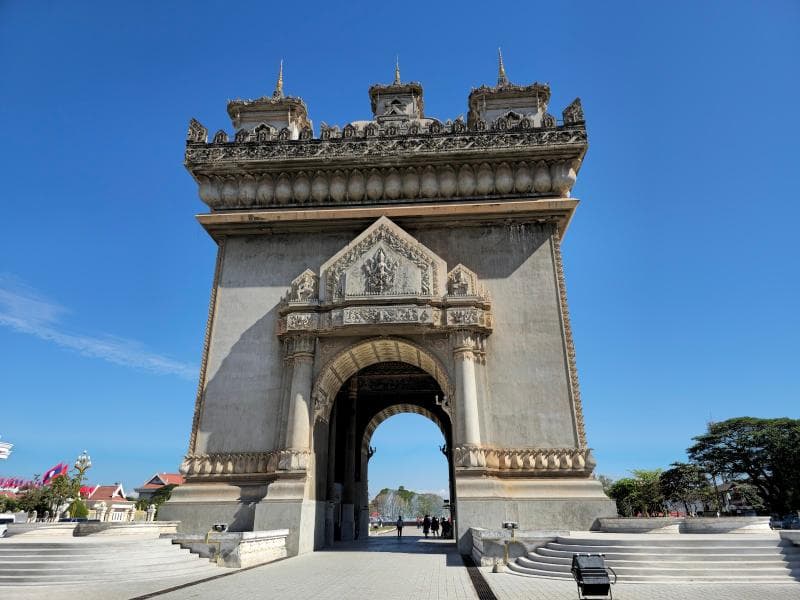
Explore the Patuxai Staircase Galleries in Vientiane, Laos, for panoramic city views and a deep dive into Laotian history and culture.
Overview
Deep within the heart of Vientiane, Laos, stands the majestic Patuxai, often referred to as the 'Victory Gate' or 'Gate of Triumph'. This iconic war monument, with its distinctive Laotian character, anchors the bustling Lane Xang Avenue and forms the centerpiece of a serene park. While drawing architectural comparisons to Paris's Arc de Triomphe, Patuxai proudly showcases its unique heritage through intricate designs and symbolic features. Within its grand structure lies a captivating journey: the Staircase Galleries, an internal network of ascending pathways that invite curious travelers to explore its rich history and cultural narratives, culminating in breathtaking panoramic views of the Lao capital.
History & Cultural Background
The construction of Patuxai commenced in 1957 and reached completion in 1968, marking a significant period in Laotian history. It was erected as a solemn tribute to the valiant Laotian soldiers who sacrificed their lives during World War II and the pivotal independence war against France in 1949. Initially named 'Anousavary', meaning 'Monument', it was later renamed Patuxai, meaning 'Victory Gate', after the Pathet Lao assumed control in 1975, symbolizing their triumph. A remarkable anecdote surrounding its creation is that the monument was built using funds and cement originally provided by the United States for the construction of a new airport, a diversion that humorously earned Patuxai the nickname 'the vertical runway'. The monument's distinct design was conceptualized by the talented Laotian architect, Tham Sayasithsena.
What Makes It Special
What truly sets Patuxai apart is its masterful fusion of French triumphal arch aesthetics with profoundly Lao Buddhist and Hindu artistic elements. The exterior and interior are a tapestry of traditional Laotian motifs, including revered Buddhist symbols, depictions of Hindu deities such as Brahma, Vishnu, and Indra, and mythical figures like the graceful Apsaras, the half-woman, half-bird Kinnari, and the powerful Naga kings. Even the ceilings beneath its grand arches are intricately adorned with scenes of Hindu gods and other mythological creatures. Crowning the monument are five distinct towers, each carrying profound symbolism; they represent the five principles of coexistence among nations and embody the five Buddhist principles of thoughtful amiability, flexibility, honesty, honor, and prosperity. At ground level, four strategically placed ponds, located in front of each gate, symbolize the opening petals of a lotus flower, signifying the deep reverence Laotians hold for their brave warriors.
Stories, Fun Facts & Local Details
The moniker 'vertical runway' is perhaps one of Patuxai's most charming and well-known fun facts, born from the unexpected repurposing of American airport construction materials. It's a testament to Laotian ingenuity and a humorous twist of fate. Another poignant detail is that architect Tham Sayasithsena received a modest 30,000 kips (approximately two US dollars at the time) for his seminal design work. While the monument technically remains unfinished, some locals view this as a symbolic representation of Laos's past struggles and a constant reminder of the ongoing journey towards national development. The surrounding Patuxay Park features a musical fountain, offering a delightful spectacle, especially in the evenings. As you ascend through the Staircase Galleries, some internal spaces on the lower floors host stalls where local artisans sell souvenirs and traditional handicrafts, offering a glimpse into local commerce. The journey up itself, though sometimes through simply adorned concrete passages, provides a unique, evolving perspective of the monument's internal grandeur and scale.
Visitor Perspective
The Staircase Galleries of Patuxai offer an immersive experience, inviting visitors to physically connect with the monument's impressive scale. Climbing the internal staircases is an essential part of the visit, leading explorers through various levels to upper viewing galleries and ultimately, a magnificent rooftop platform. This ascent, across seven levels connected by spiral stairs, culminates in unparalleled panoramic vistas of Vientiane. From the top, the city unfolds beneath you, showcasing the expanse of Lane Xang Avenue, the lush parkland, governmental buildings, and even distant landmarks like That Luang. While some staircase sections might appear as functional concrete, they periodically reveal glimpses of the monument's interior artistry and embedded Buddha images. The final two floors typically offer outdoor areas, providing the best vantage points for photography and enjoying the fresh air. A nominal fee, usually around 5,000 kip, grants access to this unique vertical journey. For the most pleasant experience and stunning photographs, consider visiting in the late afternoon, when the temperatures are cooler and the light casts a beautiful glow over the city as the sun begins to set.
Coordinates: 102.61861, 17.97056
View on Google Maps💬 How Travelers Describe This Place
Based on community votes
Must See
961Interesting
710Beautiful
448Unique
156Photogenic
87
Traveler Stories
Discover memorable experiences shared by travelers who have visited this place.
No traveler stories yet.
Be the first traveler to share what made this place memorable.

Tour
By
Spot
Discover amazing places around the world. Your journey starts here.
Explore
© 2026 TourBySpot. All rights reserved.