Oslo Opera House
Oslo, Norway
Explore the Oslo Opera House in Oslo, Norway – an architectural marvel with a walkable marble roof offering stunning fjord views. Home to the national opera and ballet.
Overview
Perched gracefully at the head of the Oslofjord in Norway's capital, the Oslo Opera House stands as a beacon of modern architecture and a vibrant cultural hub. Located in the revitalized Bjørvika district, this iconic structure, often described as an 'iceberg' rising from the water, is the permanent home of the Norwegian National Opera and Ballet. Designed by the renowned Norwegian architectural firm Snøhetta, the building officially opened its doors on April 12, 2008. Its distinctive sloping roof, crafted from white Carrara marble and granite, invites visitors to walk upon it, offering unparalleled panoramic views of the city and the fjord.
History & Cultural Background
The journey to construct the Oslo Opera House began in 1999, following extensive national discussions that led the Norwegian legislature to approve its development. Construction commenced in 2003 and impressively concluded in 2007, not only ahead of schedule but also under budget, a rare feat for such a monumental project. The grand opening on April 12, 2008, was a significant event, attended by King Harald of Norway, Queen Margrethe II of Denmark, and President Tarja Halonen of Finland, among other dignitaries. Symbolically, the Opera House is the largest cultural building to be erected in Norway since the completion of the Nidaros Cathedral around 1300, underscoring its national importance. Beyond its artistic function, the Opera House played a pivotal role in the urban regeneration of the Bjørvika waterfront, transforming a former industrial area into a dynamic cultural and residential district and reconnecting Oslo with its waterfront.
What Makes It Special
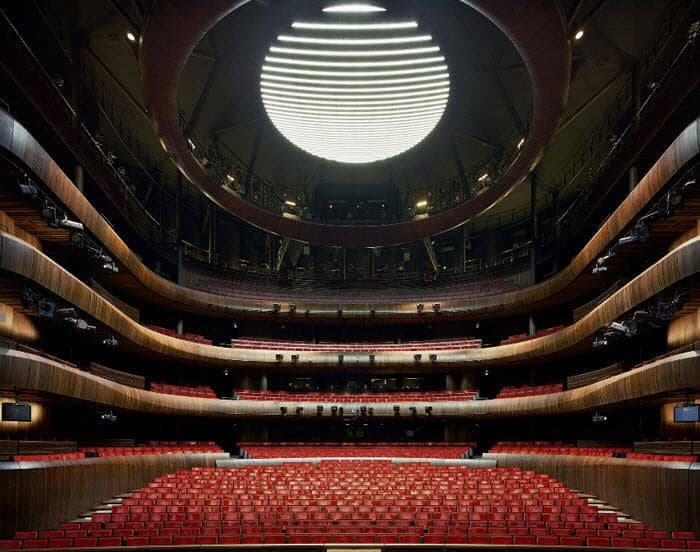
The Oslo Opera House is celebrated for its extraordinary design that blurs the lines between architecture and landscape. Its most defining feature is undoubtedly the massive, walkable roof, which slopes gently down to meet the water. This 'carpet' of white Carrara marble from Italy and white granite allows anyone to stroll across its surface, experiencing a unique interaction with the building and its surroundings while enjoying breathtaking vistas of the Oslofjord and city skyline. Inside, the building contrasts its cool, white exterior with warm oak paneling. The foyer, bathed in natural light from tall glass facades, features a prominent undulating 'Wave Wall' made of oak, which also serves to define the acoustic properties of the main auditorium. The main auditorium, a horseshoe-shaped space seating 1,364, is lauded for its exceptional acoustics and intimate setting, reminiscent of classical European theatres. The building also houses two smaller performance stages. A striking aspect is the integration of art throughout the structure, with eight permanent art projects by 17 artists. Notable examples include Monica Bonvicini's sculpture 'She Lies,' anchored in the fjord, moving with the tides, and Olafur Eliasson's perforated wall panel in the lobby, illuminated to evoke the illusion of melting ice.
Stories, Fun Facts & Local Details
The project's successful completion, both ahead of schedule and under its initial budget, is a point of national pride. Its immediate popularity was evident when 1.3 million people visited the Opera House within its first year of operation. The design concept, developed by Snøhetta, was built around three core elements: 'The Wave Wall,' representing the threshold between public and artistic spheres; 'The Factory,' symbolizing the extensive production facilities behind the scenes; and 'The Carpet,' the accessible roofscape that invites public engagement. The architects intended for the building to be a democratic space, emphasizing openness and inviting citizens and visitors alike to engage with art and the urban landscape. Large glass windows offer glimpses into rehearsal rooms and workshops, subtly revealing the creative process to passersby. The stage tower's cladding, made of white aluminum, incorporates a design by Løvaas & Wagle that subtly echoes traditional weaving patterns.
Visitor Perspective
The Oslo Opera House is designed as a welcoming space for everyone, not just those attending a performance. The public has free access to both the sloping roof and the spacious foyer, making it a popular spot for leisurely strolls, sunbathing in summer, and enjoying the magnificent views. Guided tours are available in both Norwegian and English, offering insights into the architecture, the history, and a peek behind the scenes, including costume workshops and the main stage. While the exterior is always open, visitors are advised that the marble roof can become slippery in wet or icy winter conditions, and certain areas might be restricted for safety. Located conveniently near Oslo Central Station, the Opera House serves as a fantastic starting point for exploring the vibrant Bjørvika neighborhood, which now includes attractions like the Munch Museum and Deichman Bjørvika library. Ticket prices for performances are considered accessible, aiming to open the world of opera and ballet to a broader audience.
Coordinates: 10.7522, 59.9075
View on Google Maps💬 How Travelers Describe This Place
Based on community votes
Interesting
951Beautiful
748Must See
499Photogenic
491Unique
427
Traveler Stories
Discover memorable experiences shared by travelers who have visited this place.
No traveler stories yet.
Be the first traveler to share what made this place memorable.
Things to see at Oslo Opera House



Tour
By
Spot
Discover amazing places around the world. Your journey starts here.
Explore
© 2026 TourBySpot. All rights reserved.