Harbor Front
Oslo, Norway
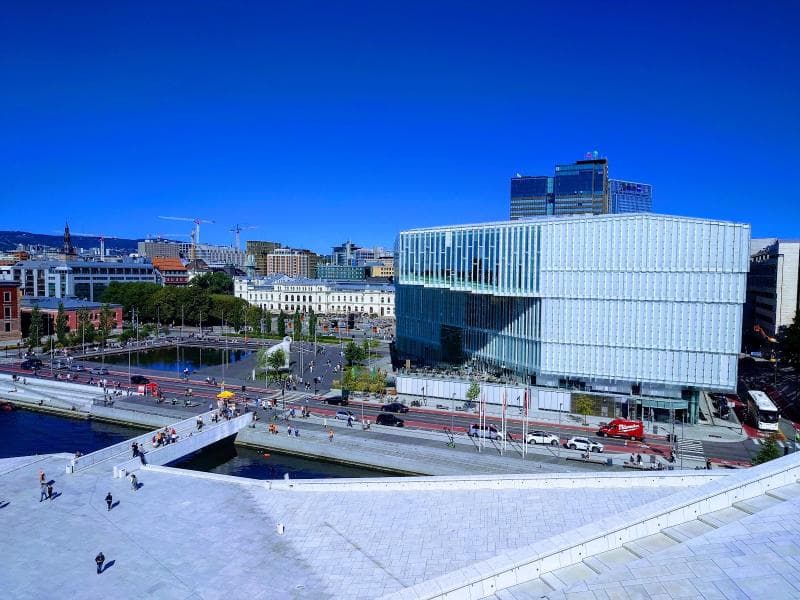
Explore the Oslo Opera House Harbor Front in Oslo, Norway. Walk its iconic sloping roof, admire unique architecture, and enjoy panoramic fjord views.
Overview
The area often referred to as the 'Harbor Front' of the Oslo Opera House is not merely a boundary but an integral, dynamic extension of this architectural masterpiece in Oslo, Norway. It encapsulates the innovative design by Snøhetta, seamlessly blending the building with the Oslofjord and creating a vibrant public space that invites interaction. This iconic structure, home to the Norwegian National Opera and Ballet, appears to rise majestically from the water, resembling an iceberg or a glacier, clad in gleaming white marble and granite.
Opened in 2008, the Opera House was conceived not just as a venue for world-class performances, but as a democratic gathering place for everyone. Its most distinctive feature is the sloping roof, which functions as a public plaza accessible to all, offering panoramic views of the city, the fjord, and the surrounding islands. This 'Harbor Front' area symbolizes Oslo's commitment to transforming its industrial waterfront into a thriving cultural and recreational hub, making art and architecture accessible to the broader public.
History & Cultural Background
The genesis of the Oslo Opera House dates back to a national debate in 1999, which culminated in the decision to construct a new national opera house. An international design competition followed, with the Norwegian architectural firm Snøhetta emerging victorious from 350 entries. Construction commenced in 2003 and was remarkably completed in 2007, ahead of schedule and under budget, a rare feat for such an ambitious project.
Inaugurated on April 12, 2008, with the Norwegian Royal Family and other dignitaries in attendance, the Opera House quickly became a symbol of modern Norway and a testament to its forward-thinking urban development. It is the largest cultural building constructed in Norway since the Nidaros Cathedral was completed around 1300. The building's design philosophy was deeply rooted in the Norwegian tradition of 'allemannsretten,' or the right to roam, ensuring that public access and engagement were central to its very existence, challenging traditional notions of elite cultural institutions.
What Makes It Special
The 'Harbor Front' of the Oslo Opera House is extraordinary for its seamless integration of architecture, landscape, and public life. The building's signature sloping roof, made of white Carrara marble from Italy and white granite, invites visitors to walk directly from the ground level up to its summit. This creates an unparalleled experience, offering unobstructed, 360-degree views across the Oslofjord, the city skyline, and the distant hills.
The design blurs the conventional boundaries between inside and outside, public and private. Inside, the spacious foyer features floor-to-ceiling windows, providing expansive views of the water and allowing natural light to flood the space. The use of warm oak wood in the interior provides a striking contrast to the cool, white exterior. The Opera House is also a living gallery, with eight integrated art projects by 17 artists. Notable examples include Monica Bonvicini's sculpture 'She Lies,' anchored in the harbor waters, and Olafur Eliasson's luminous light installations in the foyer, 'The Other Wall.'
Stories, Fun Facts & Local Details
Imagine being able to walk on the roof of an opera house – a concept that feels almost rebellious! This unique feature is a direct reflection of Norway's 'right to roam' ethos, making the Opera House a gift to the people. There was even an early consideration during the planning stages to incorporate a ski jump on the roof, showcasing the architects' willingness to explore unconventional uses of space.
The choice of materials is deeply symbolic: the white marble and granite evoke Norway's icy glaciers and snow-capped landscapes, while the interior's oak offers warmth, reminiscent of traditional Nordic craftsmanship. The main stage curtain, designed by Pae White, cleverly mimics the appearance of crumpled aluminum foil, adding a playful and modern artistic touch. Furthermore, the construction of the Opera House was a catalyst for a major urban regeneration project in Bjørvika, transforming a former industrial shipyard into a vibrant cultural district and contributing to the environmental cleanup of the Oslofjord, making it cleaner than it had been in almost a century.
Visitor Perspective
Visiting the Harbor Front of the Oslo Opera House offers a truly democratic and immersive experience. Access to the famous sloping roof and the public foyer is entirely free and generally open year-round, 24/7 for the roof (though winter conditions can make it slippery). It's a favorite spot for both locals and tourists to gather, relax, picnic, or simply enjoy the breathtaking views. Whether you are a photography enthusiast capturing the sunset over the fjord or a family enjoying a leisurely stroll, the Opera House invites engagement.
For those keen to delve deeper, guided tours are available, offering behind-the-scenes glimpses into the main auditorium, rehearsal rooms, and even the costume workshops. The building is also highly accessible, with ramps, elevators, and accessible restrooms ensuring that visitors with disabilities can fully enjoy the experience. Large glass facades often allow passersby to catch glimpses of ongoing rehearsals or workshop activities, further demystifying the world of opera and ballet. The 'Harbor Front' serves as an open invitation to connect with art, architecture, and the natural beauty of Oslo.
Coordinates: 10.7522, 59.9042
View on Google Maps💬 How Travelers Describe This Place
Based on community votes
Photogenic
836Must See
287Interesting
255Beautiful
231Unique
86
Traveler Stories
Discover memorable experiences shared by travelers who have visited this place.
No traveler stories yet.
Be the first traveler to share what made this place memorable.

Tour
By
Spot
Discover amazing places around the world. Your journey starts here.
Explore
© 2026 TourBySpot. All rights reserved.