Old Town
Bucharest, Romania
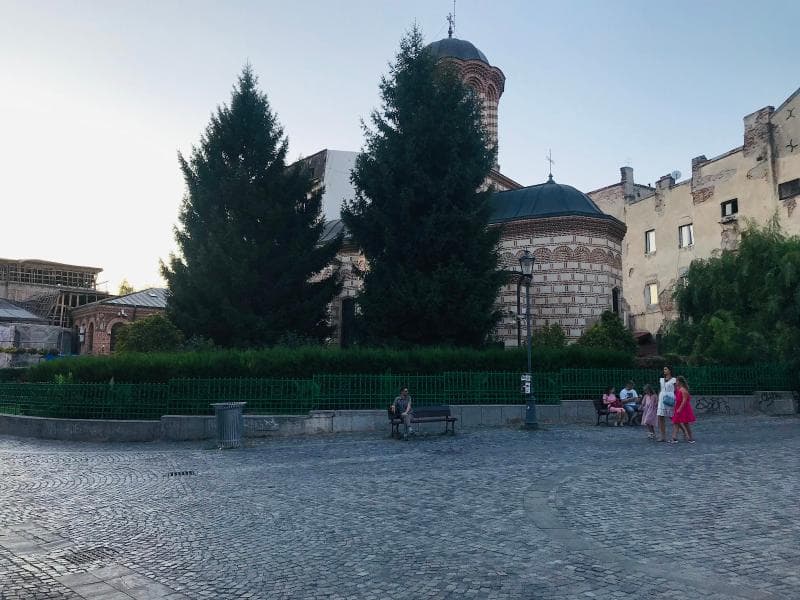
Explore Bucharest's Old Town, Romania's vibrant historical heart. Discover medieval ruins, stunning architecture, and lively streets filled with culture and stories.
Overview
Bucharest's Old Town, often referred to as Lipscani after its most famous street, is the vibrant historical heart of the Romanian capital. This pedestrian-friendly district stands as a testament to the city's rich and often turbulent past, seamlessly blending centuries of history with a lively contemporary atmosphere. It is a place where ancient ruins lie adjacent to beautifully restored 19th-century buildings, offering a unique glimpse into the soul of Bucharest.
As a central hub of culture, commerce, and social life, the Old Town draws visitors with its labyrinthine cobblestone streets, diverse architectural styles, and an abundance of cafes, restaurants, and cultural venues. It is a district that has risen from periods of neglect and destruction to become one of Eastern Europe's most dynamic historic quarters, reflecting the resilience and spirit of the Romanian people.
History & Cultural Background
The origins of Bucharest's Old Town date back to the 15th century, when the city was first mentioned in 1459 as the 'Citadel of București'. It quickly became the residence of Wallachian Prince Vlad the Impaler, who established his princely court here.
The area, particularly around Lipscani Street, evolved into the commercial heart of medieval Wallachia. Its name 'Lipscani' derives from the Romanian word for traders from Leipzig ('Lipsca'), highlighting its importance as a significant stop along trade routes connecting the Ottoman Empire with Central Europe.
Over centuries, the Old Town experienced periods of immense prosperity and severe challenges. It was a melting pot of influences, from Ottoman caravanserais to Austro-Hungarian facades, and later, French-inspired neoclassical elegance. However, fires, earthquakes, and urban redevelopment—especially during the communist era—led to significant damage and neglect.
Despite these setbacks, the district retained its historical essence. After the 1989 Romanian Revolution, a gradual restoration began, accelerating in the 2000s with pedestrianization efforts that transformed it into the bustling cultural and entertainment district it is today.
What Makes It Special
What truly sets Bucharest's Old Town apart is its remarkable blend of historical layers. Walking its streets is like traversing a living museum where each building tells a story. The architectural diversity is astounding, showcasing Brâncovenesc style (a unique Romanian blend of Byzantine, Ottoman, and Western European influences), Art Nouveau, neoclassical, and even remnants of medieval fortifications.
Key landmarks within the Old Town contribute significantly to its unique character. The ruins of Curtea Veche, the Old Princely Court established by Vlad the Impaler, offer a direct link to the city's medieval beginnings. Nearby, the Stavropoleos Monastery, a small but exquisitely detailed 18th-century church, is considered a masterpiece of Brâncovenesc architecture, known for its delicate stone carvings and serene courtyard.
The area also boasts impressive structures from its past as Romania's financial center, including early 20th-century banks with grand facades. The presence of Hanul lui Manuc, Romania's oldest operating hotel, further highlights the district's historical commercial importance.
Stories, Fun Facts & Local Details
- The Shepherd's Legend: According to legend, Bucharest was founded by a shepherd named Bucur, who built a church on the eastern bank of the Dâmboviţa River in the 1300s, around which the city grew.
- Vlad the Impaler's Seat: The Old Princely Court (Curtea Veche) was Vlad the Impaler's primary residence, making Bucharest an important center during his reign. A bust of Vlad III Dracula can still be seen amidst the ruins today.
- 'Little Paris' of the East: In the interwar years, Bucharest earned the nickname 'Little Paris' or 'Paris of the East' due to its cosmopolitanism, wide boulevards, elegant architecture, and sophisticated lifestyle, a reputation that the Old Town embodies with its charm.
- Monastery and Inn: The Stavropoleos Monastery was originally built within the precinct of an inn, a common practice at the time, with the inn's income supporting the monastic community.
- Street Names Tell Tales: Many street names in the Old Town, such as Strada Blănari ('Furriers' Street') and Strada Șelari ('Saddlers' Street'), still reflect the guilds and crafts that once thrived there.
Visitor Perspective
For the curious traveler, Bucharest's Old Town offers an immersive experience where history is not just observed but felt. The entire district is pedestrianized, encouraging leisurely exploration of its narrow, winding lanes. Comfortable shoes are recommended for navigating the cobblestone streets.
During the day, visitors can delve into historical sites, browse boutique shops, and discover hidden courtyards. As evening approaches, the Old Town transforms into a lively social hub, with its numerous terraces, cafes, and bars buzzing with activity. Whether seeking historical insights, a vibrant nightlife, or simply a charming place to wander and soak in the atmosphere, the Old Town provides a rich and memorable experience, serving as a resilient and romantic heart of Bucharest.
Coordinates: 26.10626, 44.43225
View on Google Maps💬 How Travelers Describe This Place
Based on community votes
Must See
996Unique
673Photogenic
186Beautiful
143Interesting
80
Traveler Stories
Discover memorable experiences shared by travelers who have visited this place.
No traveler stories yet.
Be the first traveler to share what made this place memorable.
Things to see at Old Town



Tour
By
Spot
Discover amazing places around the world. Your journey starts here.
Explore
© 2026 TourBySpot. All rights reserved.