Stavropoleos Monastery
Bucharest, Romania
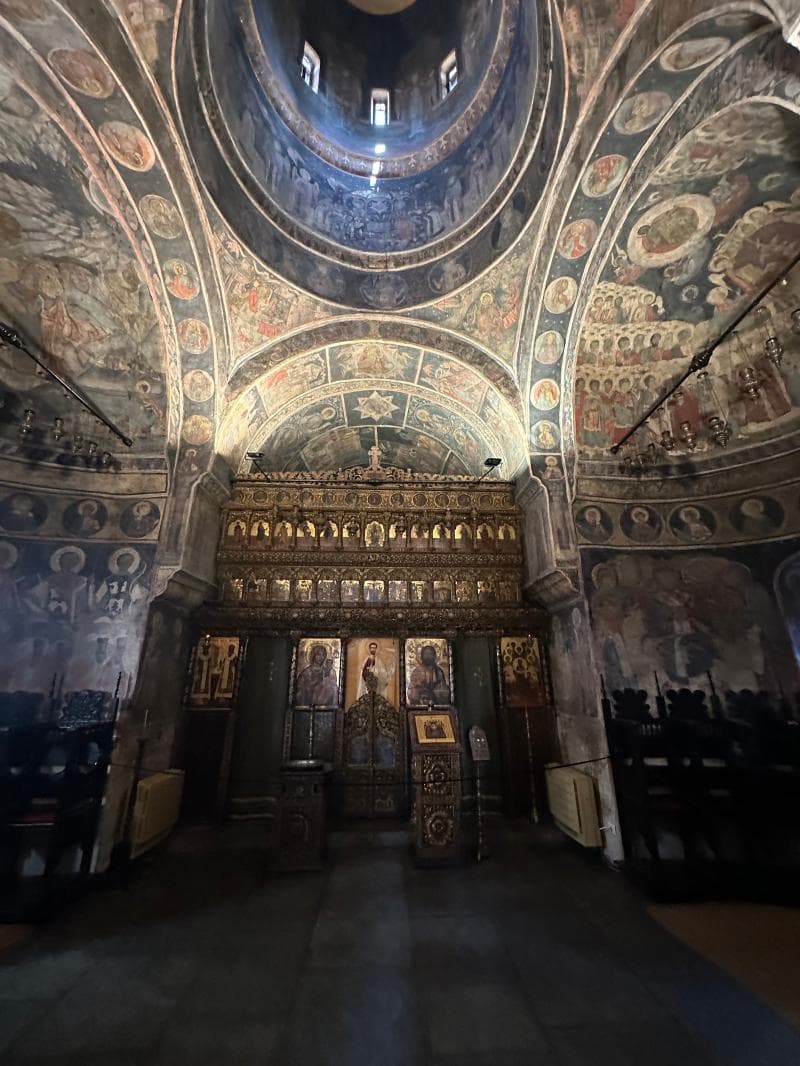
Discover Stavropoleos Monastery in Bucharest, Romania. Explore its stunning Brâncovenesc architecture, rich history, and serene atmosphere.
Overview
Nestled within the bustling heart of Bucharest's Old Town, the Stavropoleos Monastery emerges as a serene oasis, a testament to enduring faith and exquisite artistry. This small, yet profoundly detailed, Eastern Orthodox monastery for nuns captivates visitors with its unique Brâncovenesc architectural style and an atmosphere of profound tranquility. It is a cherished landmark, offering a glimpse into Romania's rich cultural and spiritual heritage, often described as one of the most beautiful buildings in the city.
History & Cultural Background
The Stavropoleos Monastery's origins trace back to 1724, during the reign of Prince Nicholas Mavrocordatos of Wallachia. It was founded by Ioannikios Stratonikeas, a Greek archimandrite who came to Bucharest from Pogoniani. Initially, Ioannikios established the monastery within the precinct of an inn, a common practice of the era, using the inn's income to sustain the religious community. Two years later, in 1726, Ioannikios was elected Metropolitan of Stavropolis, giving the monastery its distinctive name, which means 'The City of the Cross' in Greek. The monastery suffered significant damage and neglect in the 19th century due to fires, earthquakes, and inefficient administration, leading to the dissolution of the monastic community. However, in the early 20th century, a vital restoration project breathed new life into Stavropoleos. Architect Ion Mincu, a pivotal figure in Romanian architecture, undertook the work, rebuilding parts of the monastery in the Neo-Romanian style and cementing the church's status as a symbol of national cultural heritage.
What Makes It Special
Stavropoleos is a masterpiece of the Brâncovenesc architectural style, a uniquely Romanian synthesis that blends Byzantine, Ottoman, and Western European influences from the late 17th and early 18th centuries. The exterior is adorned with delicate stone carvings, featuring intricate vine motifs, rosettes, and religious symbols that wind around its arched entrance porch. Inside, despite its modest size, the church is a treasure trove of richly preserved 18th-century frescoes and icons, depicting biblical scenes and saints, with some original elements still visible alongside later restorations. The ornate wooden iconostasis, separating the altar from the nave, showcases exquisite Byzantine artistry. Beyond its visual splendor, Stavropoleos is renowned for its profound connection to Byzantine music. The monastery houses the largest collection of Byzantine music books in Romania, and its resident choir is celebrated for regularly performing this ancient musical tradition.
Stories, Fun Facts & Local Details
The monastery's inner courtyard offers a particularly poignant experience. It serves as an open-air museum, housing a collection of ancient tombstones, stone crosses, and fragments from churches demolished during various historical periods, including the communist regime. This collection speaks silently of Bucharest's tumultuous past and the resilience of its spiritual heritage. The very act of the monastery's survival through earthquakes, fires, and regime changes contributes to its unique character, echoing a sense of enduring faith. The nuns of Stavropoleos are known not only for their spiritual devotion but also for their intellectual pursuits, often possessing higher education and specializing in fields like book restoration. The monastery also functions as a vibrant cultural hub, hosting concerts and exhibitions, further enriching its role within the community.
Visitor Perspective
Visiting Stavropoleos Monastery is like stepping into a peaceful, forgotten garden amidst the urban symphony of Bucharest's Old Town. The transition from the lively streets to the monastery's quiet courtyard, with its carved wooden galleries and ancient stones, offers a profound sense of calm. Take time to admire the intricate details of the facade, the delicate floral carvings that seem more like lace than stone, and the vibrant frescoes within. If you are fortunate, you might experience the ethereal sounds of the Byzantine choir, an unforgettable auditory journey. While welcoming to all, visitors are encouraged to respect the sanctity of this active monastery by dressing modestly and maintaining a quiet demeanor, particularly within the church. It is a place for reflection, appreciation of art, history, and a quiet moment away from the city's energetic pace.
Coordinates: 26.0988, 44.4318
View on Google Maps💬 How Travelers Describe This Place
Based on community votes
Must See
839Interesting
445Photogenic
416Beautiful
289Unique
141
Traveler Stories
Discover memorable experiences shared by travelers who have visited this place.
No traveler stories yet.
Be the first traveler to share what made this place memorable.

Tour
By
Spot
Discover amazing places around the world. Your journey starts here.
Explore
© 2026 TourBySpot. All rights reserved.