National Bank Palace
Bucharest, Romania
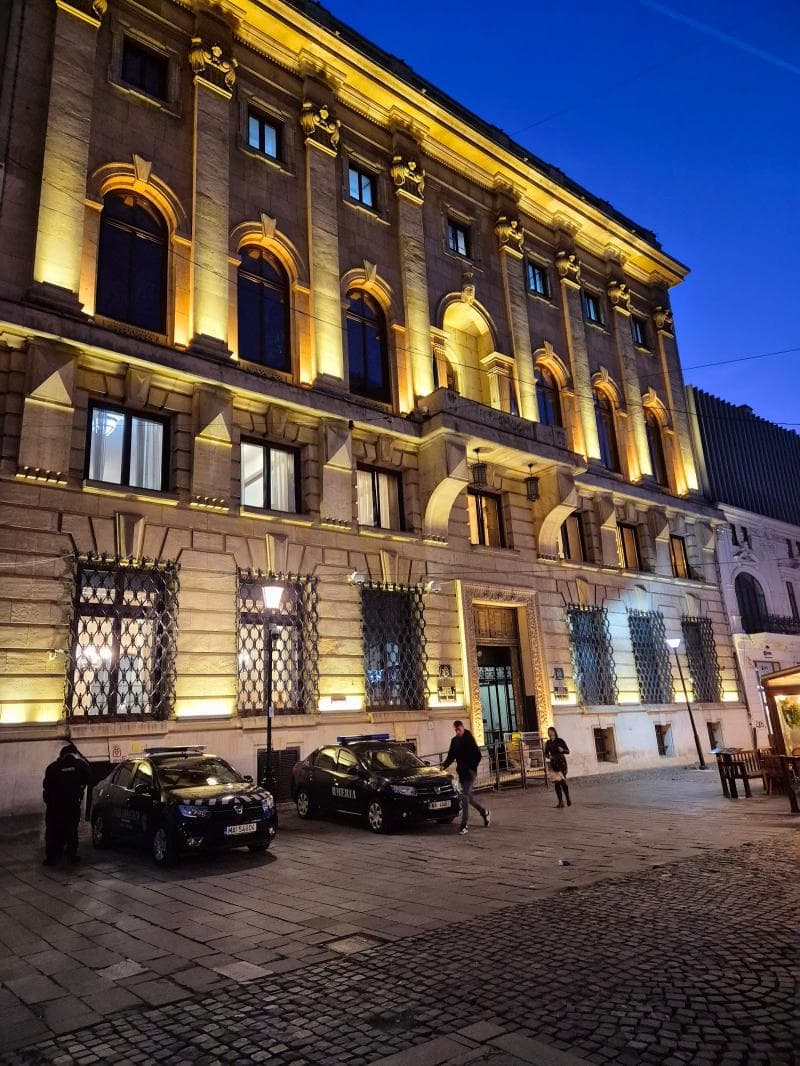
Explore the National Bank Palace in Bucharest, Romania. Discover its stunning architecture, rich history, and captivating numismatic museum in the Old Town.
Overview
Nestled in the vibrant heart of Bucharest's Old Town, the National Bank Palace, or BNR Palace, stands as a magnificent testament to Romania's rich history and architectural grandeur. It serves as the esteemed headquarters for the National Bank of Romania and houses a captivating museum that charts the nation's monetary evolution. This imposing structure, with its dual architectural styles, is not merely a financial institution but a prominent cultural landmark, inviting curious travelers to delve into its storied past and impressive collections. Its presence anchors the historic commercial district, reflecting an era of significant economic and architectural development in the city.
History & Cultural Background
The journey of the National Bank Palace began in the late 19th century, following the establishment of the National Bank of Romania on April 17, 1880, making it one of the world's oldest central banks. Construction of the original 'Old Palace' took place between 1884 and 1890, built on the former site of the 17th-century Șerban Vodă Inn. Renowned French architects Cassien Bernard and Albert Galleron, celebrated for their contributions to Parisian landmarks like the Alexander III Bridge and the Romanian Athenaeum, were commissioned for its design. They conceived a structure imbued with French Classicism and academic eclectic style, showcasing elements of the French Renaissance. Romanian architects Grigore Cerchez and E. Băicoianu oversaw the construction. At the close of the 19th century, the BNR Palace heralded a new era of architectural progress in Bucharest, becoming the capital's first significant banking edifice and influencing subsequent public buildings like the Royal Palace and the Palace of Justice. Between 1937 and 1944, a new wing was added, exhibiting a neoclassical style with rationalist influences, monumental granite stairs, and commanding Corinthian columns.
What Makes It Special
The National Bank Palace is an architectural marvel, distinguished by its harmonious blend of academic eclectic and neoclassical styles across its old and new wings. The original palace boasts intricate carvings, grand columns, and an opulent facade that has led it to be considered one of the most beautiful buildings in Bucharest by some, including the great Romanian architect Ion Mincu. Six allegorical sculptures adorn its facade, crafted by Ion Georgescu and Ștefan Ionescu Valbudea, representing Justice, Agriculture, Trade, and Industry, symbolizing the bank's role in the national economy. Inside, the BNR Museum, housed in the Old Palace, offers a captivating journey through Romania's financial history. It features an extensive numismatic collection spanning over 2,500 years, including the oldest coin minted in what is now Romania, Dacian and Roman coins, and a complete series of Romanian state-issued currency. The museum also displays gold bullion, gold coins, and a gallery of portraits of the bank's governors, highlighting its enduring legacy.
Stories, Fun Facts & Local Details
Beneath the grand facade of the National Bank Palace lies a tangible link to Bucharest's distant past: through a glass floor in front of the building, visitors can view the unearthed ruins of the Șerban Vodă Inn, which stood on this site from 1678 to 1688. This offers a fascinating glimpse into the layers of history beneath the modern city. Another intriguing historical note involves the 'Romanian Treasure' – in 1916, during World War I, the National Bank of Romania's assets, along with other valuable objects, were sent to Moscow for safekeeping, but were largely never returned, except for a few select items like the Pietroasele Treasure. Within the BNR Museum, visitors have the unique opportunity to interact with history hands-on, specifically by attempting to lift a real 13-kilogram gold bar, a popular and engaging challenge.
Visitor Perspective
For those eager to explore the National Bank Palace and its rich offerings, the BNR Museum is accessible primarily through guided tours. Visits are free but require advance booking, typically at least two days prior, through the museum's official website or by email. Given its status as a central bank headquarters, visitors should be prepared for security checks and must present a valid ID for entry. Guided tours usually last about an hour and cover both the architectural and historical significance of the building, alongside the evolution of Romania's banking system and its impressive numismatic collection. Photography is generally permitted, adding to the experience. Its location within Bucharest's Old Town makes it a convenient and enriching stop for anyone interested in monumental architecture, economic history, and cultural heritage.
Coordinates: 26.09943, 44.43258
View on Google Maps💬 How Travelers Describe This Place
Based on community votes
Interesting
989Unique
613Photogenic
581Must See
514Beautiful
207
Traveler Stories
Discover memorable experiences shared by travelers who have visited this place.
No traveler stories yet.
Be the first traveler to share what made this place memorable.

Tour
By
Spot
Discover amazing places around the world. Your journey starts here.
Explore
© 2026 TourBySpot. All rights reserved.