Smârdan Street
Bucharest, Romania
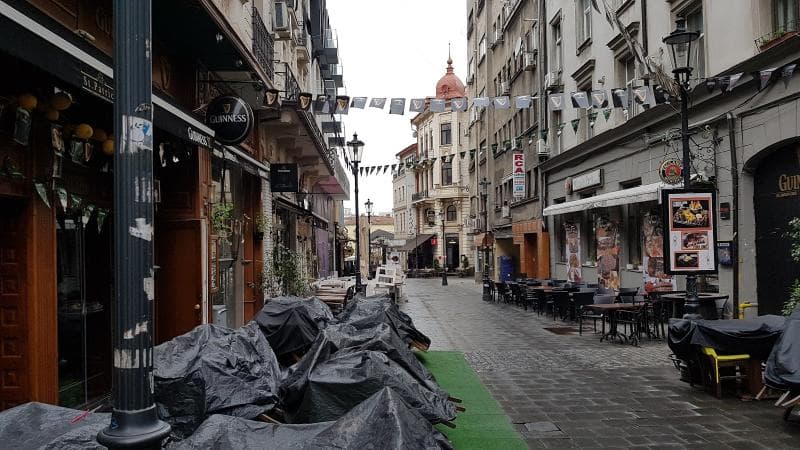
Discover Smârdan Street in Bucharest's Old Town, Romania. A vibrant pedestrian hub blending centuries of history with lively cafes, bars, and unique cultural stories.
Overview
Tucked away within the vibrant embrace of Bucharest's Old Town, Smârdan Street, or Strada Smârdan as it is known locally, is a captivating pedestrian artery that pulses with both historical echoes and contemporary energy. Considered one of the oldest streets in Bucharest, it offers a charming experience with its cobblestone pathways and elegant street lamps, which are reminiscent of the city's 'Little Paris' era. Today, Smârdan Street is a bustling hub, renowned for its lively collection of cafes, bars, restaurants, and boutique shops, drawing in both locals and curious travelers. It stands as a testament to the city's enduring spirit, having been reborn as a vibrant urban space after significant restoration and pedestrianization efforts.
History & Cultural Background
The story of Smârdan Street stretches back centuries, with its first documented mention appearing in 1672 as 'German Street' or 'German Alley'. However, medieval documents suggest its existence even earlier, possibly as far back as the 15th-16th centuries, establishing it as one of Bucharest's earliest recorded thoroughfares. In 1672, it served as a vital link between the Royal Court and the Greek Church, reflecting its early importance in the city's layout. Throughout the 19th century, the street flourished as a bustling center of commerce and hospitality, gaining the moniker 'German Lane' due to the significant presence of German merchants who established shops and workshops there.
A profoundly pivotal moment in Romanian history unfolded on Smârdan Street in January 1859. At the former Hotel Concordia, Wallachian deputies convened and, in a landmark decision, elected Alexandru Ioan Cuza as Prince, an event that paved the way for the unification of the Romanian Principalities. The street earned its current name, Smârdan, in 1878, a tribute to the Romanian victory at the Battle of Smârdan during the War of Independence (1877-1878), thereby weaving local history with national patriotic symbolism. Interestingly, Smârdan Street was also among the first streets in Bucharest to be paved during the Phanariot era and even hosted a tram network until the 1960s. Despite facing the ravages of World War II bombings and the threats of communist-era demolitions, the street's enduring spirit ensured its survival and eventual renaissance.
What Makes It Special
What truly sets Smârdan Street apart is its remarkable ability to seamlessly blend profound historical significance with an irresistibly lively contemporary atmosphere. It offers visitors a tangible connection to Romania's past, particularly through its role in the unification of the Romanian Principalities at the Hotel Concordia. The street is a feast for the eyes, boasting well-preserved 19th-century architecture and elegant neoclassical buildings that line its winding path. The pedestrian-only nature of Smârdan Street invites leisurely exploration, allowing travelers to soak in the ambiance at their own pace. Its charming cobblestones and ornate street lamps evoke a sense of Bucharest's 'Little Paris' reputation, transporting visitors to a bygone era while they enjoy modern comforts.
Moreover, Smârdan Street's strategic location within the Old Town places it in close proximity to a wealth of other historical and cultural landmarks. Nearby attractions such as the serene Stavropoleos Monastery, the intricate Macca-Vilacrosse Passage, and the historic Manuc's Inn are just a stone's throw away, making Smârdan Street an ideal starting point for wider exploration of Bucharest's rich heritage. This convergence of history, architecture, and accessibility crafts an experience that is both deeply educational and delightfully engaging.
Stories, Fun Facts & Local Details
Smârdan Street carries a fascinating tapestry of stories and intriguing details. One notable fact is its ever-changing identity; having been known by several names throughout its history, each reflecting a different chapter in Bucharest's development. The decision to rename it in honor of the Battle of Smârdan serves as a direct, powerful link to Romanian national pride and military valor. Imagine standing outside the former Hotel Concordia, knowing that within its walls, specifically in Room 5 on the first floor, a decision was made that reshaped the map of modern Romania.
Beneath the bustling surface of Smârdan Street and the wider Old Town lie hidden secrets: vaulted caves and cellars that once belonged to ancient inns, shops, and houses, hinting at a forgotten subterranean world of commerce and refuge. Many of the architectural gems along the street are not merely old buildings but are listed as historic monuments, including former headquarters of significant institutions like the 'Agricultural Bank'. In contemporary times, Smârdan Street continues to make its mark, hosting popular establishments such as the stylish Nomad Skybar at number 30. It's also noteworthy that Smârdan Street was pioneering in its modern revival, being the very first street within the Old Town to undergo complete repaving and renovation, setting a precedent for the district's transformation.
Visitor Perspective
For the curious traveler, a visit to Smârdan Street promises an immersive and delightful experience. It is the perfect place for leisurely evening strolls, where the glow of historical lamps illuminates the cobblestones and the air buzzes with conversation and laughter. The street offers an abundant and diverse culinary journey, from savoring authentic Romanian specialties to indulging in a wide array of international dishes available at its many restaurants and cafes. As night falls, Smârdan Street truly comes alive, transforming into a vibrant nightlife destination with numerous bars and clubs catering to every taste.
Beyond its immediate charm, the street serves as an excellent gateway to explore the intricate network of side streets and discover hidden gems, or to visit major landmarks just a short walk away. Walking its length, one feels a tangible connection to the past, witnessing firsthand how the 'Little Paris' of the East has evolved into a dynamic European capital. It is, as many describe it, a 'living bridge' that connects Bucharest's storied past with its energetic present, inviting every visitor to pause, savor, and soak in every meaningful detail.
Coordinates: 26.100344, 44.430181
View on Google Maps💬 How Travelers Describe This Place
Based on community votes
Photogenic
446Unique
152Interesting
33Must See
30Beautiful
16
Traveler Stories
Discover memorable experiences shared by travelers who have visited this place.
No traveler stories yet.
Be the first traveler to share what made this place memorable.

Tour
By
Spot
Discover amazing places around the world. Your journey starts here.
Explore
© 2026 TourBySpot. All rights reserved.