Narikala Fortress
Tbilisi, Georgia
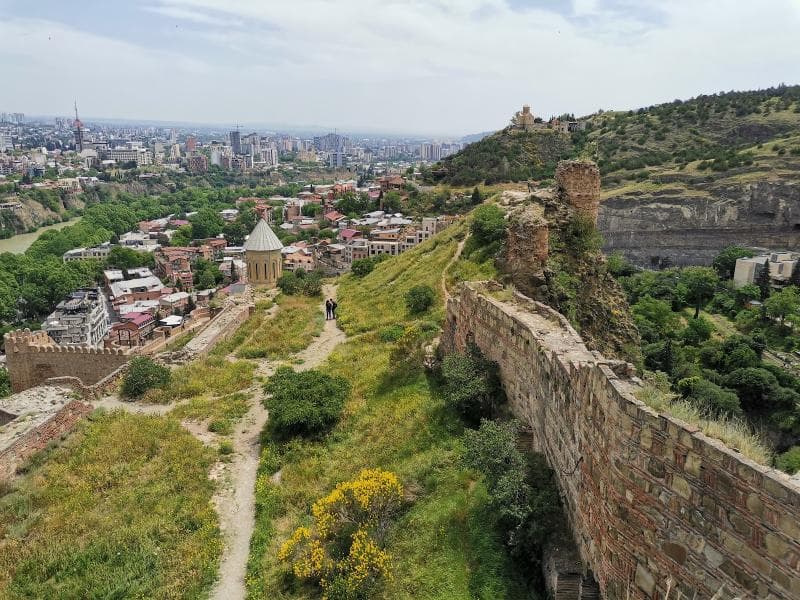
Explore Narikala Fortress, an ancient citadel in Tbilisi, Georgia, offering breathtaking panoramic views. Discover centuries of history, iconic ruins, and the restored St. Nicholas Church, a true symbol of Georgian resilience.
Overview
Perched majestically on a steep hill overlooking Tbilisi, Georgia's vibrant capital, Narikala Fortress stands as a timeless sentinel. Often referred to as the 'heart and soul' or 'Mother Fortress' of the city, this ancient citadel offers unparalleled panoramic vistas of the Mtkvari River, the charming Old Town, the bustling sulfur baths district, and the tranquil botanical gardens. Its weathered stone walls tell tales of centuries past, making it an indispensable landmark for any traveler seeking to immerse themselves in Georgia's rich history and culture. Narikala is composed of two distinct walled sections, strategically positioned to offer commanding views and defensive capabilities.
History & Cultural Background
The origins of Narikala Fortress trace back to the 4th century AD, when it was first established as a Persian citadel. In its earliest days, it was known by the evocative name 'Shuris-tsikhe,' which translates to the 'Enviable Fortress' or 'Rival Fortress,' reflecting its strategic importance and formidable presence. Over the subsequent centuries, Narikala witnessed numerous expansions and transformations under various rulers. The Umayyads, an Arab caliphate, significantly enlarged the fortress in the 7th and 8th centuries, with their palace once residing within its protective walls. Later, during the Georgian 'Golden Age,' King David the Builder further reinforced and expanded the citadel in the 11th and 12th centuries, cementing its role as a primary defensive stronghold.
The name 'Narikala' itself emerged during the 13th-century Mongol invasions, derived from the Turkic 'Narin Qala,' meaning 'Little Fortress.' This period marked another significant chapter in its layered history. While much of the fortress we see today dates from the 16th and 17th centuries, particularly after fortifications by Rostom, the Safavid-appointed king of Kartli, its past is punctuated by periods of destruction and rebuilding. A devastating earthquake in 1827, coupled with an explosion in a Russian ammunition depot housed within its walls, caused extensive damage, reducing much of the inner structures to the picturesque ruins visible today.
Within the fortress grounds stands the Church of St. Nicholas, a testament to enduring faith and resilience. The original 13th-century church was destroyed by fire and subsequently rebuilt between 1996 and 1997. This new church follows a 'prescribed cross' architectural type, featuring frescoes that depict both biblical narratives and pivotal moments from Georgian history.
What Makes It Special
Narikala's strategic location above the Mtkvari River is undoubtedly what makes it so special. It was historically crucial for controlling the trade and military routes that snaked through the Mtkvari valley, making it a critical defensive point throughout various empires. Beyond its military significance, the fortress is cherished for the breathtaking, 360-degree panoramic views it offers. From its ancient walls, visitors can gaze upon the entirety of Tbilisi, from the historic wooden balconies of the Old Town to the domed sulfur baths below, the winding Mtkvari River, and the modern city extending into the distance.
As night falls, Narikala transforms. Beautifully illuminated, it becomes a magical silhouette against the night sky, casting a romantic glow over the city. This nocturnal spectacle makes it a favorite spot for photographers and an unforgettable experience for all. More than just a collection of ruins, Narikala is a profound symbol of Tbilisi's unwavering resilience, sovereignty, and identity, having stood firm through countless invasions, destructions, and rebirths.
Stories, Fun Facts & Local Details
The fortress is rich with local folklore and cultural references. In Georgian sources, it's often revered as 'Dedatsikhe,' or the 'Mother Fortress,' a name that speaks to its protective role over the capital. Its original name, 'Shuris-tsikhe,' meaning 'Enviable' or 'Rival Fortress,' underscores its perceived strength and importance in ancient times. Legends whisper of hidden treasures and guardian spirits residing somewhere within its ancient confines, adding an air of mystery to its weathered stones.
Narikala has also left its indelible mark on Georgian literature, music, and art, reflecting its deep integration into the national consciousness. Interestingly, some of its former towers bore unique names such as 'Tabriz' or 'Tower of Istanbul,' and one, known as 'Shahis-Tachti,' even served as an observatory in the Middle Ages. The fortress is closely associated with the iconic Kartlis Deda, or 'Mother of Georgia' statue, which stands nearby, embodying the Georgian character with a sword for enemies and a cup of wine for friends.
As of August 2026, it is important to note that Narikala Fortress is undergoing restoration and safety work. While access to the immediate interior and certain sections of the walls may be restricted, the surrounding areas, panoramic viewpoints, and the cable car continue to operate, ensuring visitors can still experience the grandeur of Narikala Hill.
Visitor Perspective
Exploring Narikala Fortress offers an engaging journey through time. The most popular and scenic way to reach the fortress is via the Tbilisi cable car, which departs from Rike Park. The ride is quick and offers breathtaking views through its glass floors as it ascends to the upper station on Narikala Hill. For those who prefer to walk, a picturesque, albeit steep, path winds up from the historic Abanotubani sulfur baths district. Admission to the fortress area itself is free, allowing everyone to experience its historical allure and stunning vistas.
The best times to visit are either in the early morning, before 10 AM, to enjoy fewer crowds and soft light, or in the late afternoon, particularly leading up to sunset. During this 'golden hour,' the fortress walls glow with warm light, and as evening descends, the city lights below twinkle like a vast carpet of stars, creating a truly memorable experience. Visitors should be mindful that the terrain around the fortress involves steep approaches, uneven stones, and some areas without handrails, so comfortable and sturdy footwear is highly recommended. The site is not fully wheelchair accessible.
A quick visit to appreciate the views and walls might take 30-45 minutes, while a more thorough exploration that includes the nearby Mother of Georgia statue could extend to 1.5-2 hours. Combining a visit with the adjacent National Botanical Garden would require 3-4 hours. Nearby attractions like the sulfur baths, Metekhi Church, and the Bridge of Peace complement the Narikala experience, offering a comprehensive glimpse into Tbilisi's unique charm.
Coordinates: 44.80861, 41.68778
View on Google Maps💬 How Travelers Describe This Place
Based on community votes
Must See
540Photogenic
252Unique
147Beautiful
114Interesting
19
Traveler Stories
Discover memorable experiences shared by travelers who have visited this place.
No traveler stories yet.
Be the first traveler to share what made this place memorable.
Things to see at Narikala Fortress



Tour
By
Spot
Discover amazing places around the world. Your journey starts here.
Explore
© 2026 TourBySpot. All rights reserved.