St. Nicholas Church
Tbilisi, Georgia
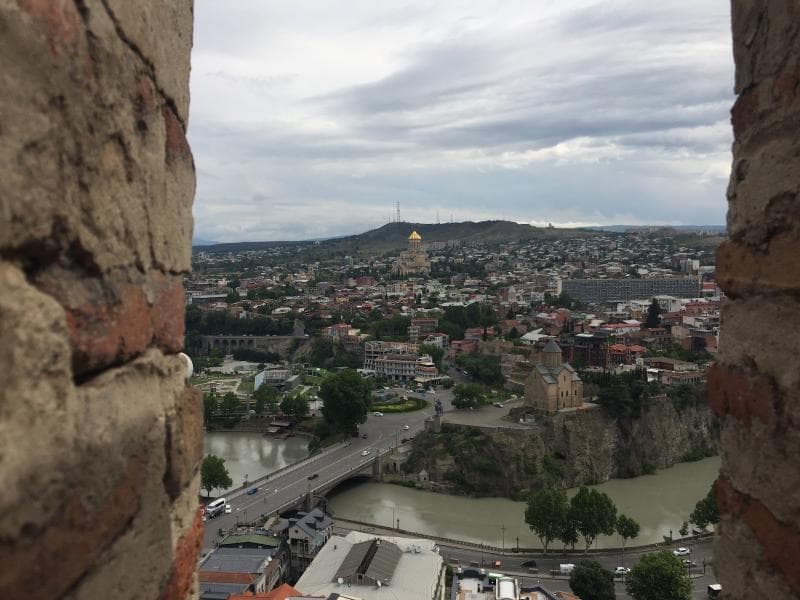
Discover St. Nicholas Church within Narikala Fortress in Tbilisi, Georgia – a symbol of resilience, history, and stunning city views.
Overview
Perched high within the ancient walls of Narikala Fortress in Tbilisi, Georgia, St. Nicholas Church offers a profound glimpse into the nation's spiritual and historical resilience. This sacred site, a beacon overlooking the Mtkvari River and the old city, is more than just a place of worship; it is a testament to rebirth and cultural continuity. Though the church visible today is a meticulous reconstruction, it faithfully echoes the grandeur of its 13th-century predecessor. Visitors are drawn not only to its spiritual ambiance but also to the breathtaking panoramic views of Tbilisi that unfold from its elevated position.
The church stands in the lower court of the fortress, a prominent feature of the Tbilisi skyline, particularly notable for its traditional Georgian cross-domed architecture. Its interior is richly adorned with vibrant frescoes, depicting a blend of biblical narratives and significant moments from Georgian history.
History & Cultural Background
The story of St. Nicholas Church is deeply intertwined with the tumultuous history of Narikala Fortress itself, an ancient citadel with origins dating back to the 4th century. The original Church of St. Nicholas was first established in the 13th century, during the reign of King Demetrius II the Self-Sacrificer.
Tragically, this revered structure faced a devastating fate. In 1818, during the Russian Imperial period, the church was repurposed as a munitions dump by General Yermolov. This decision led to catastrophic consequences when an explosion in 1827 almost completely destroyed the church, leaving it in ruins.
For over a century and a half, the church lay in disrepair. However, during archaeological excavations at Narikala in 1966, the remnants of the ancient church were rediscovered. This paved the way for its remarkable resurrection. The current iteration of St. Nicholas Church was meticulously rebuilt between 1996 and 1997, constructed directly upon the original foundations and walls. The restoration endeavored to replicate the proportions and architectural style of the 13th-century edifice, using traditional Georgian bricks and tufa stones, thereby honoring its profound historical and cultural legacy.
What Makes It Special
St. Nicholas Church is special not only for its dramatic history of destruction and rebirth but also for its unique artistic and architectural elements. The church's design follows the traditional Georgian cross-domed style, characterized by its elegant conical dome and the use of brick and stone that harmonize beautifully with the ancient fortress surroundings.
Inside, the church is a visual feast of vibrant frescoes that cover the walls from floor to ceiling. These aren't merely religious illustrations; they uniquely interweave biblical scenes with pivotal moments and figures from Georgian history, such as King Tamar and Vakhtang Gorgasali. This blend serves as a powerful visual narrative, connecting faith with national identity and providing a deeper understanding of Georgia's rich heritage.
Furthermore, the church's strategic location within Narikala Fortress offers unparalleled panoramic views. From its vantage point, visitors can survey the entirety of Old Tbilisi, the winding Mtkvari River, and the distant landscapes, creating a profound sense of connection to the city's past and present.
Stories, Fun Facts & Local Details
The story of St. Nicholas Church is often likened to that of a 'phoenix,' rising from the ashes of its destruction. Its complete obliteration by a gunpowder explosion in the 19th century and subsequent faithful reconstruction in the late 20th century makes it a powerful symbol of Georgian resilience and unwavering faith.
Local details that add to its charm include the traditional Bolnisi crosses carved into its facade and the massive wooden doors, inviting visitors into a space of serene contemplation. The interior also houses a collection of icons, some newly painted, alongside older relics dating from the 17th to 19th centuries. A charming detail often noted by visitors is the organization of additional icons in wooden boxes, sometimes sorted alphabetically, reflecting a unique Georgian approach to preserving sacred art.
For those interested in the broader context of the fortress, archaeological digs near the church have uncovered four ancient tombs and remnants of secret tunnels that once connected to a royal palace complex beneath the fortress, hinting at deeper layers of history waiting to be explored.
Visitor Perspective
Visiting St. Nicholas Church offers a truly immersive cultural and historical experience. While the Narikala Fortress itself is currently undergoing extensive reconstruction, which may limit access to certain outer defensive walls and unpaved trails, the church, its courtyard, and primary viewpoints generally remain accessible.
Travelers can reach the church by taking a scenic cable car ride from Rike Park, which provides spectacular aerial views of the city. Alternatively, a more strenuous but equally rewarding hike through the narrow, charming streets of Old Tbilisi leads directly to the fortress.
Inside the church, a quiet and contemplative atmosphere prevails. As an active place of Orthodox worship, visitors are encouraged to dress modestly, covering shoulders and knees; headscarves are recommended for women. The interplay of light through narrow windows, especially during late afternoon, beautifully illuminates the frescoes and creates a memorable, reflective experience. The church's small, intimate scale provides a sanctuary from the bustling fortress ramparts, inviting moments of peace and spiritual connection amidst centuries of history.
Coordinates: 44.80902, 41.68792
View on Google Maps💬 How Travelers Describe This Place
Based on community votes
Beautiful
540Must See
410Interesting
147Unique
114Photogenic
19
Traveler Stories
Discover memorable experiences shared by travelers who have visited this place.
No traveler stories yet.
Be the first traveler to share what made this place memorable.

Tour
By
Spot
Discover amazing places around the world. Your journey starts here.
Explore
© 2026 TourBySpot. All rights reserved.