Fortress Walls
Tbilisi, Georgia
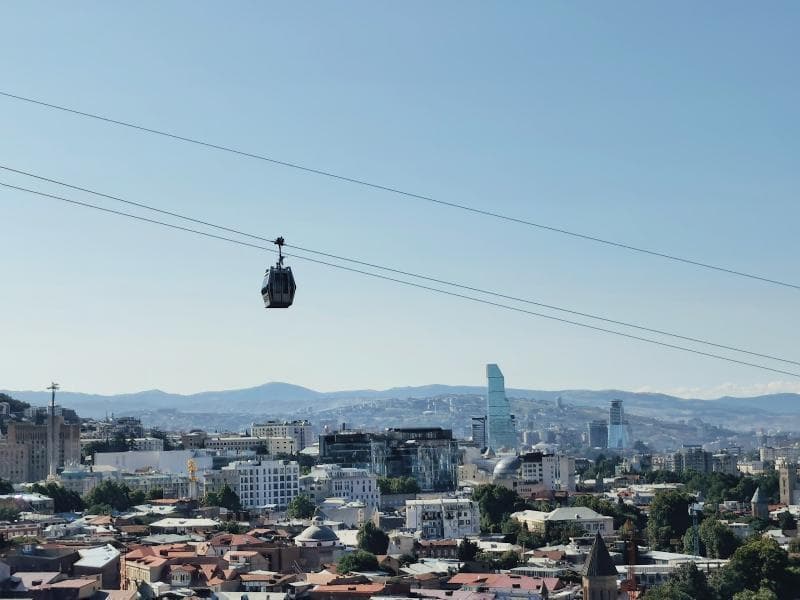
Explore the historic Narikala Fortress Walls in Tbilisi, Georgia. Discover centuries of history, enjoy panoramic city views, and immerse yourself in this ancient 'Mother Fortress'.
Overview
The Fortress Walls of Narikala stand as a timeless sentinel, dramatically perched on the Sololaki Ridge overlooking Tbilisi, Georgia. This ancient citadel, often affectionately called the 'Mother Fortress' of Tbilisi, presents a magnificent silhouette against the skyline, offering breathtaking panoramic views of the city, the winding Mtkvari River, and the surrounding landscapes. Its weathered stone walls tell a story spanning over 1,500 years, embodying the resilience and rich history of Georgia's capital. Narikala consists of two main walled sections, stretching between the historic sulphur baths below and the Tbilisi Botanical Garden behind it. Exploring these formidable walls offers a tangible connection to the city's layered past and its enduring spirit.
History & Cultural Background
The genesis of Narikala Fortress dates back to the 4th century AD, when it was initially established as a Persian citadel, known then as Shuris-tsikhe, or 'The Rival Fortress'. This early fortification marked the strategic importance of this hilltop location for controlling the nascent city of Tbilisi and the trade routes through the Mtkvari valley.
Over the centuries, the fortress underwent numerous expansions and reconstructions, each ruling power leaving an indelible mark on its architecture. In the 7th and 8th centuries, Arab emirs significantly reinforced and expanded the fortifications, building many of the robust walls visible today, and even establishing their palace within the fortress. Later, Georgian kings, notably David the Builder in the 11th-12th centuries, further strengthened and enlarged the fortress, making it a pivotal defensive stronghold. The Mongols, during their rule, renamed it 'Narin Qala,' meaning 'Little Fortress,' a name that eventually evolved into Narikala.
Narikala's military significance continued until 1827, when a catastrophic event dramatically altered its structure. An explosion of an ammunition depot, possibly triggered by an earthquake, destroyed much of the fortress's inner structures, leaving the impressive ruins that visitors explore today. Despite this devastation, the enduring external walls and towers continued to stand, becoming silent witnesses to Tbilisi's tumultuous history.
What Makes It Special
What truly sets the Narikala Fortress Walls apart is their palpable sense of history, intricately woven into every stone. The varying styles of fortifications and masonry visible throughout the complex reflect the successive layers of Persian, Arab, Mongol, Ottoman, and Georgian influences, showcasing a living museum of ancient military architecture. Walking along the restored battlements, visitors can trace the strategic genius of its builders, who leveraged the steep terrain for maximum defensive advantage.
The fortress is not merely a collection of ruins; it is an active testament to Tbilisi's resilience. Within its grounds stands the recently rebuilt St. Nicholas Church, a modern reconstruction of a 13th-century church that was destroyed in the 1827 explosion. Its interior is adorned with frescoes depicting biblical scenes and episodes from Georgian history, adding a spiritual dimension to the historic site. Beyond the historical and architectural marvel, the unique perspective offered from the fortress walls—a sweeping panorama of the Old Town, the modern city, and natural landscapes—makes it an unforgettable experience.
Stories, Fun Facts & Local Details
Locals often refer to Narikala as the 'heart and soul of Tbilisi,' a testament to its profound emotional and cultural significance for the city's residents. Its ancient presence has inspired numerous tales and legends over centuries. One such legend suggests that hidden treasures and guardian spirits reside somewhere within its venerable grounds, adding an air of mystique to the already captivating ruins. The fortress has also found its way into Georgian literature, music, and art, symbolizing the nation's enduring spirit and unwavering defense.
Its various historical names also offer intriguing insights. From the initial Persian 'Shuris-tsikhe' ('The Rival Fortress' or 'Invidious Fort') to the Mongol 'Narin Qala' ('Little Fortress'), each name reflects a chapter in Tbilisi's grand narrative. The enduring nickname 'Mother Fortress of Georgia' underscores its protective role and its deep connection to the identity of the Georgian capital.
Visitor Perspective
Visiting the Narikala Fortress Walls offers an immersive journey through time, accessible to most curious travelers. The fortress grounds are generally open 24 hours a day, and entry is free, allowing visitors to experience its majesty from dawn till dusk, and especially when it's beautifully illuminated at night.
There are two primary ways to reach the fortress: a scenic cable car ride from Rike Park, which provides spectacular aerial views of the city during the ascent, or a picturesque walk up from the historic Abanotubani sulphur baths area. The paths winding around the fortress and up the hillside offer excellent vantage points for photography and a more intimate encounter with the site.
While the panoramic views from the fortress walls are consistently praised, it is important to note that, as of recent updates, parts of the fortress may be undergoing renovations. While the surrounding areas, cable car, and pathways to iconic spots like the Mother of Georgia statue remain accessible, internal exploration of some fortress sections, including the ability to climb certain walls, might be temporarily restricted. Visitors should always adhere to local signage and instructions. Nonetheless, the experience of wandering its ancient perimeter, soaking in the views, and feeling the immense history underfoot remains a highlight of any trip to Tbilisi.
Coordinates: 44.8086, 41.6878
View on Google Maps💬 How Travelers Describe This Place
Based on community votes
Interesting
791Photogenic
514Unique
457Beautiful
252Must See
19
Traveler Stories
Discover memorable experiences shared by travelers who have visited this place.
No traveler stories yet.
Be the first traveler to share what made this place memorable.

Tour
By
Spot
Discover amazing places around the world. Your journey starts here.
Explore
© 2026 TourBySpot. All rights reserved.