Narikala Viewpoints
Tbilisi, Georgia
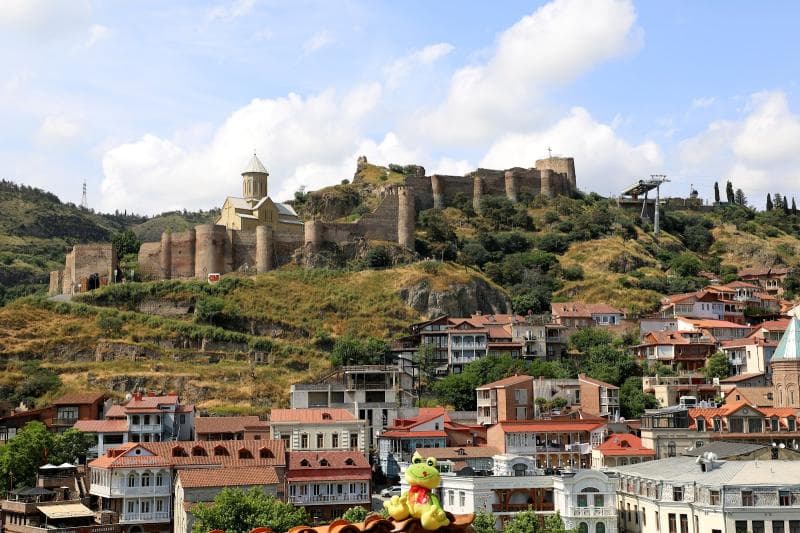
Discover Narikala Viewpoints, part of Narikala Fortress in Tbilisi, Georgia, for breathtaking panoramic city views and rich history.
Overview
Perched majestically on a steep hill overlooking Tbilisi, Georgia's vibrant capital, the Narikala Fortress is more than just ancient ruins; it's a window into the city's soul. Within its weathered walls lie the Narikala Viewpoints, offering some of the most spectacular panoramic vistas of Old Tbilisi, the Mtkvari River, and the sprawling urban landscape beyond. This ancient citadel, often called 'the heart and soul of the city,' commands attention from almost every corner of Tbilisi, inviting curious travelers to explore its rich history and breathtaking scenery.
Strategically situated between the historic sulfur bath district of Abanotubani and the serene Tbilisi Botanical Garden, Narikala consists of two walled sections, providing diverse perspectives of the surrounding beauty. Its commanding position has made it a crucial defensive stronghold for centuries, and today it stands as an enduring symbol of Tbilisi's resilience and identity.
History & Cultural Background
Narikala Fortress boasts an incredibly deep history, with its origins tracing back to the 4th century AD. The earliest fortifications on this site were built during the reign of King Varaz-Bakur, though local legends sometimes attribute its founding to King Vakhtang I Gorgasali. Initially known as 'Shuris-Tsikhe,' which translates to 'the Enviable Fortress' or 'the Rival Fortress,' its strategic importance was recognized by successive empires.
Over fifteen centuries, the fortress was expanded and rebuilt by various rulers, each leaving their architectural mark. The Arabs significantly reinforced it in the 8th century, and later, under Georgian kings like David the Builder and Queen Tamar in the 11th-12th centuries, it became the city's primary defensive stronghold. The name 'Narikala' itself emerged later, believed to be derived from the Persian 'narin-kala' or Mongol 'narin-qala,' both meaning 'small fortress' or 'small city fortress.'
Despite its formidable past, a devastating event reshaped Narikala's appearance. In 1827, an earthquake severely damaged parts of the fortress, and a catastrophic explosion of gunpowder stores kept within its walls during the Russian Empire period caused irreparable damage to several sections. This is why much of the walls remain in their ruined state, an atmospheric quality that photographers and historians alike find compelling. Narikala is recognized as a cultural heritage monument of Georgia, and restoration work has been carried out in the 2000s, with a section of the walls reconstructed.
What Makes It Special
What truly sets Narikala Viewpoints apart is the unparalleled visual spectacle they offer. From the crumbling battlements, visitors are treated to an expansive panorama that captures the essence of Tbilisi. You can see the curving path of the Mtkvari River (also known as the Kura River), the intricate domes of the Abanotubani sulfur baths nestled below, the contemporary elegance of the Bridge of Peace, and the vibrant rooftops of the Old Town.
Specific vantage points within the fortress offer unique photographic opportunities: the upper tower, or citadel, provides the highest point for a sweeping view of all Tbilisi, including Rustaveli Avenue and Mount Mtatsminda. The north wall above Abanotubani is famously where the classic postcard photograph of Tbilisi, showcasing the sulfur bath domes, is often taken. From the platform near the cable car station, you get an excellent view of Rike Park and the Bridge of Peace.
Stories, Fun Facts & Local Details
The very name 'Shuris-Tsikhe,' or 'the Enviable Fortress,' speaks volumes about Narikala's historical significance and desirability. Throughout its existence, it was a prize fought over by numerous empires, underscoring its strategic value. The dramatic explosion in 1827 that left much of the fortress in its present picturesque ruin adds a layer of poignant history, transforming destruction into a unique atmospheric charm.
Inside the fortress complex lies the recently restored St. Nicholas Church. Originally a 13th-century church, it was rebuilt in 1996-1997. Its interior is adorned with frescoes depicting scenes from both the Bible and the rich history of Georgia, offering a glimpse into the country's religious and cultural heritage. Just a short walk from Narikala, the iconic Kartlis Deda, or 'Mother of Georgia' statue, stands tall. This 20-meter aluminum figure holds a bowl of wine for friends and a sword for enemies, a powerful symbol of Georgian hospitality and fierce national pride that is visible from the fortress.
Visitor Perspective
Visiting Narikala's viewpoints is an essential Tbilisi experience. The journey itself can be part of the adventure; many travelers opt for a scenic cable car ride from Rike Park, which offers stunning aerial views of the city before you even reach the fortress. Alternatively, a more atmospheric route involves walking up through the narrow, winding streets from the Abanotubani sulfur baths, a climb that takes around 20 minutes and rewards you with charming views along the way.
The fortress grounds are generally accessible throughout the day, and there is no entrance fee to explore the ancient walls and enjoy the vistas. For the best experience, consider visiting early in the morning or late in the afternoon, especially around sunset. These times offer softer light for photography, a more pleasant temperature, and the magical experience of watching the city lights flicker on below. Comfortable, non-slip shoes are highly recommended, as parts of the walls are uneven and can be slippery, particularly after rain. Remember to bring your own water, as there are no cafes or kiosks directly within the fortress.
Coordinates: 44.80882, 41.68803
View on Google Maps💬 How Travelers Describe This Place
Based on community votes
Beautiful
556Interesting
470Photogenic
410Unique
254Must See
145
Traveler Stories
Discover memorable experiences shared by travelers who have visited this place.
No traveler stories yet.
Be the first traveler to share what made this place memorable.

Tour
By
Spot
Discover amazing places around the world. Your journey starts here.
Explore
© 2026 TourBySpot. All rights reserved.