Mustafa Pasha Mosque
Skopje, North Macedonia
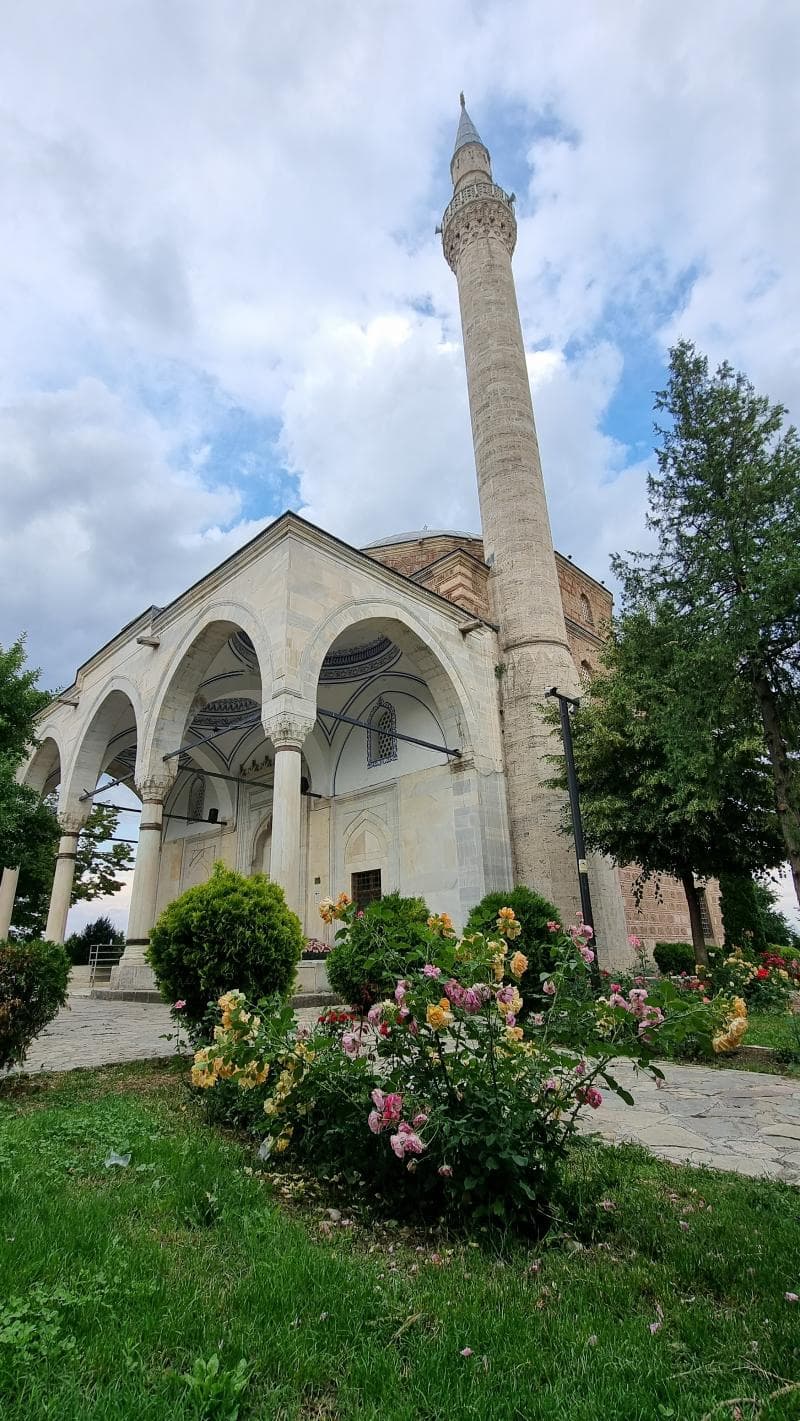
Discover Mustafa Pasha Mosque, an iconic 15th-century Ottoman masterpiece in Skopje, North Macedonia. Explore its history, architecture, and cultural significance.
Overview
Perched majestically above the historic Old Bazaar in Skopje, North Macedonia, the Mustafa Pasha Mosque stands as a timeless testament to Ottoman grandeur. Built in 1492, this architectural marvel is considered one of the most significant and well-preserved Islamic buildings in the Balkans. It offers visitors a captivating journey through centuries of history, blending spiritual tranquility with remarkable artistry. Its prominent position on a plateau provides breathtaking panoramic views of Skopje's bustling Old Bazaar and the modern city that stretches beyond. Often referred to as the 'Marble Mosque' due to its exquisite white marble exterior, it draws thousands of worshippers and heritage tourists annually, symbolizing a rich cultural tapestry woven into the heart of the Macedonian capital.
History & Cultural Background
The Mustafa Pasha Mosque was commissioned in 1492 by Çoban Mustafa Pasha, a respected vizier during the reigns of Ottoman Sultans Bayezid II and Selim I. An inscription above its entrance proudly details its founding, cementing its place in the annals of Ottoman history. Originally, the mosque was part of a larger complex, a waqf, which would have included a caravanserai, a medresse (religious school), an imaret (communal soup kitchen), and a mekteb (elementary school). Today, while many of these ancillary structures have faded with time, the mosque itself, along with its associated türbe (mausoleum) and the sarcophagus of Mustafa Pasha's daughter, Umi, remain remarkably intact. This enduring preservation allows the mosque to serve not only as an active place of worship but also as a powerful cultural institution, reflecting the artistic and spiritual traditions of the 16th-century Ottoman Empire in Macedonia. Despite the devastating 1963 Skopje earthquake that damaged much of the city, the Mustafa Pasha Mosque largely withstood the calamity, a testament to its sturdy construction and timeless design. A comprehensive five-year renovation, generously funded by the Turkish government, was completed in 2011, restoring its splendor and ensuring its legacy for future generations.
What Makes It Special
The mosque's 'Constantinople architectural style' is a prime example of classical Ottoman design, characterized by harmonious proportions and a distinctive aesthetic. Its most striking features include a magnificent central dome, measuring an impressive 16.3 meters in diameter, which creates an expansive and contemplative prayer space. Adjacent to it, a slender, elegant minaret soars nearly 47 meters into the Skopje skyline, crafted from the same pristine white limestone as parts of the mosque's exterior. The facade is notable for its plating with white marble, accented by subtle profiling on window lintels. A graceful portico, supported by four marble columns and adorned with three pointed arches, precedes the entrance, covered by three smaller domes. Inside, visitors are greeted by a visual feast of original ornamental calligraphy illustrating verses from the Quran, intricate geometric patterns, and vibrant arabesques, showcasing the rich artistic traditions of its era. The unique marble plaque above the entrance, detailing the mosque's founding, is another point of interest for its historical and artistic value.
Stories, Fun Facts & Local Details
Beyond its architectural beauty, the Mustafa Pasha Mosque holds poignant historical narratives. Within its peaceful courtyard lies the hexagonal türbe, a mausoleum containing the remains of Mustafa Pasha himself, alongside a lavishly decorated stone sarcophagus believed to be that of his daughter, Umi. This personal detail adds a human element to the grand structure, connecting visitors to the lives of those who shaped its legacy. The mosque is also famed for its beautiful rose garden, which bursts into fragrant bloom during warmer months, offering a serene escape and a favorite spot for contemplation. Its hilltop location is not just architecturally strategic; it offers some of the best photographic opportunities in Skopje, with expansive views over the labyrinthine streets of the Old Bazaar and the modern city stretching out below. The area surrounding the mosque, steeped in history, also pulses with daily life, with nearby cafes and teahouses inviting visitors to savor local teas or Turkish coffee, immersing themselves in the authentic neighborhood atmosphere.
Visitor Perspective
Visiting the Mustafa Pasha Mosque offers a profoundly enriching experience, whether one seeks historical insight, architectural appreciation, or spiritual solace. The mosque is accessible to non-Muslim visitors daily, outside of prayer times, allowing for respectful exploration of its interior. There is no entrance fee, though donations are gratefully accepted to support its ongoing preservation. To ensure a respectful visit, modest attire is required: women should cover their hair, and all visitors should avoid shorts and short-sleeved shirts. Shoes must be removed before entering the prayer hall, a common custom in mosques worldwide. Information pamphlets are often available at the entrance, providing valuable historical context and guidelines. The tranquil atmosphere inside the mosque, with its intricate patterns and historical depth, invites quiet reflection. Many travelers combine their visit with a stroll through the adjacent Old Bazaar, further immersing themselves in Skopje's vibrant cultural heritage. Allowing about 45-60 minutes to explore the mosque, its garden, and the views is recommended, with additional time for the surrounding historical district.
Coordinates: 21.435417, 42.00194
View on Google Maps💬 How Travelers Describe This Place
Based on community votes
Photogenic
915Beautiful
211Interesting
123Unique
74Must See
20
Traveler Stories
Discover memorable experiences shared by travelers who have visited this place.
No traveler stories yet.
Be the first traveler to share what made this place memorable.
Things to see at Mustafa Pasha Mosque



Tour
By
Spot
Discover amazing places around the world. Your journey starts here.
Explore
© 2026 TourBySpot. All rights reserved.