Dome Interior
Skopje, North Macedonia
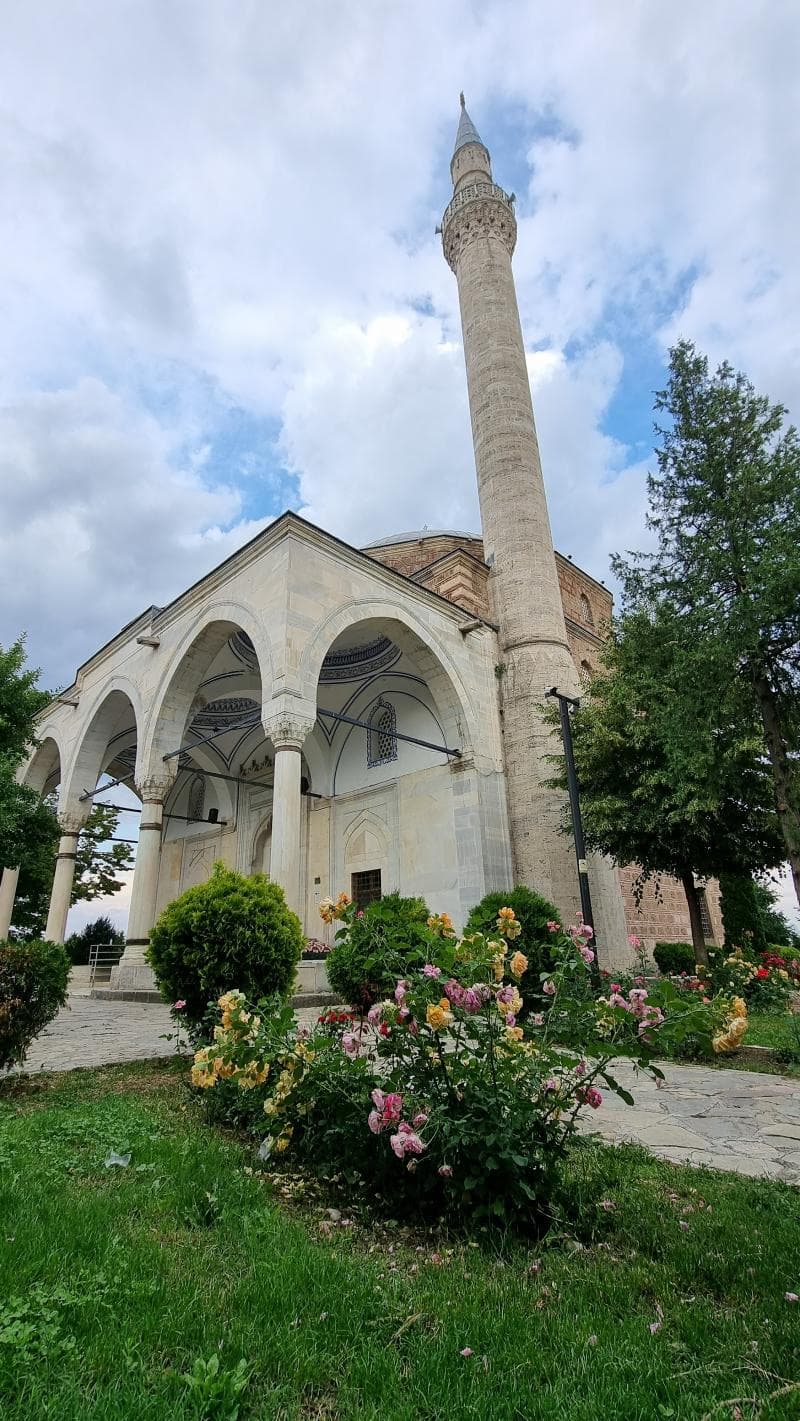
Explore the exquisite Dome Interior of Mustafa Pasha Mosque in Skopje, North Macedonia, with its 15th-century Ottoman art and serene ambiance.
Overview
Perched majestically on a plateau overlooking Skopje's vibrant Old Bazaar, the Mustafa Pasha Mosque stands as a timeless emblem of Ottoman heritage in North Macedonia. Constructed in 1492 by Çoban Mustafa Pasha, a distinguished vizier in the Ottoman Empire, this architectural marvel is celebrated for its pristine 15th-century form and remarkable preservation. At its heart lies the grand main dome, a central feature that not only defines its silhouette but also creates an awe-inspiring interior space for contemplation and worship. The mosque, along with its slender minaret and peaceful rose garden, offers visitors a profound glimpse into a rich historical and cultural tapestry, all while providing panoramic views of the city below.
This sacred site represents more than just a place of prayer; it is a living museum, showcasing the artistic and architectural prowess of its era. Its interior, particularly the dome, is a testament to the exquisite craftsmanship of Ottoman artists, adorned with intricate details that have captivated visitors for centuries.
History & Cultural Background
The Mustafa Pasha Mosque was commissioned in 1492 by Çoban Mustafa Pasha, a prominent figure who served under Sultans Bayezid II and Selim I. Its founding date is proudly etched on a marble plaque above the main portal, a detail later corroborated by a legal document from 1514-1515. What makes this mosque particularly significant is its extraordinary resilience; unlike many structures of its age, it has largely retained its original 15th-century design, avoiding major structural alterations over the centuries.
Historically, the mosque was part of a much larger charitable complex, known as a 'külliye', which included a caravanserai for travelers, a madrasa for religious education, an imaret or communal soup kitchen, and a mekteb, an elementary school. While most of these ancillary buildings have succumbed to the passage of time, the mosque, along with Mustafa Pasha's türbe (mausoleum) and the sarcophagus believed to belong to his daughter Umi, endure as powerful reminders of this extensive endowment.
Despite sustaining damage during the devastating 1963 Skopje earthquake, the mosque underwent a comprehensive five-year restoration, generously funded by the Turkish government agency TİKA, concluding in 2011. This careful restoration ensured that the mosque's original splendor and structural integrity were meticulously preserved for future generations, maintaining its status as one of the Balkans' most resplendent sacral Islamic buildings.
What Makes It Special
The dome interior of the Mustafa Pasha Mosque is a masterpiece of early Ottoman architecture and decorative art. The main dome, a grand structure with a diameter of 16.3 meters, crowns the central prayer hall, creating an expansive and spiritually uplifting space. Its visual impact is immediate and profound, drawing the eye upwards to a celestial canopy of artistic expression.
The dome is supported by sturdy pillars, which are themselves adorned with delicate arabesques, showcasing a harmony of form and decoration. Within the circular space beneath the dome, visitors will find intricate calligraphic inscriptions. These elaborate designs include the revered names of Muhammad and Allah prominently displayed, while the names of the four revered caliphates—Evubekir, Omer, Osman, and Ali—grace the south and north sections.
Further enhancing the interior's allure are the original ornamental calligraphy, illustrating verses from the Quran, and the intricate 16th-century grey-and-blue floral paintings. These vegetative motifs, described as 'burgeoning' and 'saturated in the oriental manner', are considered among the most splendid achievements in Islamic wall painting in Macedonia. They reflect the high artistic standards prevalent in Istanbul, the imperial capital, during that period.
Stories, Fun Facts & Local Details
The Mustafa Pasha Mosque is not just a building; it's a repository of stories and a focal point of community life. One fascinating detail is the adjacent türbe, the mausoleum of Mustafa Pasha himself. Unusually for Ottoman tombs in North Macedonia, its exterior is entirely faced with white marble, giving it a distinctive and elegant appearance. Nearby lies an intricately carved stone sarcophagus, believed to hold the remains of his daughter, Umi, adorned with detailed Persian calligraphic inscriptions and rumi vegetative motifs.
The mosque's elevated position not only grants it monumentality, visible from various points across Skopje, but also offers visitors a stunning panoramic perspective. From its grounds, one can gaze upon the tiled roofs of the Old Bazaar, the winding Vardar River, and the contrasting modernity of central Skopje.
The tranquil rose garden within the mosque complex is another charming feature. It provides a peaceful sanctuary, a place for quiet reflection amidst the historical grandeur. Local lore often speaks of the enduring fragrance of these roses, symbolizing the timeless beauty and serenity of the mosque itself.
Visitor Perspective
For the curious traveler, visiting the Mustafa Pasha Mosque offers an immersive cultural experience. The mosque is accessible to visitors daily, outside of designated prayer times, when it is reserved for worshippers. There is no entrance fee, though donations are gratefully accepted and contribute to the ongoing preservation of this magnificent site.
When planning a visit, it's important to observe customary etiquette to show respect for the sacred space. Modest attire is required: women are asked to cover their hair, and both men and women should avoid wearing shorts or short-sleeved shirts. Furthermore, shoes must be removed before entering the prayer hall, a common practice in Islamic places of worship. Information pamphlets are often available at the entrance, providing historical context and helpful guidelines.
Stepping inside, one is immediately enveloped by a serene atmosphere, conducive to contemplation. The intricate patterns and calligraphic art on the walls and dome invite a moment of quiet appreciation for the artistic and spiritual devotion that shaped this space. Many visitors find themselves spending 45-60 minutes leisurely exploring the interior, admiring the detailed craftsmanship, and perhaps taking a quiet moment in the rose garden.
Coordinates: 21.435417, 42.00194
View on Google Maps💬 How Travelers Describe This Place
Based on community votes
Beautiful
639Unique
569Photogenic
476Interesting
128Must See
93
Traveler Stories
Discover memorable experiences shared by travelers who have visited this place.
No traveler stories yet.
Be the first traveler to share what made this place memorable.

Tour
By
Spot
Discover amazing places around the world. Your journey starts here.
Explore
© 2026 TourBySpot. All rights reserved.